Tag

Sputnik Planitia

All articles tagged with #sputnik planitia

Colossal landslides on Pluto could bury Earth’s cities, study finds
space2 hours ago

Colossal landslides on Pluto could bury Earth’s cities, study finds

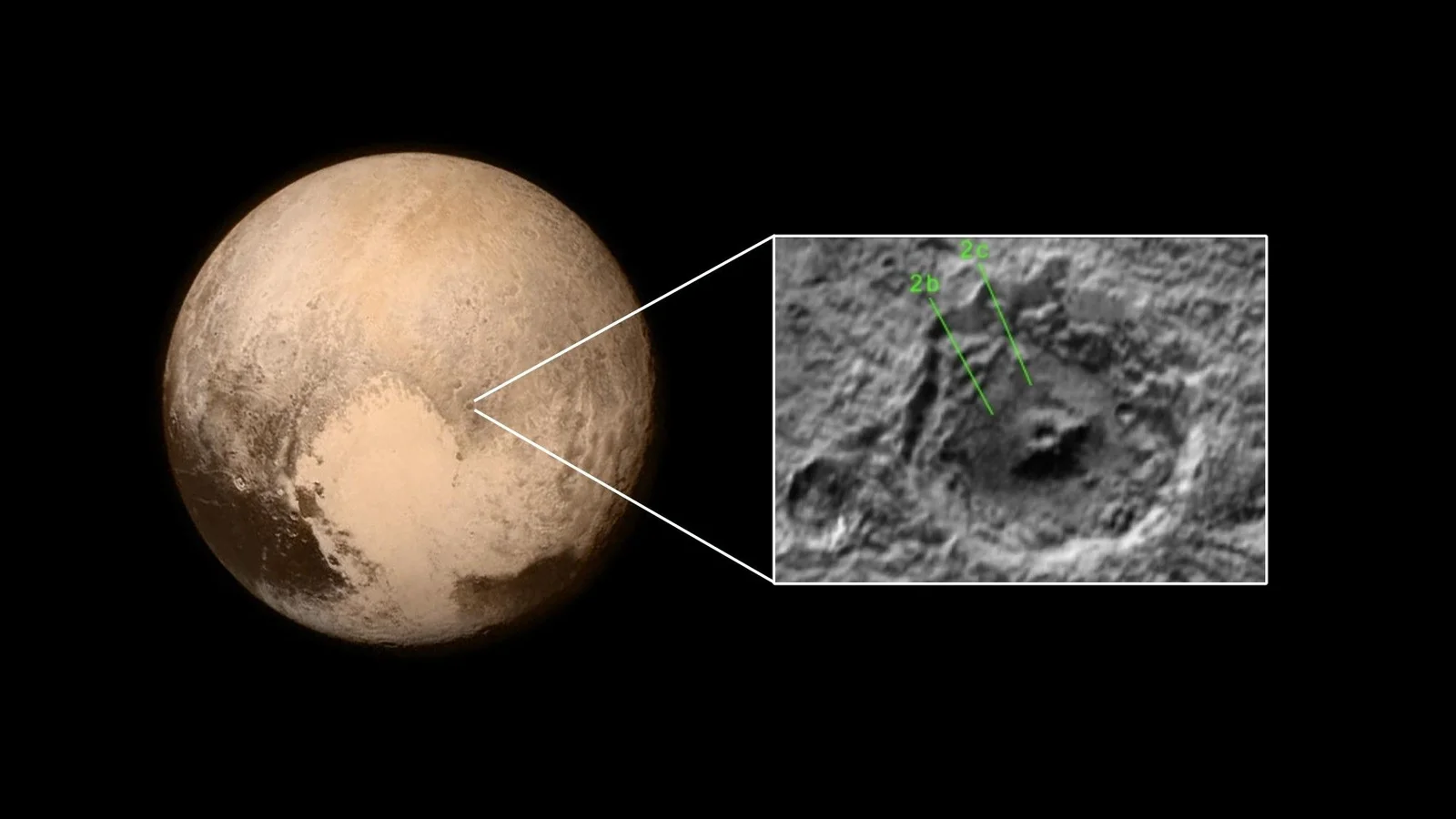
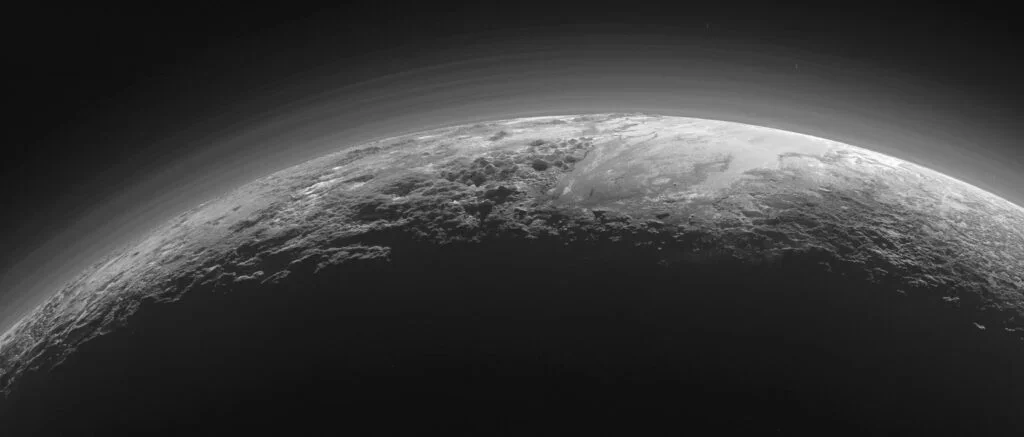
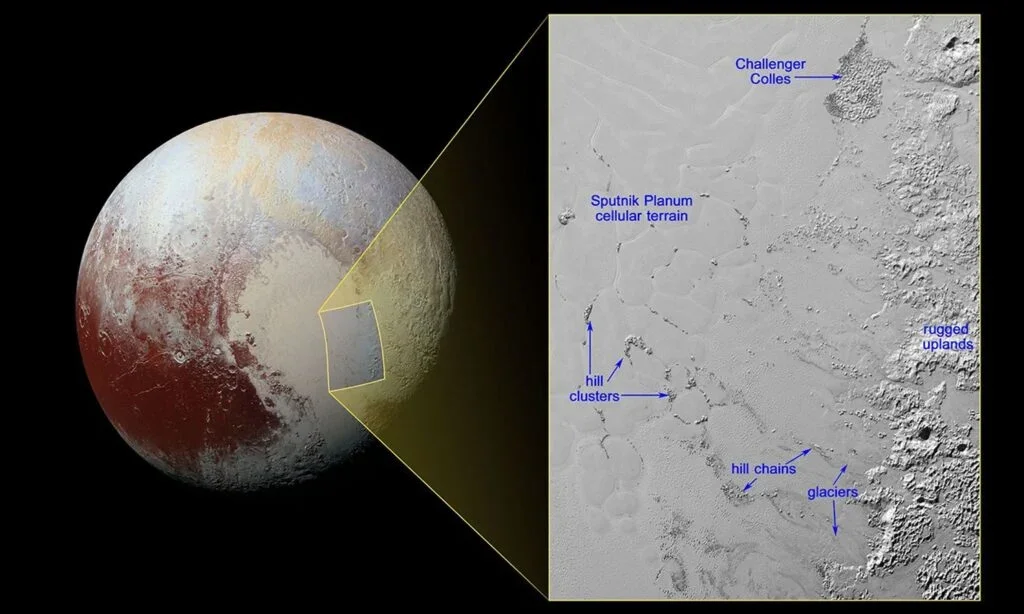
A team analyzing NASA’s New Horizons data from Pluto’s 2015 flyby identified six landslides along the inner walls of three craters on Sputnik Planitia. Debris flows stretch 10–14.5 km, with the largest apron about 130 sq km—large enough to bury a small city. These features show Pluto is geologically active on long timescales, likely driven by Pluto’s low gravity and icy, low-friction material; triggers vary, from nearby impacts to thermal stresses that cause sublimation and condensation of volatiles. The findings mark Pluto as the first Kuiper Belt world with such landslides confirmed, though coverage limits detection of additional events.

New Horizons Reveals Pluto’s Giant Hearts and Hidden Ocean Clues
space10 days ago

New Horizons Reveals Pluto’s Giant Hearts and Hidden Ocean Clues

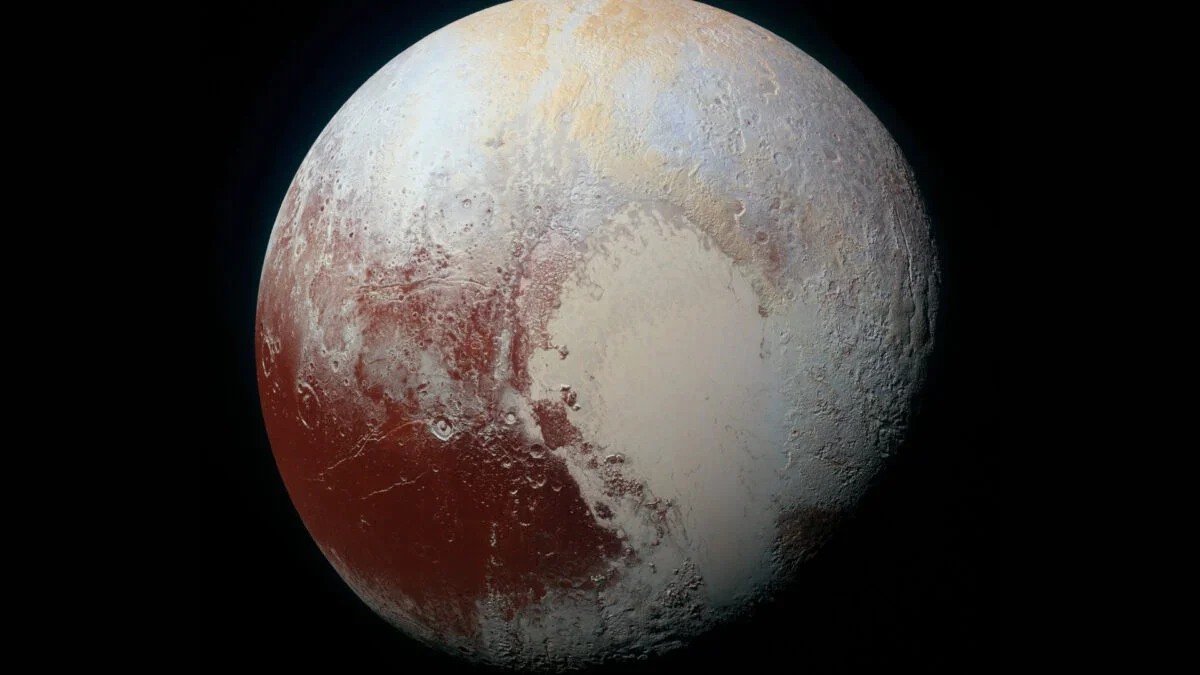
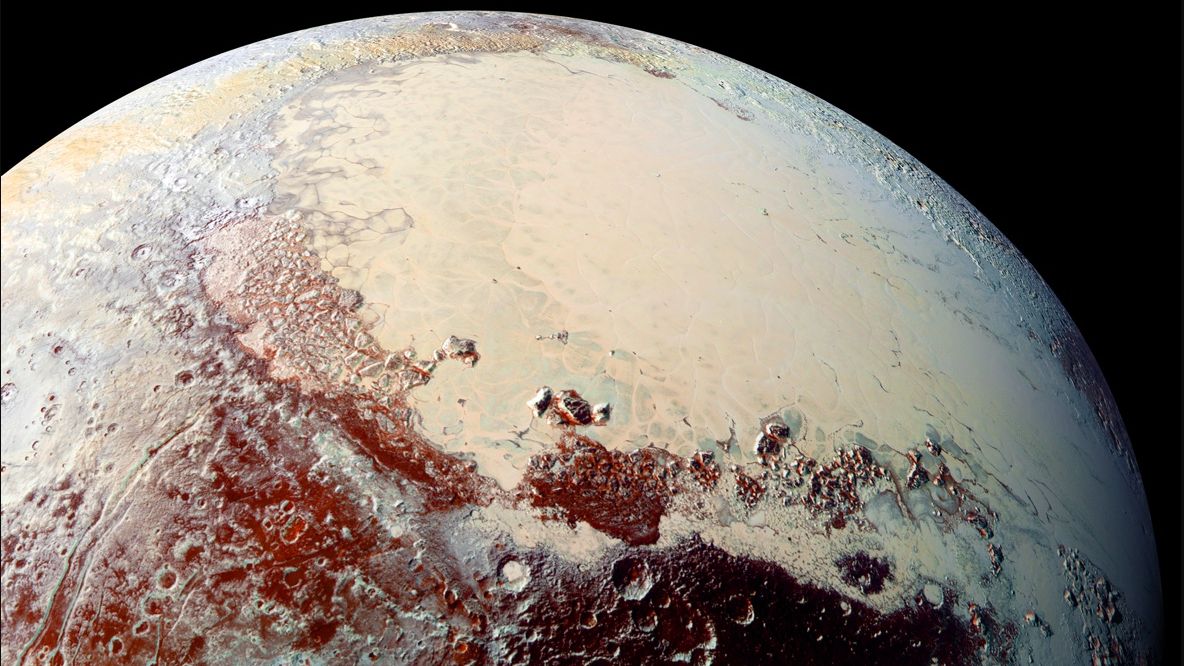
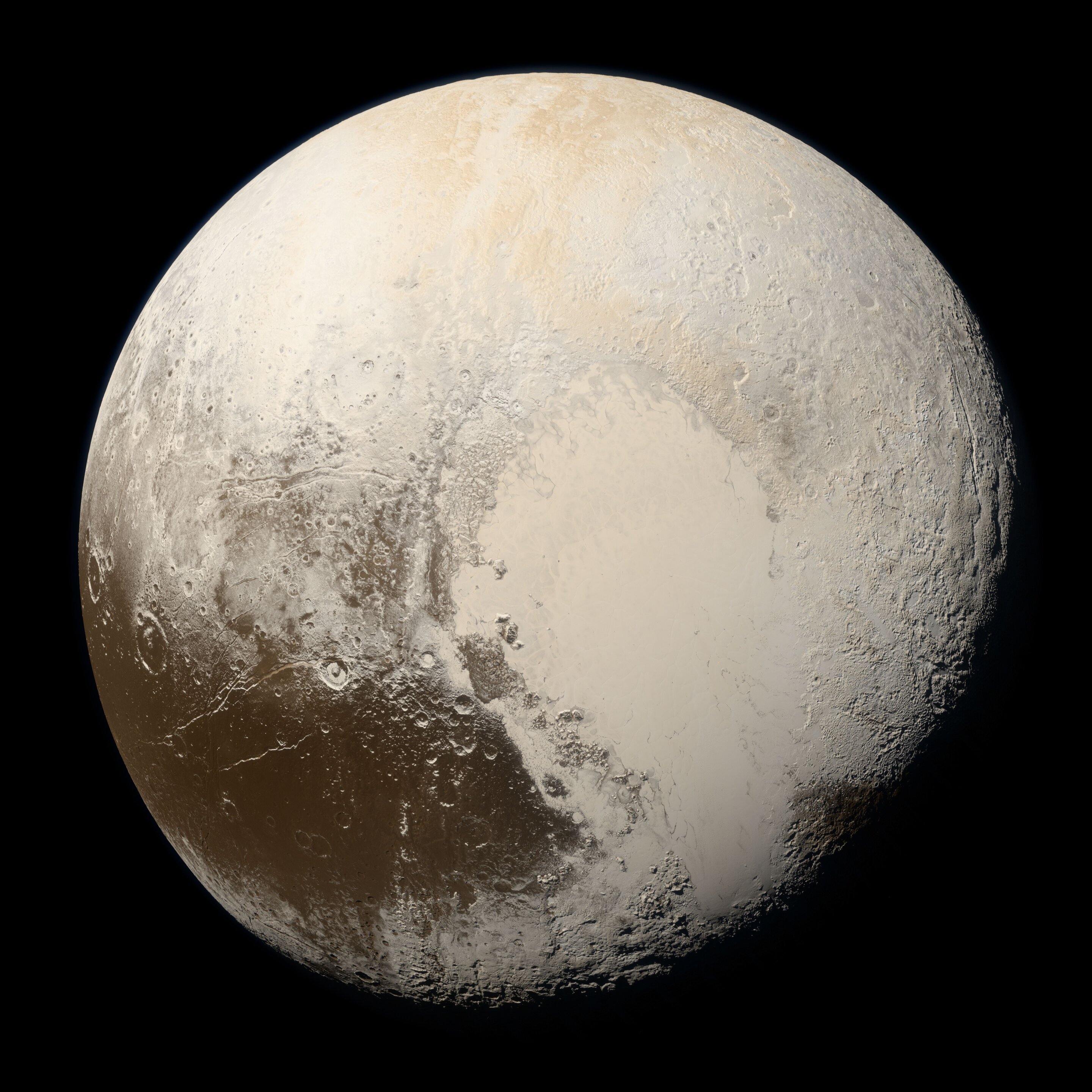
In July 2015, NASA’s New Horizons zipped past Pluto at about 32,000 mph, capturing most of its high‑resolution imagery in a ~30‑minute window and unveiling Tombaugh Regio—the heart-shaped region whose western lobe, Sputnik Planitia, is a vast nitrogen ice sheet roughly 1,200 by 2,000 km and about 4 km thick. The total data from the encounter amounted to about 6.25 GB, downlinked over about 15 months at 1–4 kb/s as the spacecraft continued outward. These findings — from the nitrogen ice plains to high‑albedo uplands, atmospheric haze, and clues to subsurface oceans — fundamentally reshaped planetary science and set the stage for decades of Pluto research as New Horizons travels beyond the Kuiper Belt.

"Effortless Floating in Pluto's Hidden Ocean"
space-exploration2 years ago

"Effortless Floating in Pluto's Hidden Ocean"

A recent study suggests that Pluto may have a subsurface ocean beneath its frozen surface, potentially deeper and denser than Earth's seawater. Clues from the New Horizons mission, such as the lack of an equatorial bulge and surface fractures, hint at this possibility. Researchers modeled the ocean's characteristics, estimating it to be 25-50 miles thick and 8% denser than Earth's seawater. However, the idea remains controversial, and more data is needed to confirm the existence of this ocean.

"The Cataclysmic Event Behind Pluto's Heart"
science2 years ago

"The Cataclysmic Event Behind Pluto's Heart"

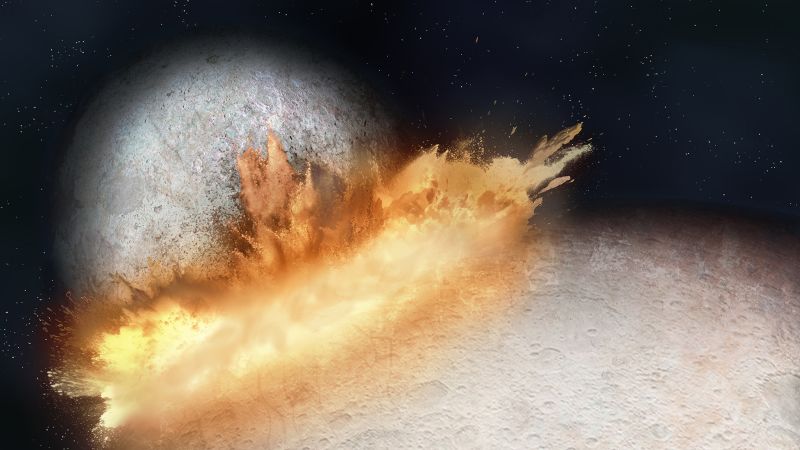
Researchers believe that a cataclysmic collision with a planetary body early in Pluto's history created the distinctive heart-shaped feature on its surface, known as Tombaugh Regio. The impact formed a deep basin called Sputnik Planitia, which is home to much of Pluto's nitrogen ice. The collision likely involved a planetary body about 435 miles in diameter and resulted in a teardrop shape due to the frigidity of Pluto's core and the impact's relatively low velocity. This new theory sheds light on how Pluto formed and could provide insights into its mysterious origins on the edge of the solar system.

"The Violent Origins of Pluto's Heart: Astrophysicists Uncover Cosmic Collision"
astronomy2 years ago

"The Violent Origins of Pluto's Heart: Astrophysicists Uncover Cosmic Collision"

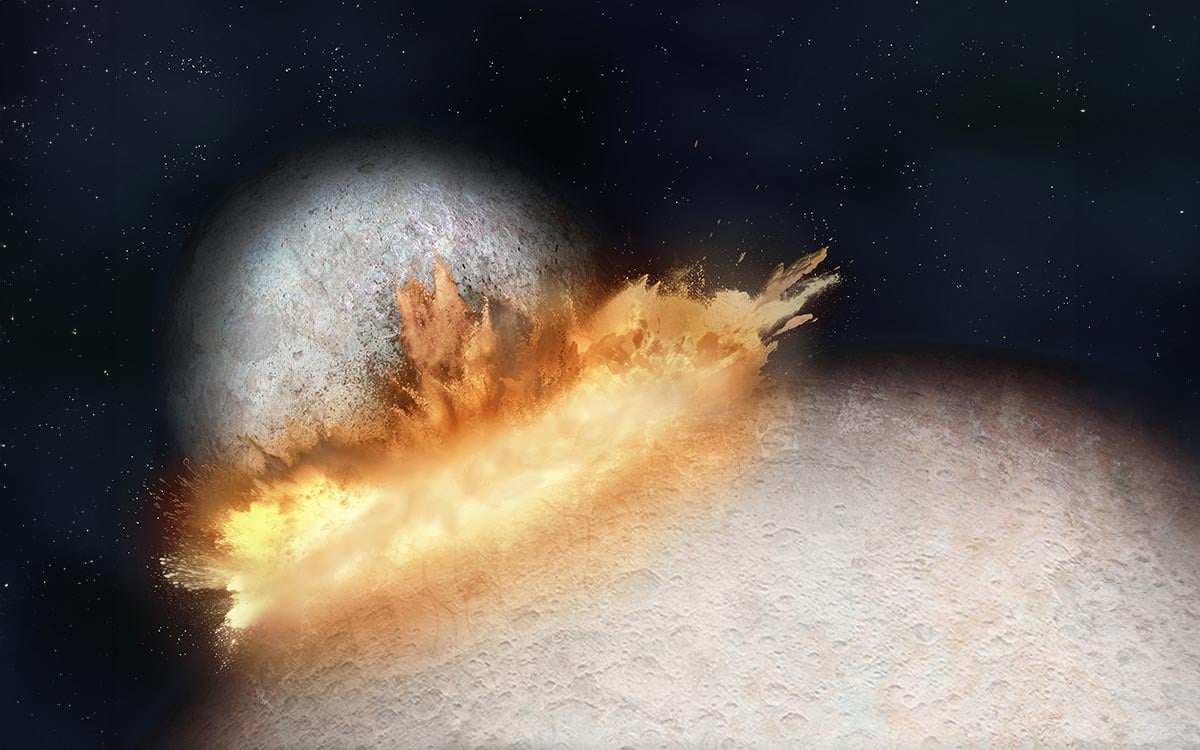
An international team of astrophysicists has solved the mystery of Pluto's heart-shaped feature, attributing it to a giant and slow oblique-angle impact with a planetary body over 400 miles in diameter. The impact formed Sputnik Planitia, a region predominantly filled with nitrogen ice, and the study suggests that Pluto's inner structure is different from previous assumptions, indicating no subsurface ocean. The findings shed new light on Pluto's early history and offer a novel origin hypothesis for its unique surface feature.

"Unraveling the Enigma of Pluto's Heart-Shaped Surface Feature"
astronomy2 years ago

"Unraveling the Enigma of Pluto's Heart-Shaped Surface Feature"

An international team of astrophysicists has solved the mystery of the heart-shaped feature on Pluto's surface, attributing it to a giant and slow oblique-angle impact. Using numerical simulations, the team determined that a collision with a planetary body about 700 km in diameter formed the feature, known as Sputnik Planitia. The study also suggests that Pluto's internal structure is different from previous assumptions, indicating no subsurface ocean. This research sheds new light on the origins of Pluto and its unique surface features.