
Titan’s Dense Atmosphere Eliminates Need for Pressure Suits, but Extreme Cold and Toxic Air Remain Fatal
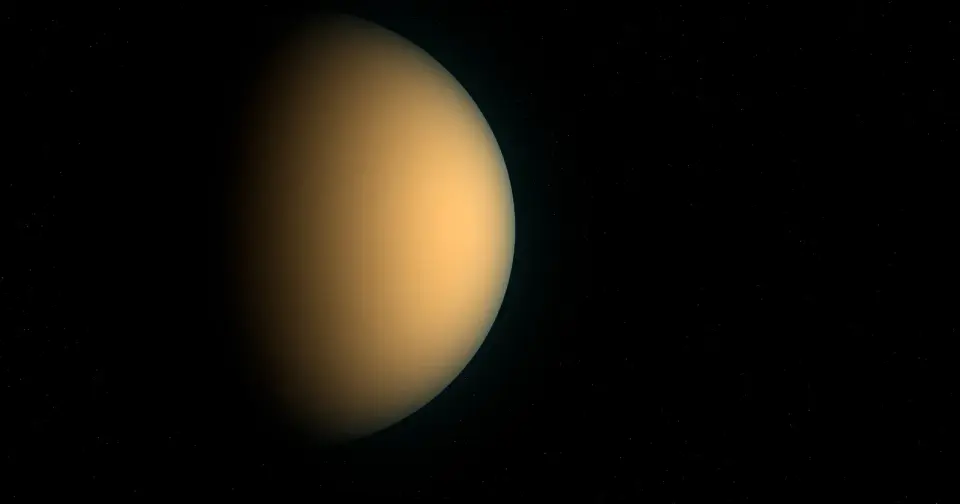
Titan, Saturn’s largest moon, possesses the only extraterrestrial atmosphere dense enough to eliminate the need for pressure suits, with surface pressure 60% higher than Earth’s. However, the air lacks oxygen and contains toxic methane, while surface temperatures reach minus 179 degrees Celsius. NASA’s Dragonfly mission will investigate pre-biological chemistry on this world, which features Earth-like weather cycles using liquid methane.
Key points
- Titan’s surface air pressure is approximately 60% higher than Earth’s, removing the necessity for pressurized space suits.
- The atmosphere consists primarily of nitrogen and methane, containing no breathable oxygen and posing toxic risks.
- Surface temperatures average minus 179 degrees Celsius, requiring heavy thermal protection for any human presence.
- Titan’s low gravity, about 14% of Earth’s, allows for potential flight with wings, unlike other planetary bodies.
- NASA’s Dragonfly mission aims to study complex carbon-based compounds and pre-biological chemistry, not life itself.
Background
Recent discussions on biosignatures, such as the 2026 warning that Earth’s oxygen gap may hinder planet-hunting telescopes, highlight the complexity of detecting life from afar. Titan’s unique chemistry offers a terrestrial analog for early Earth conditions, providing insights into how life might have emerged before atmospheric oxygen became detectable.
Why it matters
Understanding Titan’s atmospheric and chemical properties helps scientists evaluate the potential for pre-biological processes in extreme environments. The Dragonfly mission’s focus on chemistry rather than life detection underscores the importance of studying conditions that may precede biological emergence, offering insights into the origins of life on Earth and other worlds.
What to watch
NASA’s Dragonfly mission will continue its investigation of Titan’s surface chemistry, moving between sites to analyze complex carbon compounds. Future research may reveal whether pre-biological steps occur on worlds as different from Earth as Titan, informing broader astrobiological models.
Want the full story? Read the original reporting
Read on Space Daily