Tag

Dragonfly Mission

All articles tagged with #dragonfly mission

Titan’s Distance from Earth Fluctuates by 450 Million Kilometres, Altering Signal Delays
space3 months ago

Titan’s Distance from Earth Fluctuates by 450 Million Kilometres, Altering Signal Delays

The distance between Earth and Saturn’s moon Titan varies significantly due to orbital mechanics, ranging from 1.2 billion to 1.65 billion kilometres. This fluctuation causes one-way radio signal delays to shift between just over an hour and ninety minutes, complicating mission control for spacecraft like the upcoming Dragonfly probe.

NASA Greenlights Dragonfly: A Nuclear Drone to Hunt Prebiotic Chemistry on Titan
space-exploration3 months ago

NASA Greenlights Dragonfly: A Nuclear Drone to Hunt Prebiotic Chemistry on Titan

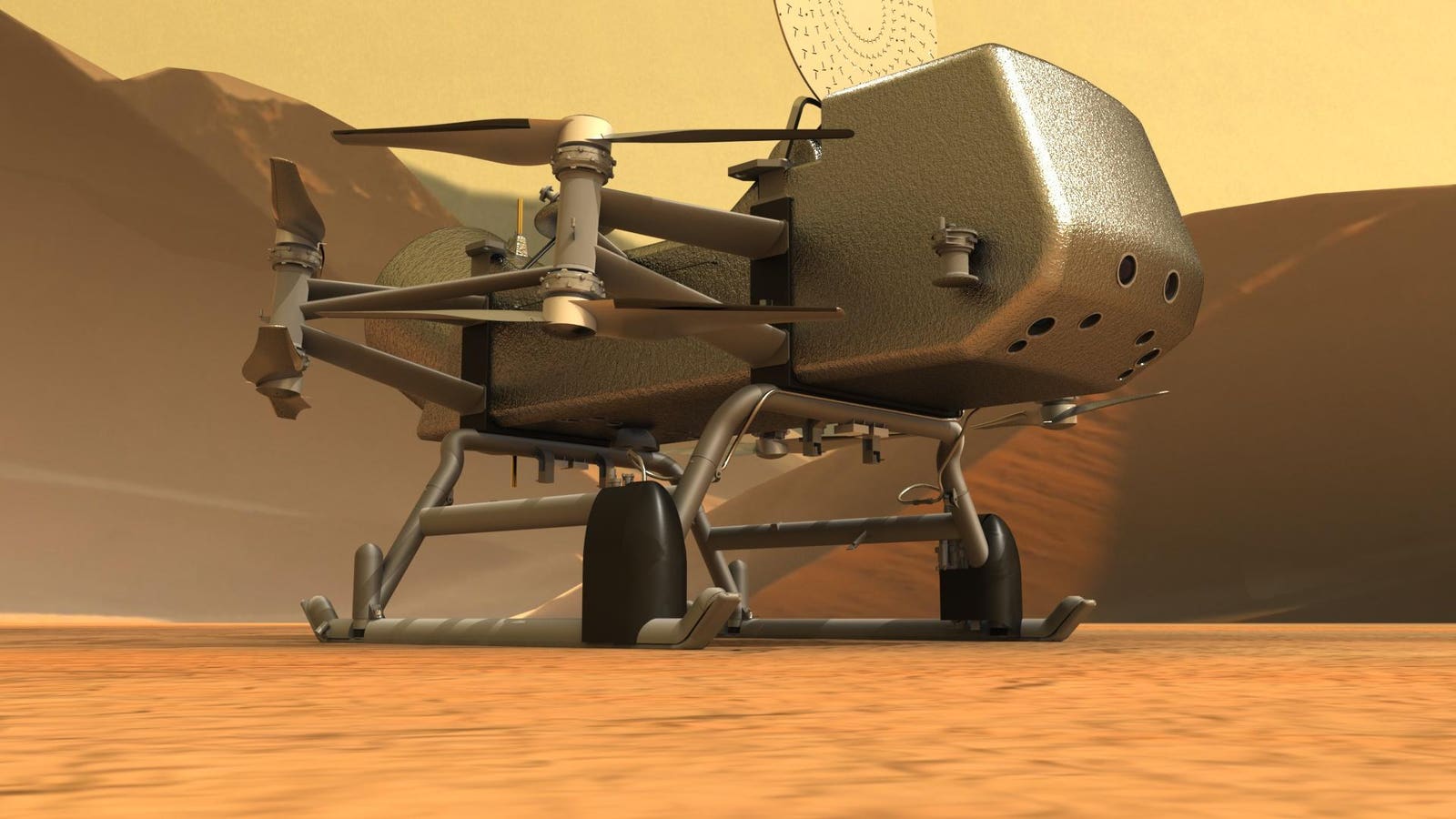
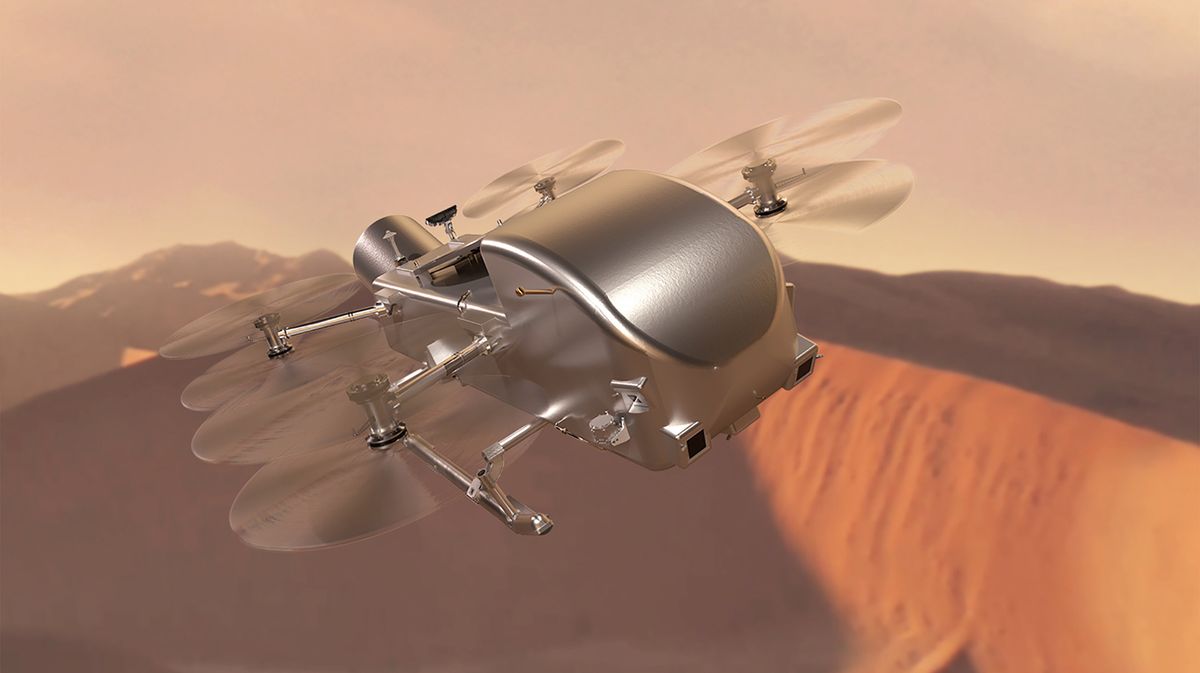
NASA has officially approved the Dragonfly mission, a car-sized, nuclear-powered rotorcraft designed to fly across Saturn’s moon Titan. Launching in 2028 and arriving in 2034, the drone will spend three years hopping between sites to study complex carbon chemistry, testing whether the steps leading to life can occur in Titan’s frozen, methane-rich environment.

Titan: The Only Solar System World Where Humans Could Stand Without a Pressure Suit
science-and-space3 months ago

Titan: The Only Solar System World Where Humans Could Stand Without a Pressure Suit

Saturn’s moon Titan is the only place beyond Earth where a human could stand without a pressure suit, thanks to an atmosphere 50% denser than Earth’s. However, the surface temperature of minus 179 degrees Celsius and lack of oxygen make it lethal without heated gear. NASA’s Dragonfly mission, launching in 2028, will investigate its methane seas and prebiotic chemistry.

Titan’s Dense Atmosphere Eliminates Need for Pressure Suits, but Extreme Cold and Toxic Air Remain Fatal
science4 months ago

Titan’s Dense Atmosphere Eliminates Need for Pressure Suits, but Extreme Cold and Toxic Air Remain Fatal

Titan, Saturn’s largest moon, possesses the only extraterrestrial atmosphere dense enough to eliminate the need for pressure suits, with surface pressure 60% higher than Earth’s. However, the air lacks oxygen and contains toxic methane, while surface temperatures reach minus 179 degrees Celsius. NASA’s Dragonfly mission will investigate pre-biological chemistry on this world, which features Earth-like weather cycles using liquid methane.

Titan's Methane Rivers Echo Earth's Hydrology, Flowing Through Ice
space4 months ago

Titan's Methane Rivers Echo Earth's Hydrology, Flowing Through Ice

Titan, Saturn's largest moon, hosts standing surface liquid—methane and ethane—driven by a slow hydrological cycle that forms rivers, rain, lakes and seas, with bedrock of water ice and surface features mapped by Cassini-Huygens; Kraken Mare and Ligeia Mare are fed by Vid Flumina, and a Dragonfly rotorcraft mission is planned for the 2030s to study Titan up close; while Earthlike in form, Titan's cycle uses different liquids and conditions, and life as we know it is unlikely.

Race to Titan: Nuclear-Heat Propulsion Could Reach Saturn’s Moon in 220 Days
space6 months ago

Race to Titan: Nuclear-Heat Propulsion Could Reach Saturn’s Moon in 220 Days

Engineers compared nuclear propulsion options for a crewed Titan mission; a uranium-fueled nuclear-thermal design called Copernicus could reach Titan in about 220 days, with additional propellant tanks shrinking transit to 90 days but adding mass and cost. The full mission could last ~1,000 days, far exceeding any human in deep space so far, with exposure to galactic cosmic rays and bone/muscle deterioration that current shielding cannot fully mitigate. NASA’s Dragonfly robotic mission, launching in 2034, will gather data to test assumptions before any crewed mission.

Dragonfly Mission Takes Flight to Titan
entertainment9 months ago

Dragonfly Mission Takes Flight to Titan

Space.com’s This Week In Space Episode 198 features Rod Pyle and Tariq Malik discussing NASA’s Dragonfly mission to Saturn’s moon Titan with principal investigator Dr. Elizabeth “Zibi” Turtle. The car-sized rotorcraft, slated for a 2028 launch and a 2034 arrival, will descend into Titan’s atmosphere and then fly across its hydrocarbon dunes and methane seas, stepping through its surface and atmospheric exploration plans.

Titan's Methane Crust: A Potential Alien Habitat?
science2 years ago

Titan's Methane Crust: A Potential Alien Habitat?

Scientists have found that Saturn's moon Titan may have a six-mile-thick crust of methane ice, which could facilitate the detection of life signs from its subsurface ocean. This methane layer might also explain Titan's methane-rich atmosphere and provide insights into Earth's climate processes. The discovery, based on shallow impact craters and computer modeling, suggests Titan's interior is warmer and more flexible than previously thought. This research could guide future missions like NASA's Dragonfly, set to explore Titan in the 2030s.

"New Insights Reveal Dynamic Liquid Lakes on Saturn's Moon Titan"
science2 years ago

"New Insights Reveal Dynamic Liquid Lakes on Saturn's Moon Titan"

Scientists have discovered that Titan, Saturn's largest moon, has liquid hydrocarbon lakes with waves, currents, and estuaries, resembling Earth's water bodies. Using data from NASA's Cassini mission, the study reveals that Titan's lakes contain varying levels of methane and ethane. NASA's upcoming Dragonfly mission, set to launch in 2027, aims to further explore Titan's prebiotic chemistry and search for biosignatures.

"NASA's Epic Dragonfly Mission: Giant Drone Set to Explore Saturn's Moon Titan"
space-exploration2 years ago

"NASA's Epic Dragonfly Mission: Giant Drone Set to Explore Saturn's Moon Titan"

NASA has confirmed the Dragonfly mission, a $3.35 billion project set to launch in July 2028, which will fly a drone-like craft around Saturn’s largest moon, Titan, to explore its unique environment with weather, liquid, and potential building blocks of life. The mission aims to search for chemical biosignatures, investigate the moon’s active methane cycle, and explore prebiotic chemistry in the atmosphere and on the surface. Dragonfly will reach Titan in 2034 and conduct a two-year mission, taking samples and pushing the boundaries of rotorcraft exploration outside of Earth.

"NASA Approves Mission to Send Nuclear-Powered Drone to Saturn's Moon Titan"
space-exploration2 years ago

"NASA Approves Mission to Send Nuclear-Powered Drone to Saturn's Moon Titan"

NASA has approved the delayed Dragonfly drone mission to Saturn's moon Titan for a 2028 launch, with the car-sized nuclear-powered drone set to reach Titan in 2034. The mission aims to investigate prebiotic chemical processes on Titan, known for its resemblance to early Earth and potential habitability. The mission's budget has increased to $3.35 billion due to design iterations, supply-chain issues, and the need for a heavy-lift launch vehicle. NASA's confirmation allows the mission to proceed to final design stages, marking a significant step in exploring Titan's potential for life.

"Life Unlikely on Saturn's Largest Moon, Titan"
space-science2 years ago

"Life Unlikely on Saturn's Largest Moon, Titan"

A study led by astrobiologist Catherine Neish suggests that Saturn's largest moon, Titan, is most likely not habitable due to the lack of organic molecules necessary for life to emerge in its subsurface ocean. This finding has significant implications for the search for extraterrestrial life in the outer solar system and raises questions about the habitability of other icy worlds. Despite this discovery, the upcoming NASA Dragonfly mission aims to study Titan's prebiotic chemistry and surface composition to gain a better understanding of its potential for hosting life.

"NASA Finds Saturn's Icy Moons Unlikely Hosts for Life"
space-science2 years ago

"NASA Finds Saturn's Icy Moons Unlikely Hosts for Life"

A new study suggests that Saturn's moon Titan, long considered a potential candidate for hosting life due to its liquid hydrocarbon lakes and subsurface ocean, may not be as habitable as previously thought. The study found that the volume of organics delivered to the moon's subsurface ocean through impacts is insufficient to sustain life. This challenges the optimism for finding extraterrestrial life within our own Solar System, but there is still hope for potential prebiotic environments near Titan's surface, which NASA's upcoming Dragonfly mission aims to explore.

"Life Unlikely: Saturn's Moon Titan Not Suitable for Life, NASA Finds"
space2 years ago

"Life Unlikely: Saturn's Moon Titan Not Suitable for Life, NASA Finds"

New research suggests that Titan's underground ocean, along with similar oceans inside other icy moons in the outer solar system, may lack the organic chemistry necessary for life due to the slow rate of comet impacts delivering organic material to the ocean. While the possibility of hydrothermal vents on Europa and organic material from Titan's interior is being investigated, it remains uncertain whether these could support life. NASA's Dragonfly mission to Titan in 2028 may provide opportunities to study impact sites on the surface and learn more about prebiotic chemistry, potentially shedding light on the formation of life on Earth.

"Uninhabitable: Saturn's Largest Moon"
space2 years ago

"Uninhabitable: Saturn's Largest Moon"

A study led by Western astrobiologist Catherine Neish suggests that Saturn's largest moon, Titan, is most likely uninhabitable due to the limited transfer of organic molecules from its surface to its subsurface ocean, making it less likely to support life. This finding has implications for the search for extraterrestrial life in the outer solar system and raises questions about the habitability of other icy moons. Despite this discovery, the upcoming NASA Dragonfly mission aims to study Titan's prebiotic chemistry and composition, providing valuable insights into the potential for life on other planets.