
MIT Study Shows Peptides Can Survive in Venus’s 98% Sulfuric Acid Clouds
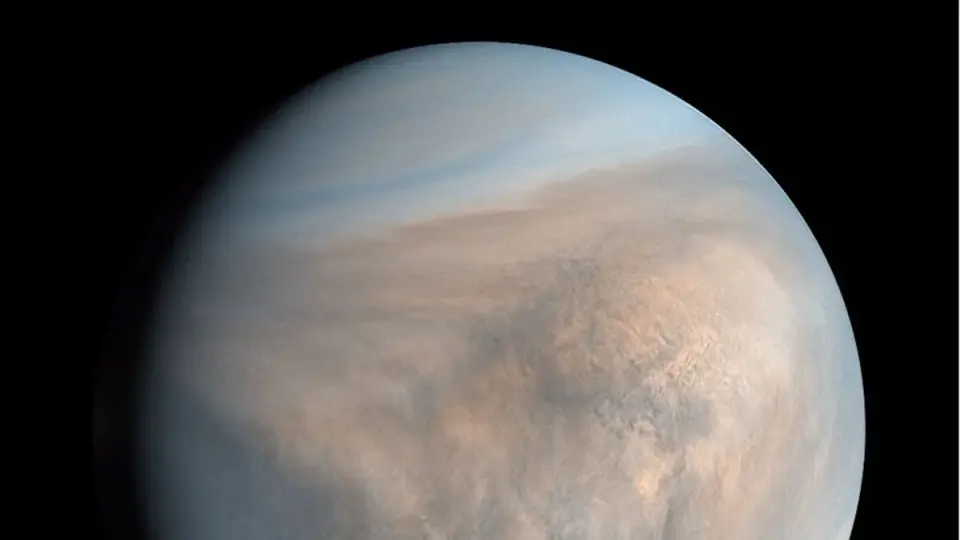
Researchers at MIT have demonstrated that complex biological signaling molecules, specifically peptides, can maintain stable three-dimensional structures in environments mimicking Venus’s upper atmosphere. By testing three specific peptides in 98% sulfuric acid, the team found they remained intact for weeks, suggesting that Venus’s cloud layers may be chemically hospitable to certain forms of complex biochemistry despite their extreme acidity.
Key points
- MIT chemists and planetary scientists tested peptides in a lab environment simulating Venus’s cloud layer, which consists of 98% sulfuric acid by weight.
- Three specific peptides, identified as HHQ, HHQ13, and K7, retained stable, well-defined structures for weeks under these harsh conditions.
- The study utilized nuclear magnetic resonance (NMR) spectroscopy to analyze the molecules, a method chosen because it allows for site-specific measurements unaffected by the acidic solvent.
- The findings suggest that the absence of water in Venus’s clouds prevents the acid from dissolving the peptides, allowing them to form 'omega loop' shapes similar to those found in proteins.
- The research builds on previous work by MIT planetary scientist Sara Seager, who confirmed that smaller molecules like lipids and amino acids could also withstand similar acidic conditions.
- The results were published in the Proceedings of the National Academy of Sciences and support the hypothesis that extraterrestrial life could exist in Venus’s atmosphere via alien biochemical processes.
Background
This development follows earlier findings that Venus’s cloud chemistry is more complex than previously thought. A 2025 reanalysis of data from NASA’s 1978 Pioneer Venus mission suggested that cloud aerosols might contain significant amounts of bound water, complicating the simple sulfuric-acid model. Additionally, recent studies have explored Venus’s potential for a temperate past and the presence of complex organic molecules in meteorites, such as the Hillsborough meteorite, which contained hundreds of non-terrestrial amino acids. These background elements highlight the ongoing scientific effort to understand the chemical environment of Venus and its potential to support life.
Why it matters
This study challenges the long-held assumption that Venus’s atmosphere is too hostile for complex chemistry. By demonstrating that peptides can survive in 98% sulfuric acid, the research expands the range of environments considered potentially habitable. This could influence future mission designs, such as NASA’s DAVINCI and the Venus Life Finder, which aim to search for biosignatures in Venus’s clouds. The findings also suggest that astrobiologists should broaden their search for life beyond Earth-like conditions, considering that life might exist in environments with radically different biochemistry.
What to watch
Future missions, including DAVINCI and Venus Life Finder, are expected to provide direct evidence to confirm or refute these lab findings. These missions will analyze multiple cloud layers to verify the presence of peptides and other complex molecules. Additionally, further research will be needed to understand the specific biochemical processes that could sustain life in such an environment, potentially leading to new discoveries about the nature of extraterrestrial life.
Want the full story? Read the original reporting
Read on Gizmodo