
Pluto's Atmosphere Shows First Signs of Collapse as It Drifts Farther from the Sun
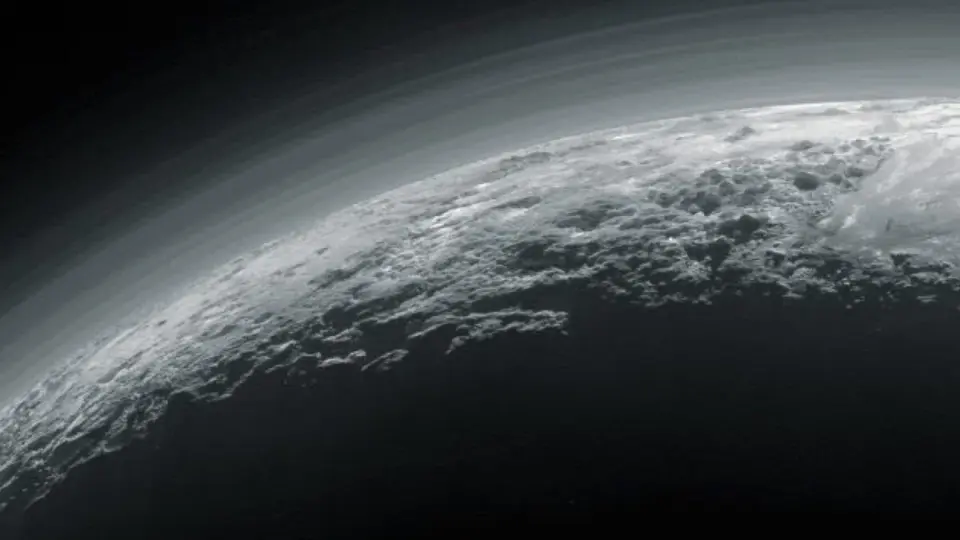
Pluto's atmosphere is likely beginning to collapse as the dwarf planet moves farther from the Sun. A new study using stellar occultations reveals a 16% drop in atmospheric pressure since 2021, confirming predictions made decades ago. This marks the first significant decline since Pluto's discovery in 1920.
Key points
- A study published in The Planetary Science Journal indicates Pluto's atmosphere has started to thin, with pressure dropping by up to 16% since 2021.
- Researchers used stellar occultations, observing how Pluto blocks starlight, to measure atmospheric changes with high precision.
- The decline aligns with predictions from 1996 that Pluto's atmosphere would 'freeze out' as it moves away from the Sun.
- Pluto's atmosphere had remained stable from 2015 to 2021 after growing between 1988 and 2015.
- Amanda Sickafoose of the Planetary Science Institute led the research, noting this could be the first signs of atmospheric collapse.
Background
Pluto's orbit takes 248 Earth years, and it is currently moving farther from the Sun. Previous data from the New Horizons flyby in 2015 showed atmospheric properties, but long-term trends were difficult to track due to Pluto's distance. The 2026 solar abundance study in our archive is unrelated but highlights ongoing refinements in planetary atmospheric models.
Why it matters
This discovery provides the first concrete evidence of a predicted long-term atmospheric change on Pluto, offering insights into how dwarf planets evolve as they move through their orbits. It also validates decades-old theoretical models and sets the stage for future observations as Pluto continues its journey away from the Sun until at least 2114.
What to watch
Astronomers plan to collect more data over the coming years and decades to confirm or refute the trend of atmospheric decline. Pluto will not approach the Sun again until at least 2114, allowing time to observe whether the atmosphere fully collapses at its farthest distance.
Want the full story? Read the original reporting
Read on Gizmodo