
Chang'e 7 Delays to 2027 as China Prepares Historic Lunar South Pole Ice Hunt
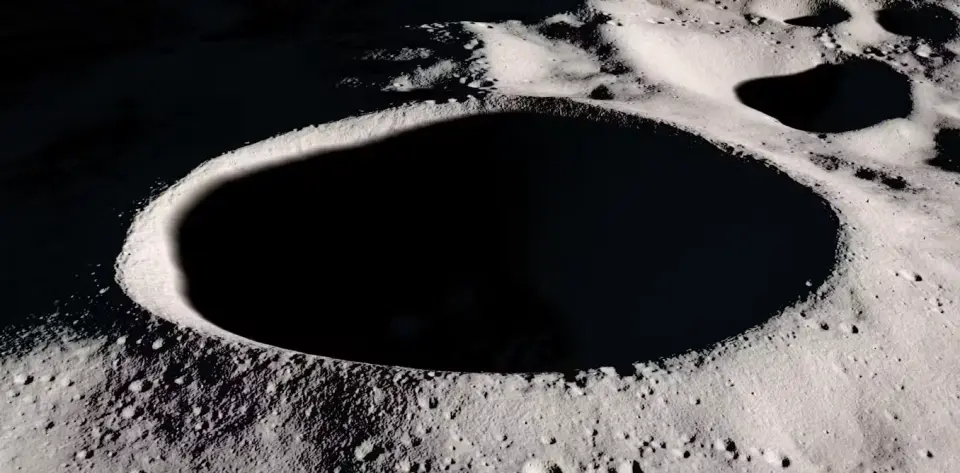
China has delayed the launch of its Chang'e 7 mission to 2027 due to weather, but the probe remains the most ambitious lunar exploration effort to date. Designed to land near Shackleton Crater at the Moon's south pole, the mission will use a novel hopping robot to access permanently shadowed craters where water ice is believed to exist. While the US pursues a commercial-led approach through NASA's CLPS program, China is executing a state-coordinated mission that includes international partners. Success could provide critical data on lunar resources, potentially influencing the geopolitical landscape of future crewed lunar settlements and the International Lunar Research Station.
Key points
- Chang'e 7 launch delayed to 2027 due to Typhoon Narra, but mission remains critical for finding water ice at the lunar south pole.
- The mission features a unique hopping robot designed to traverse broken terrain and enter permanently shadowed craters inaccessible to wheeled rovers.
- China’s approach contrasts with NASA’s commercial-led CLPS program, which has faced recent failures like the Intuitive Machines IM-2 crash.
- Chang'e 7 includes instruments from multiple international partners, including Thailand, Egypt, Switzerland, and a US-built telescope, despite US-China restrictions.
- Findings on water ice distribution could impact future lunar base plans for both China’s International Lunar Research Station and NASA’s Artemis program.
Background
Lunar exploration has evolved from reaching the Moon to exploiting its resources. Previous missions, such as the Soviet Luna-1 and Apollo programs, established foundational knowledge, but the focus has shifted to accessing water ice in permanently shadowed craters. Recent US commercial missions, like Intuitive Machines’ IM-2, attempted similar objectives but failed, highlighting the technical challenges. China’s Chang'e program, named after the moon goddess, has steadily advanced over two decades, aiming to transition from exploration to resource utilization. The broader context includes a growing US-China space race, with both nations planning crewed lunar outposts and international collaborations, despite geopolitical tensions.
How outlets are covering it
The Conversation emphasizes the technical innovation of Chang'e 7’s hopping robot and its role in transitioning from exploration to resource assessment, contrasting it with NASA’s commercial CLPS approach. Scientific American highlights the geopolitical implications, noting that China’s success could make it the leader in lunar science and reshape the race for lunar bases, while also detailing the international collaboration despite US restrictions. Ars Technica frames the mission as a potential 'wake-up call' for the US, suggesting China might assert territorial rights or keep-out zones, which could galvanize US efforts to accelerate Artemis. All sources agree on the mission’s significance but differ in emphasis: The Conversation focuses on technical novelty, Scientific American on geopolitical and scientific impact, and Ars Technica on strategic and competitive implications.
Why it matters
Chang'e 7’s success could provide the first direct evidence of accessible water ice at the lunar south pole, a critical resource for future crewed missions and lunar bases. This data could influence the design and location of both China’s International Lunar Research Station and NASA’s Artemis program, potentially altering the geopolitical dynamics of lunar exploration. The mission’s international collaboration, despite US-China restrictions, also signals a shift toward global cooperation in space, while its technical innovations, like the hopping robot, may set new standards for lunar exploration. Ultimately, the mission could redefine the 21st-century space race, moving from exploration to sustainable resource utilization.
What to watch
Chang'e 7 is expected to launch in 2027, with a planned landing near Shackleton Crater at the lunar south pole. The mission will deploy a rover and a hopping robot to explore permanently shadowed craters, using radar and drills to assess water ice distribution. Following Chang'e 7, China plans Chang'e 8 in 2028 to demonstrate resource utilization, potentially leading to the International Lunar Research Station. NASA’s Artemis IV is also slated for 2028, with a focus on commercial lunar services and the VIPER rover. The outcomes of these missions will likely influence future lunar base designs, resource extraction strategies, and international cooperation in space.
- China is launching a Moon mission to find water ice. It’s unlike anything NASA has done The Conversation
- China's Chang'e 7 moon probe will launch this weekend on the most ambitious lunar mission in history Space
- China is about to launch its most ambitious moon mission yet Scientific American
- The United States is about to wake up to the threat from China’s space program Ars Technica
- China’s Chang’e-7 lunar ice-hunting mission set for Sunday launch SpaceNews
Want the full story? Read the original reporting
Read on The Conversation