
Curiosity Marks 5,000 Martian Days with Panoramic Postcard and Scientific Milestones
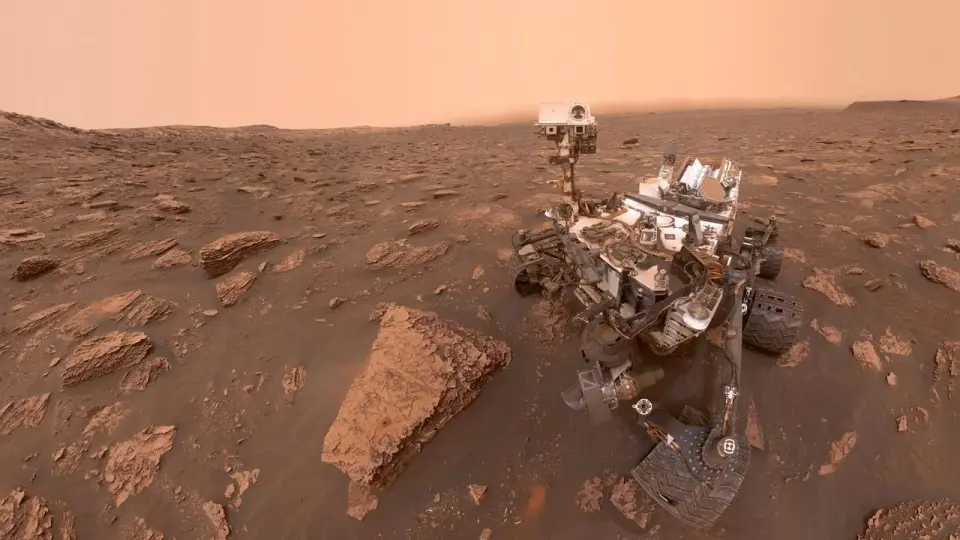
NASA’s Curiosity rover has completed its 5,000th Martian day, or sol, after landing in August 2012. To mark the milestone, the rover captured a panoramic 'postcard' from the 'Chocolatal' ridge near Mount Sharp, combining morning and evening images. The rover has traveled over 23.6 miles, climbed 1 kilometer up the mountain, and collected 42 rock samples. Recent findings include rare elemental sulfur crystals, an iron-nickel meteorite named 'Cacao,' and evidence of ancient habitable environments, though definitive proof of life requires sample return.
Key points
- Curiosity reached its 5,000th sol on August 30, 2026, having operated for nearly 14 years despite a two-year initial design life.
- The rover captured a panoramic image from the 'Chocolatal' ridge, merging photos taken on August 30 and September 2 to show the transition from morning to sunset.
- Curiosity has traveled 23.6 miles (38 km) from its landing site and climbed 1 kilometer (3,280 feet) up Mount Sharp within Gale Crater.
- The rover has collected 42 powdered rock samples using its robotic arm drill, analyzing them for chemical composition and organic molecules.
- Recent discoveries include rare elemental sulfur crystals, an iron-nickel meteorite nicknamed 'Cacao,' and a noctilucent cloud likely made of carbon dioxide ice.
- Scientists have identified clay-rich mudstones and organic molecules, suggesting Gale Crater once had conditions capable of supporting life, though definitive proof requires returning samples to Earth.
Background
Curiosity has been a focal point of Mars exploration since its 2012 landing, previously capturing images that sparked public debate, such as a 'jellyfish' artifact in August 2026 and enigmatic shallow pits in September 2026. The rover's ongoing climb up Mount Sharp has revealed sedimentary layers dating back 3.5 billion years, providing a record of Mars' environmental history. Recent coverage has highlighted the daily operations at JPL's Rover Operations Center, where scientists plan rover activities and analyze data to advance the mission's science objectives.
How outlets are covering it
Live Science emphasizes the visual and historical milestones of Curiosity's 5,000th sol, highlighting iconic photos like blue sunsets and 'alien doors.' CTV News and The Economic Times focus on the recent panoramic 'postcard' released by NASA, detailing the technical process of merging and colorizing images from the 'Chocolatal' ridge. Robohub provides an insider perspective from JPL's project scientist, Ashwin Vasavada, detailing the daily operational cycle, the discovery of honeycomb-like polygon fractures, and the scientific significance of finding organic molecules and ancient water evidence. While Live Science focuses on the breadth of the mission's visual record, the other sources highlight specific recent discoveries and the rigorous daily planning required to sustain the rover's operations.
Why it matters
Curiosity's longevity and continued scientific output demonstrate the resilience of robotic exploration in harsh environments. The rover's findings, including organic molecules and evidence of ancient lakes, strengthen the case for past habitability on Mars. The 5,000-sol milestone underscores the importance of long-duration missions in understanding planetary history and the potential for life beyond Earth. The recent panoramic images also serve as a public engagement tool, making the distant Martian landscape more relatable and highlighting the technological achievements of NASA and JPL.
What to watch
Curiosity will continue its climb up Mount Sharp, exploring higher, drier strata for signs of ancient water and potential habitats. Scientists will analyze the 42 collected rock samples for further evidence of organic molecules and chemical energy sources. The rover's daily operations will involve navigating rough terrain and selecting new targets for imaging and chemical analysis. Ultimately, the mission's findings will inform future sample return missions, which are necessary to definitively determine if life ever existed on Mars.
- Alien sunsets, stone spiderwebs and mysterious doors: Curiosity's top 10 photos after 5,000 days on Mars Live Science
- NASA’s Curiosity rover sends postcard home after almost 14 years on Mars CTV News
- Mars rovers give scientists a ground-level view of the red planet – peek inside their NASA control room Robohub
- What does a day on Mars look like? NASA Curiosity captures stunning morning-to-sunset panorama The Economic Times
- Nasa releases panoramic images showing what a day on Mars looks like Metro.co.uk
Want the full story? Read the original reporting
Read on Live Science