
From Convair Mockups to Mir: The Unbuilt Wheel and the Rise of Modular Stations
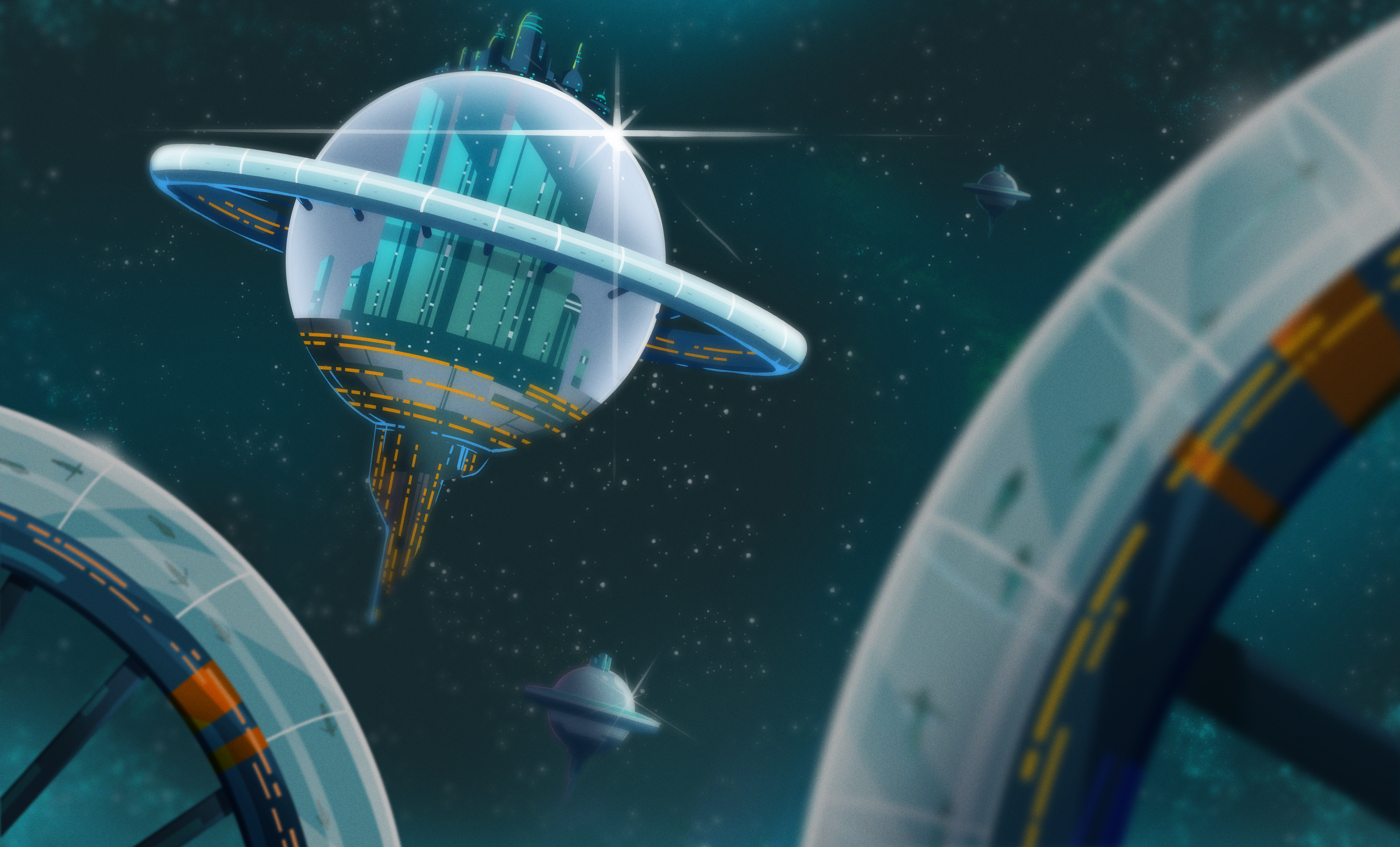
A historical review traces the evolution of space stations from 1960s rotating concepts to modular designs, highlighting why artificial gravity was abandoned in favor of practical, non-rotating habitats like Skylab and Mir.
Key points
- Convair built a full-scale ground mockup called MARS in 1960-1961 to test life support and crew fit for proposed orbital stations, bridging the gap between drawings and hardware.
- NASA’s Project Olympus, proposed in 1962, featured a 18-person rotating station with three arms, but was canceled after Kennedy prioritized the Moon landing.
- The US Air Force’s Manned Orbiting Laboratory (MOL) was approved in 1965 for reconnaissance but canceled in 1969 without a crewed flight.
- Soviet Soyuz 4 and 5 docked in 1969, requiring crew members to perform an external spacewalk to transfer between modules, a precursor to internal docking.
- Salyut 1 launched in 1971, marking the first actual space station, though its first crew failed to dock and the second crew died during reentry.
- Skylab, launched in 1973, used a converted Saturn V stage to provide large living space, enabling 84-day missions and proving long-duration microgravity effects.
Background
Previous coverage noted that rotating station concepts date back to the 1920s, with Noordung’s 1929 design and von Braun’s 1950s popularization. Skylab’s 1979 reentry and debris recovery in Australia were also documented, highlighting its role in demonstrating long-duration spaceflight. The current article expands on these by detailing the specific engineering steps, such as Convair’s MARS mockup and the cancellation of Olympus and MOL, that led to the adoption of non-rotating, modular designs like Mir.
Why it matters
Understanding the shift from rotating to modular stations explains why current space stations do not use artificial gravity. The high cost and engineering complexity of large rotating structures made them impractical compared to simpler, non-rotating designs that could be built and maintained incrementally. This history informs current discussions about future habitats and the feasibility of artificial gravity in space.
What to watch
No specific future developments are mentioned in the source. The article concludes by questioning when a rotating space station will finally be built, implying that the concept remains on the drawing board due to cost and practicality.
Want the full story? Read the original reporting
Read on Hackaday