
ESA Chief Warns Europe Faces Critical Rocket Shortage by 2030 Amid Surging Satellite Demand
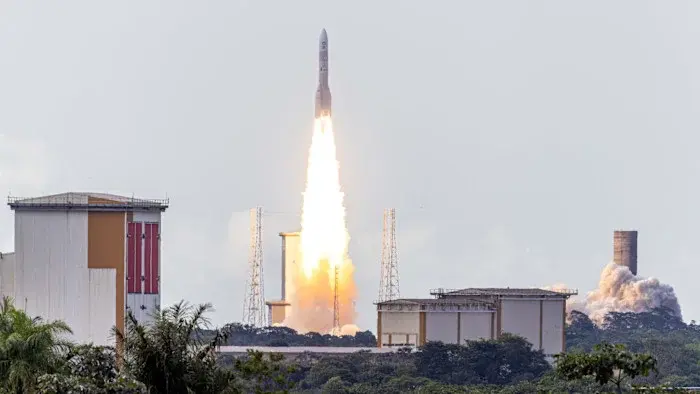
The head of the European Space Agency (ESA) has warned that Europe will face a shortage of homegrown rocket launchers by 2030, as demand for satellite launches outpaces the region's current capabilities. While Europe regained sovereign access to space in 2024 with the Ariane 6 and Vega-C rockets, it launched only eight rockets last year compared to 170 by SpaceX. ESA is now seeking cost estimates to expand production capacity, aiming to increase Ariane 6 launches from nine to 15 annually to meet the peak demand expected between 2029 and 2031.
Key points
- ESA Director-General Josef Aschbacher stated that Europe expects a shortage of launchers around 2030, with a peak in launch requirements occurring between 2029 and 2031.
- The disparity in launch capacity is stark: SpaceX launched 170 rockets last year, while Europe managed only eight, highlighting a significant gap in operational frequency and cost efficiency.
- Europe is planning extensive satellite deployments for the Iris² constellation, Galileo navigation system, and Copernicus Earth observation network, alongside national constellations proposed by Germany and others.
- ESA is currently in discussions with manufacturers to expand production, specifically aiming to increase Ariane 6 annual launches from nine to 15, and is evaluating similar expansions for the Vega-C rocket.
- The agency plans to raise these capacity issues with member states to secure funding and structural reforms, with decision-making focused on a 2035 time horizon to bridge the gap in independent launch capabilities.
Background
Europe’s return to independent space access was marked by the successful inaugural flight of the Ariane 6 in July 2024, following a year-long gap where the region relied on SpaceX. This recent milestone is part of a broader effort to restore sovereign launch capabilities after production delays with the Ariane 6 and the return of the Italian Vega-C rocket in December 2024. These developments follow a period of strategic reassessment regarding Europe's reliance on foreign launch providers for critical satellite missions.
Why it matters
The projected shortage threatens Europe's strategic autonomy and its ability to deploy critical infrastructure, including defense satellites for Greece, Spain, and Poland, as well as civilian networks. Without significant investment and structural reform in procurement and manufacturing, Europe risks remaining dependent on US and Chinese launch providers, undermining its competitive position in the global space market and its ability to meet growing defense and observation requirements.
What to watch
ESA will present cost estimates for expanding launch programs to member states in the coming months to secure additional funding. The agency aims to finalize decisions on increasing production capacity for Ariane 6 and Vega-C, with the goal of bridging the supply gap before the 2030 peak in demand. Aschbacher plans to advocate for these measures to ensure Europe can launch its satellites with homegrown launchers, potentially influencing procurement models and investment strategies through 2035.
Want the full story? Read the original reporting
Read on Financial Times