
Ancient Flickering Quasar Reveals Early Growth of Supermassive Black Holes
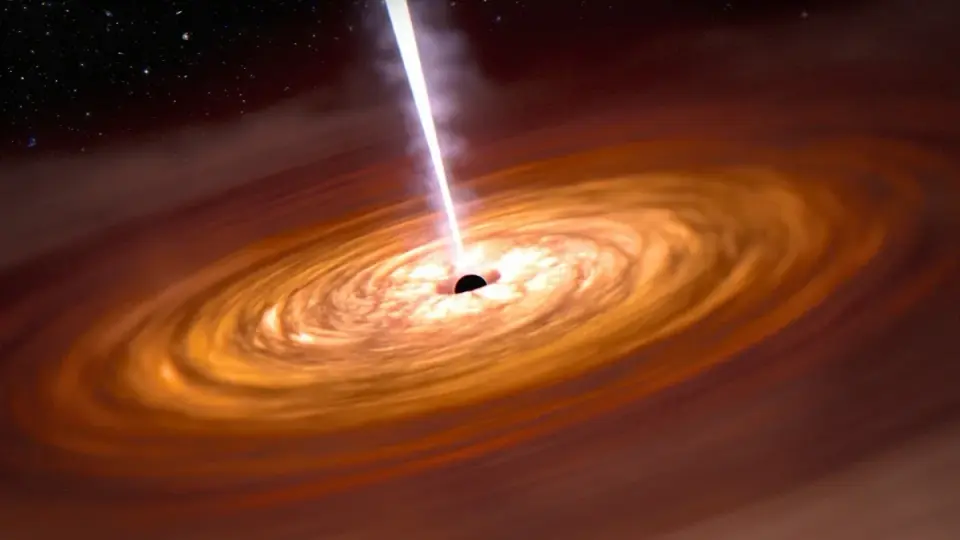
Astronomers report the discovery of J0439+1634, the oldest known flickering quasar, whose light has traveled more than 13 billion years to Earth, dating to the cosmic dawn when the Universe was about 850 million years old. The quasar appears to host a pancake-shaped, surprisingly mature accretion disk feeding a supermassive black hole over 600 million solar masses, making it extremely bright. Multi-wavelength data, including NEOWISE infrared observations, show irregular flickering driven by variable gas inflow, providing direct clues about early black hole growth and enabling new mass-measurement approaches. The study suggests growth processes seen in nearby quasars were already in place early on, and future facilities like the Vera C. Rubin Observatory and the Nancy Grace Roman Space Telescope will hunt for even earlier examples.
- Earliest Flickering Quasar Ever Seen Could Explain Monster Black Holes ScienceAlert
- MIT astronomers discover the earliest known flickering quasar MIT News
- Could the secret to black hole formation be locked away in this record-breaking ancient quasar? Space
- Discovery of quasar variability and early accretion disk signatures at cosmic dawn Nature
- The Earliest Flickering Quasar Ever Found Just Revealed a Surprising Black Hole Secret ZME Science
Want the full story? Read the original reporting
Read on ScienceAlert