
Ancient quasar flicker hints at rapid black hole growth in the early universe
TL;DR
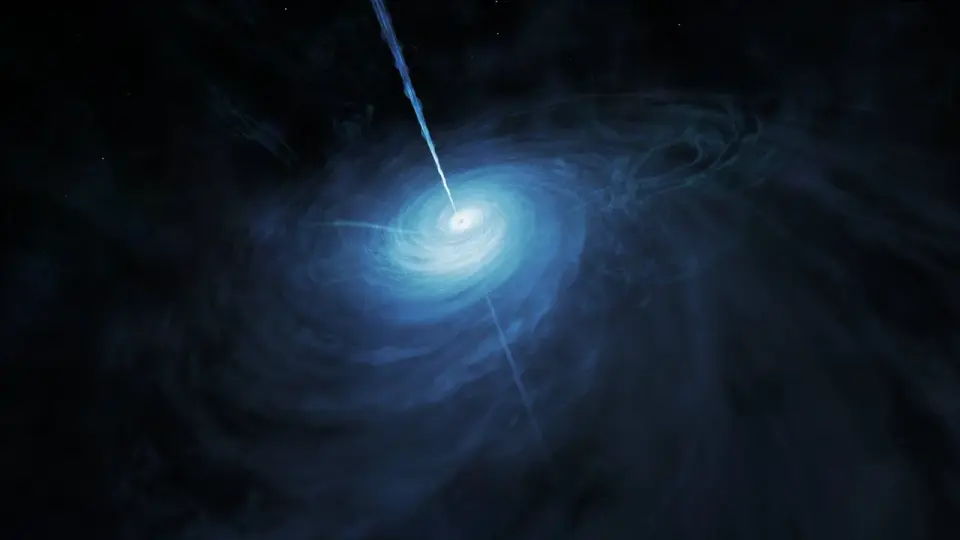
Astronomers spotted a record-breaking quasar dating to 12.9 billion years ago that flickered about 20% over NEOWISE’s 14-year data, implying a very flattened accretion disk and suggesting supermassive black holes could mature and grow rapidly very early in cosmic history. The quasar’s luminosity is about 12 trillion suns, and the finding—reported in Nature Astronomy—bolsters theories of early black-hole formation, with researchers aiming to find even older quasars using JWST.
- Could the secret to black hole formation be locked away in this record-breaking ancient quasar? Space
- MIT astronomers discover the earliest known flickering quasar MIT News
- Discovery of quasar variability and early accretion disk signatures at cosmic dawn Nature
- Earliest Flickering Quasar Ever Seen Could Explain Monster Black Holes ScienceAlert
- The Earliest Flickering Quasar Ever Found Just Revealed a Surprising Black Hole Secret ZME Science
Want the full story? Read the original reporting
Read on Space