
Ancient quasar reveals rapid black hole growth in the universe’s infancy
TL;DR
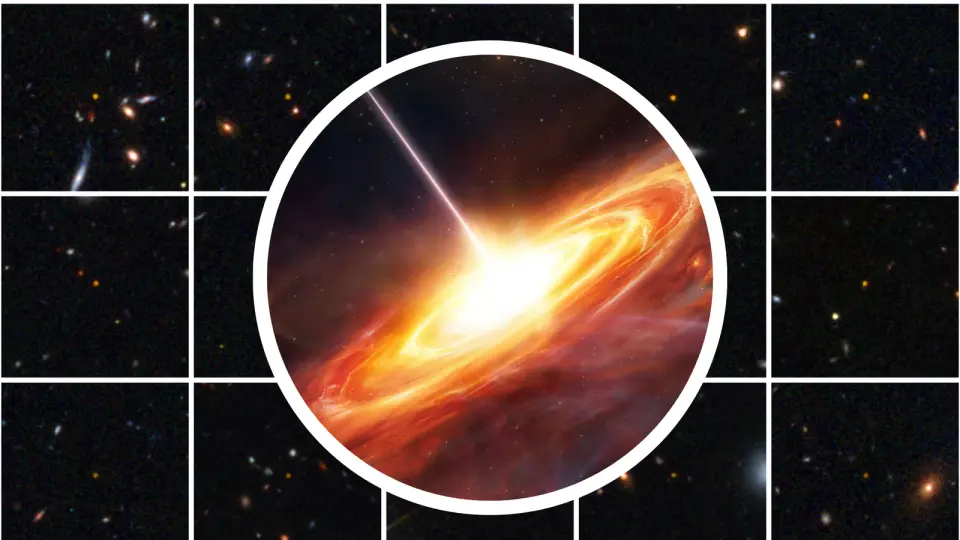
Astronomers using ESA’s Euclid telescope identified 31 quasars dating to about 670 million years after the Big Bang, including the oldest quasar yet observed that shines with the light of roughly a trillion suns, helping explain how supermassive black holes grew so quickly and shedding light on the epoch of reionization; the findings, published in Astronomy & Astrophysics, come from Euclid’s Wide Survey which will map a large portion of the sky.
- Scientists have discovered the oldest quasar ever seen, and it shines with the light of a trillion suns Space
- Ancient quasars add to a 'major unsolved problem' in astrophysics Reuters
- ESA’s Euclid Space Telescope Finds Universe’s Most Ancient Quasars NASA Science (.gov)
- Euclid discovers the most ancient quasars in the universe Phys.org
- Euclid telescope discovers the 2 most ancient monster black holes in the universe — each brighter than a trillion suns Live Science
Want the full story? Read the original reporting
Read on Space