
BepiColombo to enter Mercury orbit after eight-year journey
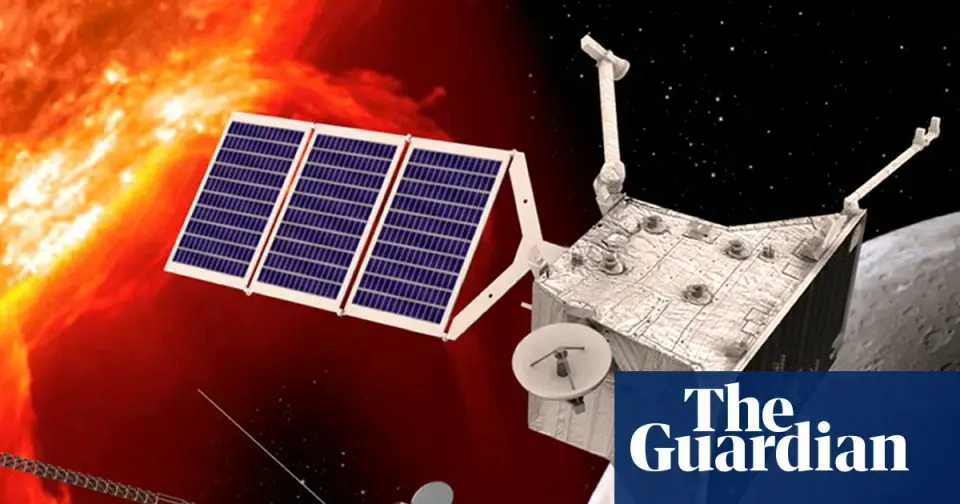
The joint European-Japanese BepiColombo mission is scheduled to enter orbit around Mercury on November 21, 2026, becoming the second spacecraft to do so. After an eight-year journey involving multiple planetary flybys, the mission will split into two probes to study the planet's surface, magnetic field, and interior. The arrival was delayed by one year due to power system issues, but the mission is now on track to begin science operations in April 2027.
Key points
- BepiColombo will enter Mercury orbit on November 21, 2026, using chemical thrusters after its ion engines were shut down in June 2026.
- The mission will split into two orbiters: ESA's Mercury Planetary Orbiter (MPO) and JAXA's Mercury Magnetospheric Orbiter (Mio), which will separate in December 2026.
- The mission was delayed from December 2025 to November 2026 due to a power shortfall and unexpected electrical currents between the solar array and power unit.
- Science operations are scheduled to begin in April 2027, with the probes orbiting Mercury for approximately three years before running out of fuel.
- The mission aims to understand Mercury's formation, magnetic field, and the presence of water ice in permanently shadowed craters.
Background
BepiColombo is the second mission to orbit Mercury, following NASA's MESSENGER mission, which orbited the planet from 2011 to 2015. The mission was launched on October 20, 2018, from Kourou, French Guiana, on an Ariane 5ECA rocket. It is named after Italian mathematician Giuseppe 'Bepi' Colombo, who calculated how Mariner 10 could use Mercury's gravity for multiple flybys in the 1970s. The mission faced a one-year delay due to power issues, but it remains a key effort to understand Mercury's unique characteristics, including its large metallic core and weak magnetic field.
How outlets are covering it
The Guardian emphasizes the scientific significance of the mission, highlighting the excitement of researchers who have worked on it for years and the potential to answer long-standing questions about Mercury's formation and magnetic field. The Financial Times frames the mission as an 'old-school' approach to space exploration, contrasting it with the current US-China rivalry over lunar landings and space weapons, while noting the mission's potential to deliver a modern understanding of Mercury's geology and chemistry. KeepTrack provides a detailed technical breakdown of the mission's timeline, including the power issues that caused the delay, the separation of the transfer module, and the planned milestones for the two orbiters. All three sources agree on the importance of the mission and the challenges of reaching Mercury, but they differ in their emphasis: The Guardian focuses on the scientific goals, the Financial Times on the broader context of space exploration, and KeepTrack on the technical details and timeline.
Why it matters
BepiColombo is a landmark mission for planetary science, as it will provide the first detailed study of Mercury's surface, interior, and magnetic field. The mission's success will help answer long-standing questions about how Mercury formed so close to the sun, why it has a magnetic field, and what makes up the frozen ice in its permanently shadowed craters. The mission also demonstrates the importance of international cooperation in space exploration, as it is a joint effort between ESA and JAXA. Additionally, the mission's challenges, including the power issues that caused the delay, highlight the complexities of deep-space missions and the need for robust engineering and planning.
What to watch
The next major milestone is the separation of the two orbiters in December 2026, with Mio being released into its own polar orbit on December 9-10, 2026, and the sunshield and interface structure being released on December 16, 2026. MPO will then maneuver to its final science orbit by March 10, 2027, and the main science phase is scheduled to begin on April 6, 2027. The probes are expected to orbit Mercury for approximately three years before running out of fuel and slamming into the surface.
- Spacecraft reaches Mercury on second-ever mission to enter its orbit The Guardian
- Mercury-bound X-ray telescope delivers first images after eight years in space Phys.org
- An old-school mission to Mercury Financial Times
- Japan spacecraft supported by NEC, others set to reach Mercury Nikkei Asia
- How BepiColombo Will Enter Mercury Orbit KeepTrack
Want the full story? Read the original reporting
Read on The Guardian