
Typhoon Narra Scrubs China’s Chang’e 7 Moon Launch, Pushing Water Ice Search to 2027
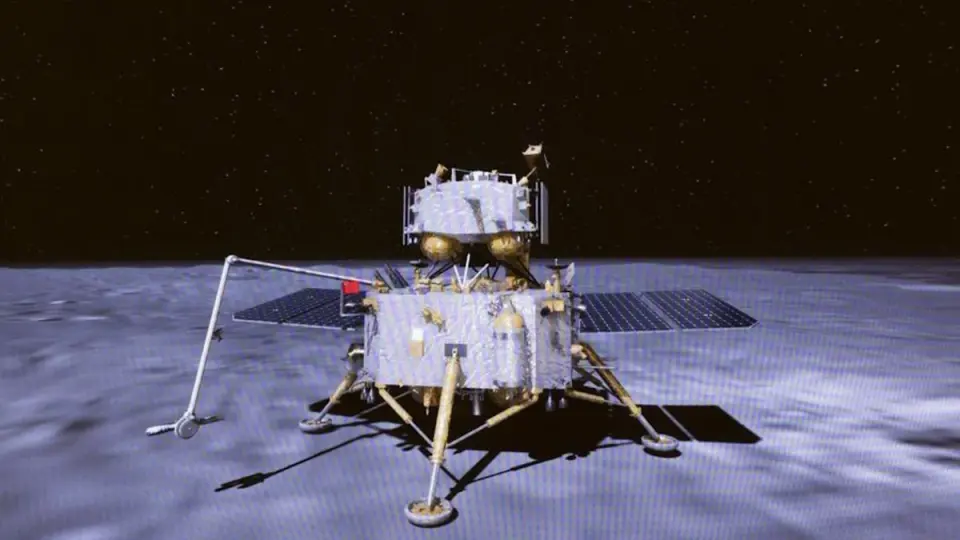
China’s Chang’e 7 mission, designed to search for water ice at the Moon’s south pole, was scrubbed hours before its August 24 launch due to poor weather linked to Typhoon Narra. The China Manned Space Agency (CMSA) stated the mission cannot proceed within the current year’s window, with the next opportunity likely not arriving until 2027. This delay impacts China’s race against NASA and private firms to establish a permanent lunar presence.
Key points
- The launch of the Chang’e 7 probe on a Long March 5 rocket from Wenchang, Hainan, was cancelled on the evening of August 23, 2026, due to adverse weather conditions.
- CMSA confirmed the mission will not launch within the planned window this year, citing the need for 'absolute safety' and 'prudence,' with a new attempt potentially delayed until 2027.
- Chang’e 7 is a complex robotic mission comprising an orbiter, lander, rover, and a unique thruster-powered 'hopping' probe designed to sample permanently shadowed craters near Shackleton Crater.
- The mission aims to quantify the amount, distribution, and accessibility of water ice, which is critical for sustaining future lunar settlements and producing rocket fuel.
- The delay intensifies the competitive timeline with NASA’s VIPER rover, which is scheduled to reach the same region in late 2027 via a Blue Origin lander.
Background
China’s Chang’e program has a strong track record, including the 2024 Chang’e 6 sample return. This mission is part of a broader strategy to establish a long-term, continuously operating lunar research station. The delay follows previous successful missions but introduces uncertainty into China’s plans to precede U.S. efforts in securing lunar resources.
How outlets are covering it
Scientific American attributes the delay primarily to weather, specifically Typhoon Narra, and notes the CMSA’s emphasis on safety. ABC News highlights the competitive aspect, quoting NASA Administrator Jared Isaacman on the 'space race' and the importance of securing water ice for permanent settlements. Space Daily emphasizes the technical constraints, noting that missing the launch window may mean missing the orbital alignment required for the south pole landing, potentially pushing the mission to 2027. While all sources agree on the delay, they differ in emphasis: Scientific American focuses on the immediate cause, ABC News on the geopolitical competition, and Space Daily on the technical and scheduling implications.
Why it matters
The delay of Chang’e 7 is significant because it affects the timeline for discovering and accessing water ice at the Moon’s south pole, a resource essential for long-term human presence. It also shifts the competitive dynamics between China and the United States, potentially allowing NASA’s VIPER mission to reach the target region first. This could influence future international cooperation or competition in lunar exploration and resource utilization.
What to watch
China is expected to announce a new launch date, likely in 2027, once the weather and orbital conditions align. NASA’s VIPER rover is scheduled to land in the same region in late 2027, making the timing of Chang’e 7’s relaunch critical. The outcome of these missions will determine the feasibility of establishing permanent lunar bases and the distribution of resources for future space exploration.
- Why China Has Unexpectedly Delayed Its Participation in the New Moon Race Yahoo
- China delays ambitious Chang’e 7 moon mission until 2027 Scientific American
- China's bid for lunar water launches Sunday as the new space race heats up ABC News - Breaking News, Latest News and Videos
- China's water-hunting Moon mission was hours from launch on Sunday when the countdown stopped — the next window may not come until 2027 Space Daily
- China Calls Off Chang’e-7 Mission in Lunar Setback Bloomberg
Want the full story? Read the original reporting
Read on Yahoo