
ESA Cluster Satellites Reenter Atmosphere in Coordinated Scientific Observation Campaign
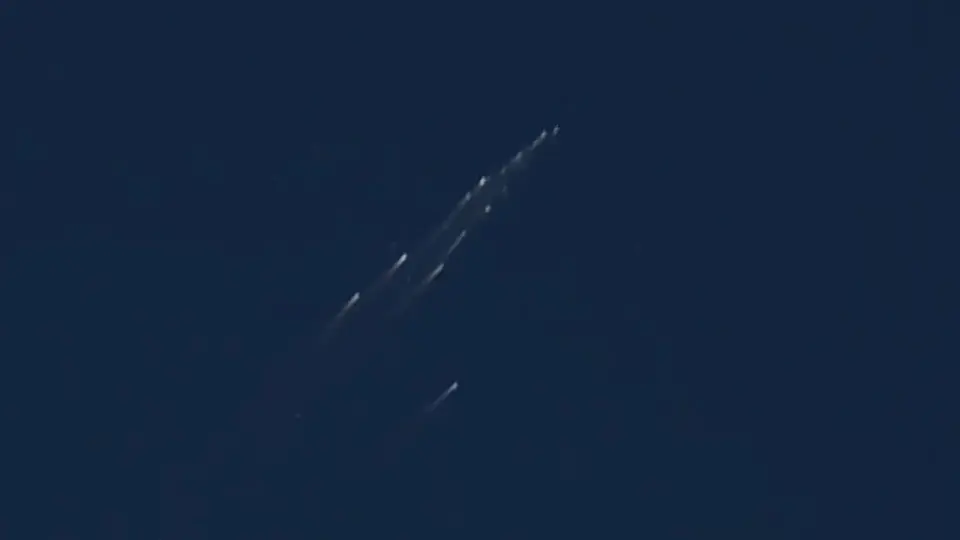
The European Space Agency (ESA) successfully deorbited its Tango and Samba satellites, the final two spacecraft of the 25-year-old Cluster mission, on August 31 and September 1, 2026. An international research team, including scientists from the University of Stuttgart and Astros Solutions, observed the reentries from a private jet near Tonga. The primary goal was to analyze the chemical compounds released during atmospheric disintegration, specifically tracking aluminum oxide formation, to better understand the environmental impact of future large-scale satellite constellations.
Key points
- Tango and Samba, the last active Cluster satellites, reentered Earth's atmosphere over the Pacific Ocean on August 31 and September 1, 2026.
- Researchers tracked the reentries from a private jet positioned near Tonga, observing the process from 90 kilometers down to 65 kilometers altitude.
- The mission aimed to identify chemical byproducts of satellite burn-up, with a specific focus on aluminum and its conversion to aluminum oxide.
- ESA ground controllers maintained contact with the satellites until moments before impact to provide precise reentry path data for the airborne observers.
- The data collected will help refine atmospheric models regarding the pollution caused by the anticipated launch of 100,000 Starlink V3 satellites and other mega-constellations.
Background
This event follows recent developments in low-Earth orbit monitoring, where researchers have utilized Starlink satellite data to map thermospheric density variations. As private entities expand Earth observation capabilities, concerns regarding atmospheric pollution from reentries have grown. The Cluster mission, which studied solar wind interactions, is now fully retired after its four spacecraft (Tango, Samba, Rumba, and Salsa) completed their orbits.
How outlets are covering it
Space.com and Starlust.org emphasize the novelty of the airborne observation method and the specific chemical analysis of aluminum oxide, noting that this phenomenon has not been previously observed. SpaceWatch.GLOBAL provides a broader context on the completion of the Cluster mission after decades of service. All sources agree on the dates and locations of the reentries but differ in emphasis: Space.com highlights the urgency due to SpaceX's plans for 100,000 satellites, while Starlust.org focuses on the technical details of the fragmentation and ablation process observed by the team.
Why it matters
Understanding the chemical impact of satellite reentries is critical as the number of spacecraft in orbit is set to increase dramatically. This research provides baseline data for atmospheric models, helping to assess potential climate and environmental risks associated with the growing space industry and the eventual disposal of thousands of large satellites.
What to watch
Researchers will spend the coming months analyzing the data collected from the Tango and Samba reentries to determine the exact quantities and formation processes of aluminum oxide and other compounds. This data will be used to improve atmospheric models and inform regulations regarding future satellite deorbiting procedures.
- 2 satellites just burned up in Earth's atmosphere — and scientists were watching from a private jet. Here's why Space
- ESA’s Cluster Spacecraft Complete Final Reentries After Decades in Orbit SpaceWatch.GLOBAL
- Cluster spacecraft return to Earth, after a successful 26 year mission UCL | University College London
- ESA’s final Cluster spacecraft Tango set for targeted reentry over the South Pacific on September 1 The Watchers - Watching the world evolve and transform
- Scientists chased two dying ESA satellites in a jet to learn how space junk pollutes our sky (watch video) starlust.org
Want the full story? Read the original reporting
Read on Space