
Katalyst's LINK Rescue Craft Spins Out of Control, Threatening Swift Telescope Mission
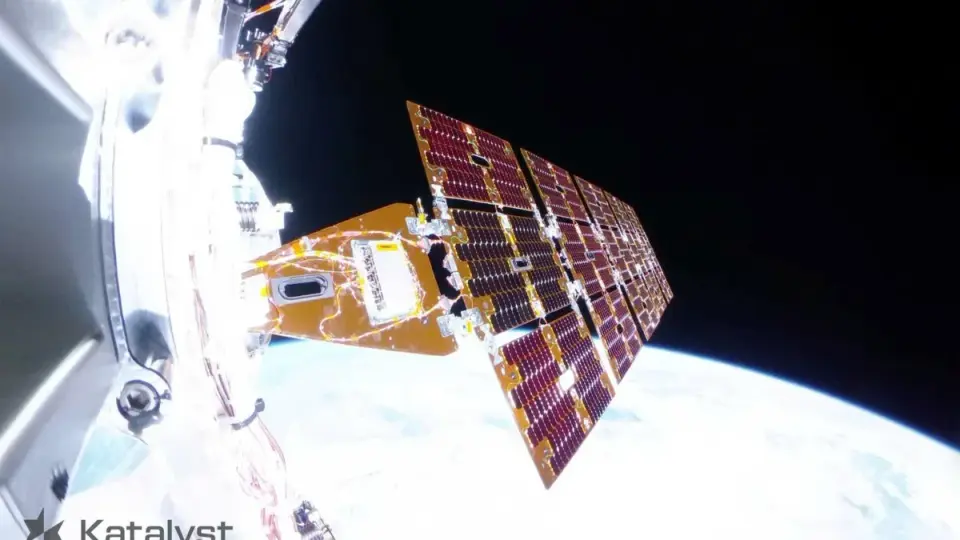
The LINK servicing spacecraft, launched by Katalyst Space Technologies to rescue NASA's decaying Swift Observatory, has suffered critical attitude control failures. Two of its three reaction wheels are non-operable, causing the craft to spin and disrupting communications. Engineers are attempting to stabilize LINK using its electric propulsion thrusters, a system not originally designed for this purpose. If stabilized, LINK will attempt to capture Swift and boost its orbit to prevent reentry. The mission, costing $30 million, remains active but faces significant technical hurdles.
Key points
- LINK experienced attitude control issues over the weekend, resulting in an uncontrolled spin and sporadic communications with ground control.
- Preliminary investigations reveal that two of LINK's three reaction wheels are currently non-operable, and its cold gas thruster system has lost some functionality.
- Katalyst is using LINK's xenon-fueled electric propulsion thrusters to stop the spin, a subsystem primarily intended for raising Swift's orbit after capture.
- NASA and Katalyst plan to update LINK's guidance, navigation, and control systems to accommodate its new configuration before evaluating the safety of a rendezvous with Swift.
- The Neil Gehrels Swift Observatory, launched in 2004, is decaying due to atmospheric drag and has a 50% chance of uncontrolled reentry by mid-2026 if not boosted.
- Swift's scientific operations were suspended earlier this year to conserve energy and extend its lifespan until the rescue mission could be completed.
Background
The Swift Observatory, a gamma-ray burst detector, has been losing altitude due to atmospheric drag since its 2004 launch. NASA suspended its scientific activities to preserve its orbit. The LINK mission, launched on July 3, 2026, from Kwajalein Atoll aboard a Pegasus XL rocket, was designed to capture Swift using three robotic arms and use ion thrusters to raise its orbit by approximately 150 miles. This mission represents a significant test of commercial satellite servicing capabilities, with NASA paying $30 million for the service.
How outlets are covering it
NASA and Katalyst Space Technologies emphasize that LINK remains power-positive and in communication, with all other major subsystems functioning as expected. They are optimistic about stabilizing the craft and proceeding with the rescue. Ars Technica highlights the high risk of the mission, noting that the electric thrusters are being used for attitude control, a function they were not originally designed for, and points out the accelerated timeline and the potential for Swift to burn up if the rescue fails. AP News focuses on the urgency, noting that Swift will crash back to Earth this fall without help, and quotes Katalyst stating that the mission remains active with a viable path to rendezvous. Gizmodo notes the earlier concerns regarding one of the reaction wheels, which were initially addressed with software patches but have now persisted, leading to the current crisis.
Why it matters
The success of the LINK mission is critical for preserving the Neil Gehrels Swift Observatory, one of NASA's few active gamma-ray burst detectors. A failure would result in the loss of a valuable scientific asset and could impact the future of commercial satellite servicing technologies. The mission also serves as a technology demonstration for the commercial satellite servicing industry, with implications for future orbital maintenance and debris removal missions.
What to watch
Katalyst and NASA will continue efforts to stabilize LINK's attitude using its electric propulsion thrusters over the next few days. Once stable, they will update the spacecraft's guidance, navigation, and control systems. Following this, they will evaluate revised plans for approaching and capturing Swift, depending on LINK's health and the safety of the approach. If the rescue fails, Swift is expected to reenter Earth's atmosphere and burn up in the coming months.
- Spacecraft Sent to Rescue NASA Telescope Is Having Its Own Issues Gizmodo
- Reaction wheel failures leave Swift rescue mission spinning in orbit Ars Technica
- Commissioning Update for Spacecraft to Boost NASA’s Swift NASA Science (.gov)
- Private mission to rescue NASA’s aging telescope runs into its own trouble AP News
- Rescue mission to save NASA’s Swift space telescope is imperiled in orbit Scientific American
Want the full story? Read the original reporting
Read on Gizmodo