Tag

Satellite Servicing

All articles tagged with #satellite servicing

Rescue attempt for NASA's Swift observatory ends in failure
science-space16 hours ago

Rescue attempt for NASA's Swift observatory ends in failure

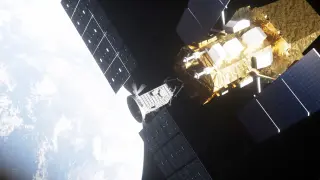
NASA's Neil Gehrels Swift Observatory, in orbit for nearly 22 years, is steadily losing altitude and is expected to reenter Earth's atmosphere later this year. A companion LINK satellite launched to boost Swift could not complete the rescue due to ongoing attitude-control issues, delaying rendezvous and preventing a higher orbit, with NASA and its partner reframing the mission as a demonstration for future in-space servicing while other observatories fill the observational gap.

NASA Aborts Rescue for Aging Swift Telescope as Reentry Looms
space3 days ago

NASA Aborts Rescue for Aging Swift Telescope as Reentry Looms

NASA canceled its planned rescue of the aging Swift gamma-ray observatory after the LINK spacecraft suffered attitude-control failures; the mission would have used robotic arms to capture Swift and raise it to a safer orbit, but ongoing control-system problems forced cancellation. With Swift losing altitude due to atmospheric drag, reentry is expected before the end of 2026, while LINK will continue rendezvous demonstrations to inform future satellite-servicing efforts.

NASA Halts Swift Rescue Mission as Observatory Nears Re-entry
space5 days ago

NASA Halts Swift Rescue Mission as Observatory Nears Re-entry

NASA canceled the plan to boost the Neil Gehrels Swift Observatory to a higher orbit after LINK’s attitude-control issues; the telescope is expected to re-enter Earth’s atmosphere later this year. LINK will still rendezvous with Swift to gather data, but the mission will not rescue or extend Swift’s life. NASA will pursue alternative options to react rapidly to cosmic events and learn from the rendezvous attempt for future satellite-servicing missions.

Rescue mission for Swift gamma-ray telescope canceled as reentry looms
science6 days ago

Rescue mission for Swift gamma-ray telescope canceled as reentry looms

NASA and Katalyst have canceled the Link rescue mission intended to reach and boost the Swift gamma-ray observatory into a higher orbit. Ongoing attitude-control issues—two reaction wheels failed and thrusters struggled—prevented Link from completing the rendezvous. Without the rescue, Swift is expected to reenter Earth's atmosphere later this year, though the teams will continue to extract technical value and demonstrate aspects of proximity operations that could inform future servicing missions.

Swift reboost plan scrapped after Link attitude-control woes
space6 days ago

Swift reboost plan scrapped after Link attitude-control woes

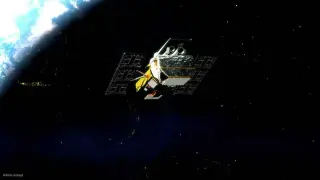
Katalyst Space and NASA have canceled plans to use the Link spacecraft to grapple and raise the Swift gamma-ray observatory's orbit due to ongoing attitude-control problems (including a spin from failing reaction wheels). Link will instead conduct rendezvous and proximity operations near Swift, but the reboost is off, effectively ending Swift's active science phase this year; NASA and Katalyst will use the experience to inform future satellite servicing efforts.

NASA rescue craft spirals out of control, risking Swift Observatory
technology24 days ago

NASA rescue craft spirals out of control, risking Swift Observatory

NASA's LINK servicing spacecraft, sent to boost the Swift Observatory, is spinning out of control after two of its three reaction wheels failed and its cold-gas thrusters misbehaved, disrupting communications. Engineers are working to stabilize and rendezvous with Swift, but if the mission fails, the observatory's orbit could decay, wiping out months of scientific data.

MRV Sets Stage for Autonomous On-Orbit Satellite Servicing
space1 month ago

MRV Sets Stage for Autonomous On-Orbit Satellite Servicing

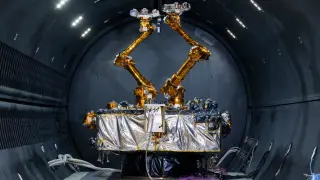
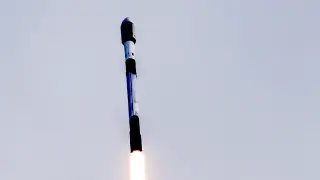
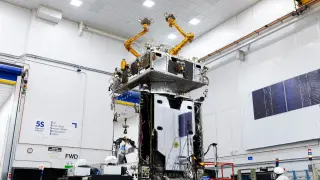
Ars Technica reports that Northrop Grumman’s Mission Robotic Vehicle (MRV), carrying the DARPA-funded RSGS payload and three Mission Extension Pods, launched on SpaceX’s Falcon 9 to geosynchronous orbit to perform on‑orbit servicing. Equipped with two seven‑degree‑of‑freedom robotic arms and autonomous control, MRV can inspect, upgrade, relocate, and potentially service satellites not designed for humans, with prospective customers including SES, Optus, and the Space Force. The mission builds on prior MEV demonstrations and signals a shift toward a space‑based depot and extended‑life servicing capability, potentially enabling a new era of orbital logistics over a planned 10–13 year service life.

SpaceX Debuts Robotic Satellite Servicing to Extend GEO Lifespans
technology1 month ago

SpaceX Debuts Robotic Satellite Servicing to Extend GEO Lifespans

SpaceX launched a Falcon 9 carrying Northrop Grumman’s Mission Robotic Vehicle and three Mission Extension Pods to geosynchronous transfer orbit to test a scalable satellite servicing approach. After docking, MRV will use robotic arms to install pods on customer satellites (Intelsat and Optus) to provide propulsion and attitude control, extending their operational life by about six years per pod. This builds on Northrop’s MEV missions and DARPA’s RSGS origins, with potential future access for the U.S. Space Force as a commercial resource.

SpaceX to launch Northrop Grumman’s MRV-MEP satellite from Cape Canaveral
space1 month ago

SpaceX to launch Northrop Grumman’s MRV-MEP satellite from Cape Canaveral

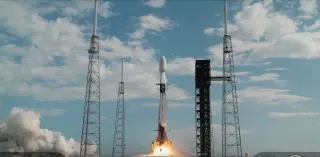
SpaceX will launch Northrop Grumman’s MRV-MEP spacecraft from Cape Canaveral aboard a Falcon 9, with about 90% favorable weather and a 5:15 p.m. ET liftoff; MRV-MEP is described as a versatile 'Swiss Army Knife' for satellites, capable of inspection, repairs, life extension, debris removal, and deploying pods, plus sensors or countermeasures to boost satellite resilience.

SpaceX readies multi-satellite servicing mission to geostationary orbit
space1 month ago

SpaceX readies multi-satellite servicing mission to geostationary orbit

SpaceX will launch the MRV-MEV mission later today, sending a Falcon 9 with a Mission Robotic Vehicle and three Mission Extension Pods to geostationary orbit to extend the lives of client satellites. The MRV’s dual robotic arms will attach the MEPs to three GEO satellites (Optus and Intelsat are customers), enabling up to eight years of life extension and providing in‑orbit servicing, relocation, and refueling capabilities. liftoff from Cape Canaveral is within a four‑hour window starting at 5:15 p.m. EDT, with live coverage on SpaceX. The flight also marks the final use of the particular Falcon 9 first stage for this mission.

Private rescue mission set to save NASA's Swift telescope from orbital decay
space-exploration1 month ago

Private rescue mission set to save NASA's Swift telescope from orbital decay

NASA is coordinating a private rescue mission to save the aging Swift Observatory from orbital decay by launching the LINK spacecraft on a Pegasus XL rocket to grapple Swift and raise its orbit back toward its original ~600 km altitude, extending its science life by years. The mission, which costs about $30 million, marks a pioneering private satellite‑servicing effort for a U.S. government asset.

NASA taps three-armed robot to rescue Swift from decay and reentry
science1 month ago

NASA taps three-armed robot to rescue Swift from decay and reentry

NASA is launching a $30 million rescue mission using Katalyst Space Technologies’ autonomous three-armed Link to rendezvous with the Swift Observatory and move it from about 360 km to 600 km, delaying its reentry after solar activity accelerated orbital decay; the operation could start this week from the Marshall Islands, with Swift potentially back online by September if successful, and the effort could pave the way for future in-space satellite servicing.