
Little Red Dots Hint at Dense, Metal-Poor Hosts in the Early Universe
TL;DR
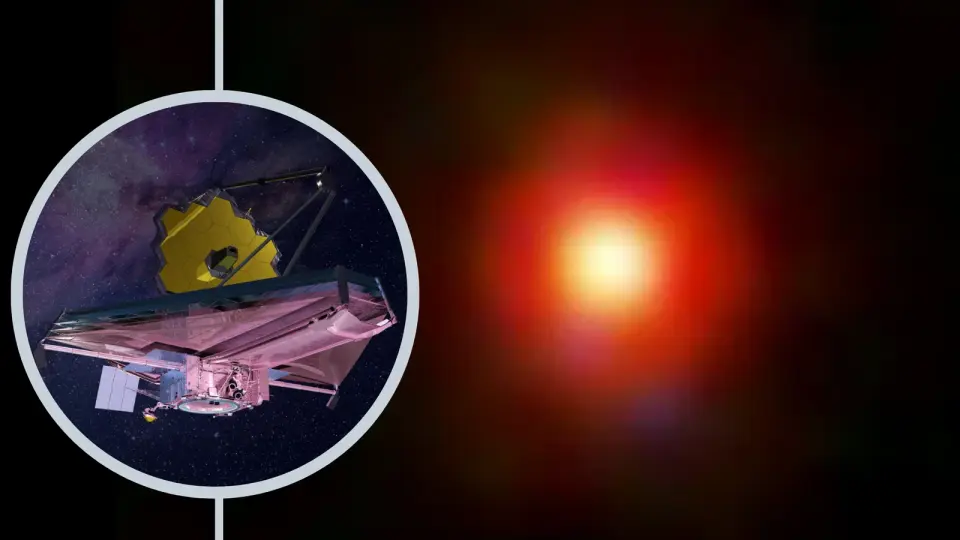
A new JWST analysis of 217 Little Red Dots (LRDs) in the early universe finds faint light from surrounding host galaxies, which are unusually compact (~1,400 light-years across) and metal-poor. The results suggest LRDs may be connected to bursts of star formation in their hosts (not just a central engine), offering a host-galaxy perspective on their origin and evolution. The study, led by Jorge Zavala (UMass Amherst), calls for spectroscopy and searches for local analogs, and was published in Nature Astronomy.
Topics:sciencespace#compact-galaxies#early-universe#james-webb-space-telescope#little-red-dots#metallicity#space
- Galaxies housing the James Webb Space Telescope's mysterious 'Little Red Dots' might've revealed their secrets space.com
- Japanese supercomputer simulations may explain Webb's Little Red Dots Phys.org
- Massive Black Holes May Have Started as Little Red Dots The New York Times
- Overmassive black holes and little red dots naturally form in simulations nature.com
- Black Holes or Black Hole Stars? Astronomers Spar Over Webb Telescope’s ‘Little Red Dots.’ quantamagazine.org
Want the full story? Read the original reporting
Read on space.com