
Magnetar-powered gamma glow lights up a distant supernova
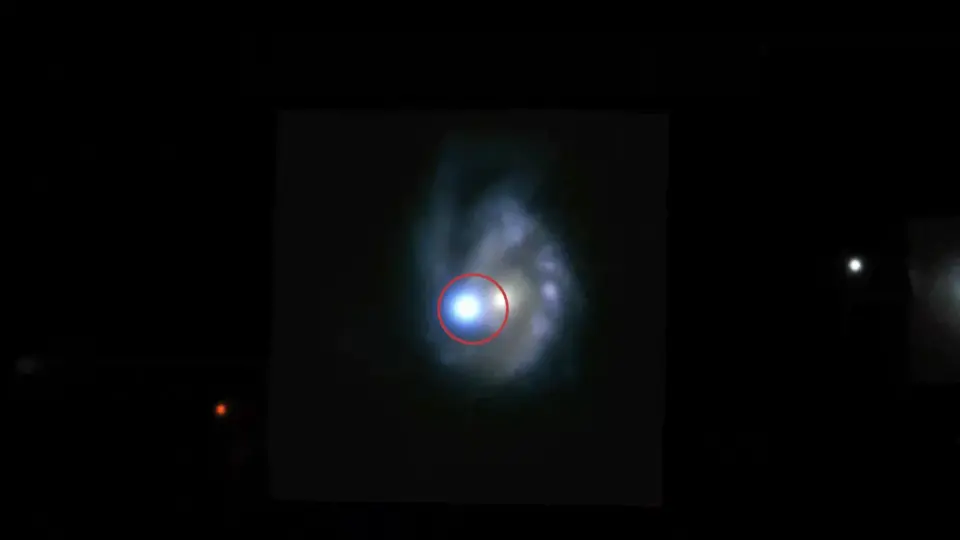
NASA’s Fermi detected gamma rays from the luminous core-collapse supernova SN 2017egm (NGC 3191, about 440 million light-years away), supporting the idea that a newborn magnetar—an ultra‑magnetized neutron star—powers the explosion. A magnetar wind nebula and related particle interactions could boost gamma-ray production and reprocess energy into visible light, explaining the unusually bright display; gamma rays begin to leak out as debris expands, with the early light curve matching models though late-time fading remains puzzling. The study also notes the upcoming Cherenkov Telescope Array could detect similar events up to ~500 million light-years, advancing understanding of magnetar engines. The work appeared in Astronomy & Astrophysics on May 20, 2026.
- Scientists just found a supercharged supernova — powered up by a magnetic star corpse Space
- NASA’s Fermi Glimpses Power Source of Supercharged Supernovae NASA Science (.gov)
- The Magnetar at the Heart of a Superluminous Supernova Universe Today
- NASA's Fermi Telescope Captures First Clear Signal from the Engine of a Record-Bright Star Explosion TechEBlog -
- After 16 years of silence, NASA's Fermi telescope finally heard a superluminous supernova speak in gamma rays ecoportal.net
Want the full story? Read the original reporting
Read on Space