
NASA Selects Lunar Outpost and Astrolab for Artemis Moon Rovers
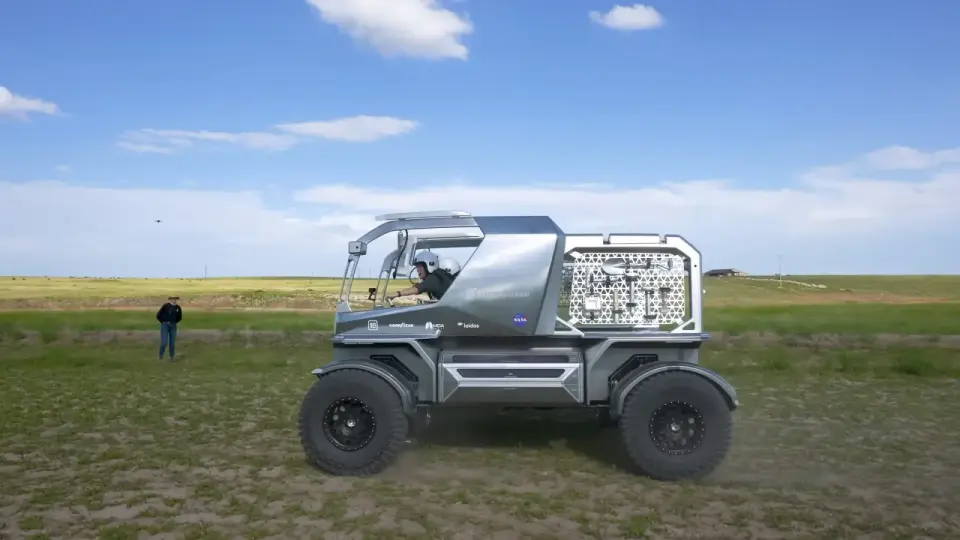
NASA has selected two competing designs for its Lunar Terrain Vehicle (LTR) to support future crewed missions to the Moon. The chosen vehicles, developed by Lunar Outpost and Astrolab, feature specialized engineering to handle extreme lunar conditions, including abrasive dust and temperature swings. These rovers are designed to operate both crewed and autonomously, serving as essential infrastructure for the Artemis program's goal of establishing a permanent lunar presence.
Key points
- NASA announced earlier in 2026 that it would proceed with LTR designs from Lunar Outpost and Astrolab.
- The Lunar Outpost LTR candidate was recently reviewed by Cleo Abram and Michelle Khare.
- The vehicle is designed to function as a semi-autonomous rover when uncrewed and as a crewed transport for astronauts.
- The LTR features an electric current system to pull abrasive lunar dust under the vehicle, preventing it from entering the cab.
- To withstand temperature swings ranging from -200°C to 200°C, the vehicle uses wire mesh tires to avoid flat tires.
- The cab includes oversized seats to assist astronauts in moving due to the limited agility provided by space suits.
Background
This development is part of NASA's broader Artemis program, which aims to return humans to the Moon and establish a sustainable presence. The selection of these LTR designs follows previous milestones in the program, such as the development of other lunar infrastructure. The focus on the lunar south pole aligns with scientific goals to locate water ice, which is crucial for long-term habitation and fuel production.
Why it matters
The selection of these LTR designs is a critical step in preparing for crewed lunar missions. The ability to traverse the lunar surface safely and efficiently is essential for scientific exploration and the establishment of a permanent base. The specialized engineering of the LTR, such as the dust mitigation system and wire mesh tires, addresses the unique challenges of the lunar environment, which could inform future space vehicle design for other celestial bodies.
What to watch
NASA will continue to develop and test the selected LTR designs in preparation for future crewed missions to the Moon. The vehicles are expected to be used to explore the lunar south pole and support the establishment of a permanent lunar base. Further testing and refinement of the LTR will be necessary to ensure its reliability and safety in the harsh lunar environment.
Want the full story? Read the original reporting
Read on Hackaday