Tag

Artemis Program

All articles tagged with #artemis program

NASA speeds Artemis 3 toward a sustained Moon presence with overlapping missions
space17 hours ago

NASA speeds Artemis 3 toward a sustained Moon presence with overlapping missions

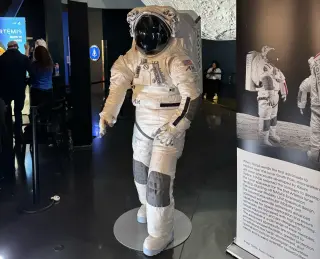
NASA is accelerating Artemis 3 while Artemis 2 returns home, adopting overlapping mission phases and small, incremental changes rather than major redesigns to shorten timelines. By leveraging real‑time data, multiple Human Landing System providers, and an increased launch cadence, the agency aims for a mid‑2027 Artemis 3 lunar landing to dock Orion with Starship and/or Blue Moon HLS and test the AxEMU spacesuit, all as part of a broader move toward a sustainable, reusable lunar presence.

NASA charts $20B lunar base plan and nuclear Mars mission
science-and-technology17 days ago

NASA charts $20B lunar base plan and nuclear Mars mission

NASA unveils a seven-year, $20 billion overhaul to build a surface lunar base with robotic prep, repurpose the Lunar Gateway for surface infrastructure (pausing its orbital role), and advance a nuclear-powered Mars mission via Space Reactor 1 Freedom by 2028, including a Mars helicopter test; the move reshapes Artemis and heightens competition with China.

NASA shelves lunar Gateway to accelerate a Moon base
space17 days ago

NASA shelves lunar Gateway to accelerate a Moon base

NASA has paused the planned lunar Gateway space station to focus on surface infrastructure for a sustained Moon presence under Artemis, repurposing Gateway hardware for landers, rovers and habitats. The move aims to accelerate crewed lunar missions with a higher launch cadence and a three‑phase plan to a long‑term Moon base (~$20B), with Artemis II slated for early April, Artemis III targeting 2027 and Artemis IV around 2028, and no Gateway rendezvous for the near-term, though NASA says Gateway could be revisited in the future.

From SEAL to Space: Jonny Kim to Keynote Harvard Alumni Day
education17 days ago

From SEAL to Space: Jonny Kim to Keynote Harvard Alumni Day

NASA astronaut and Harvard-trained physician Jonny Kim will headline Harvard Alumni Day on June 5. Kim spent 245 days aboard the International Space Station during Expedition 72/73, contributing to science and NASA’s Artemis program, after a path from Navy SEAL and emergency medicine to space. His story of service and achievement will inspire alumni joining in person on campus or online.

Artemis II: NASA’s Crewed Moon Flyaround Signals a New Era of Lunar Exploration
space23 days ago

Artemis II: NASA’s Crewed Moon Flyaround Signals a New Era of Lunar Exploration

NASA’s Artemis II mission will send four astronauts on a roughly 10-day crewed flyaround of the Moon to test systems ahead of future lunar landings and a long-term lunar presence. The flight aims to advance science—studying lunar geology and the southern polar region’s water ice—while also evaluating human physiology in deep-space conditions and laying groundwork for a lunar base and eventual missions to Mars as part of the broader Artemis program.

A Century Later, Goddard’s Liquid-Fueled Rocket Powers NASA’s Moon Return
space-exploration25 days ago

A Century Later, Goddard’s Liquid-Fueled Rocket Powers NASA’s Moon Return

On the 100th anniversary of Robert Goddard’s first liquid-fueled rocket, NASA’s Artemis program uses modern liquid-propellant technology (via the Space Launch System and Orion) to return humans to the Moon, with Artemis 2 a crewed, 10-day lunar rehearsal launching soon and plans for a lunar landing later in the decade.

US lawmakers push for a permanent Moon base to secure long-term lunar presence
space-exploration29 days ago

US lawmakers push for a permanent Moon base to secure long-term lunar presence

A bipartisan push in Congress via the NASA Authorization Act of 2026 would establish a permanent Lunar Surface Moon Base to sustain a US presence on the Moon with long‑duration habitation and robotics/industrial capabilities for science, technology demonstrations, and future Mars missions. The bill seeks an enduring lunar presence, tasks NASA with evaluating crew rescue options, and is framed within the broader space‑race context with China, aligned with Artemis and recent US space policy.

Artemis Moon Landing Faces Safety Gaps, Warns NASA Watchdog
space-and-spaceflight1 month ago

Artemis Moon Landing Faces Safety Gaps, Warns NASA Watchdog

NASA’s Office of the Inspector General warns the Artemis Human Landing System program has serious gaps in testing and crew-survival analyses for SpaceX’s Starship HLS and Blue Origin’s Blue Moon landers, meaning a failure could leave astronauts stranded without a feasible rescue. The report calls for clearer funding rules, contract updates, and enhanced risk analyses as NASA pushes toward 2028 crewed Moon landings (Artemis 4/5), though the technical feasibility and cost impacts remain uncertain.

space1 month ago

Centaur 5 Clinches the SLS Upper Stage for Artemis 4 and Beyond

NASA has selected United Launch Alliance’s Centaur 5 as the upper stage for the Space Launch System, starting with Artemis 4 no earlier than early 2028, via a sole-source contract to standardize the fleet to a near-Block 1 configuration. The decision leverages Centaur 5’s RL10 heritage and existing infrastructure, while bypassing alternatives like Boeing’s EUS and Blue Origin’s NGUS due to cost, schedule, and development risks, in line with NASA’s push to accelerate manufacturing and increase launch rates.

Congress pushes NASA to accelerate private space stations as ISS life extends
space1 month ago

Congress pushes NASA to accelerate private space stations as ISS life extends

Congressional NASA Authorization legislation extends the ISS to 2032 and mandates a rapid push toward private space stations: within 60 days NASA must publish requirements for commercial stations, within 90 days issue the final RFPs, and within 180 days sign contracts with two or more providers. Companies like Axiom Space and Vast welcome the clarity, aiming for a continuous human presence in low-Earth orbit by around 2030–2032. The act also ties de-orbit timing to when a commercial LEO destination reaches initial operating capability, signaling a clear pivot from the ISS to private platforms while international partners must still approve the extension.

NASA Overhauls Artemis Roadmap to Expedite Lunar Return After Artemis II Delays
science1 month ago

NASA Overhauls Artemis Roadmap to Expedite Lunar Return After Artemis II Delays

With Artemis II delayed, NASA is restructuring the lunar program by reverting to simpler, proven hardware: replacing the Exploration Upper Stage with the Interim Cryogenic Propulsion Stage and canceling the Exploration Upper Stage program. The plan accelerates mission cadence to about one flight every 10 months, retooling Artemis III as a near‑Earth, 30‑day rehearsal to validate docking, life‑support, and lander interfaces before the lunar landings planned for Artemis IV and V in 2028, clarifying the path back to the Moon.

Artemis Plan Reorients: In-Orbit Tests Ahead of 2028 Moon Landing
space1 month ago

Artemis Plan Reorients: In-Orbit Tests Ahead of 2028 Moon Landing

NASA is reshaping the Artemis program: Artemis III will test key technologies in low Earth orbit instead of landing, and Artemis IV is now scheduled for a 2028 crewed lunar landing; the plan emphasizes in-space life-support, propulsion, and communications tests, potential docking with commercial lunar landers, and new AxEMU suits, while Lunar Gateway is not mentioned in the latest rollout and workforce/schedule challenges persist.

Moon Gateway: Debating the case for an orbital lunar outpost
space1 month ago

Moon Gateway: Debating the case for an orbital lunar outpost

The Lunar Gateway—NASA's planned Moon-orbiting space station developed with international partners—is meant to help test deep-space technology and serve as a staging post for Artemis missions. Its high cost and funding uncertainties spark a debate: supporters say the outpost enables sustainable, international Moon exploration, while critics question its necessity. Even if Gateway is canceled, much of its hardware could be repurposed, but abandoning it could weaken U.S. leadership and international trust in future deep-space cooperation.

Ultrasound Helps ISS Medical Evacuation Highlighting Deep-Space Readiness
science2 months ago

Ultrasound Helps ISS Medical Evacuation Highlighting Deep-Space Readiness

Four astronauts were flown back to Earth from the International Space Station after a medical concern, with NASA keeping details private. Public remarks from Mike Fincke revealed a portable ultrasound was instrumental in diagnosing the issue during the emergency, underscoring the crew’s preparedness as NASA eye’s longer missions such as Artemis II.

Crew-11's ISS medical evacuation tests readiness for future deep-space missions
space2 months ago

Crew-11's ISS medical evacuation tests readiness for future deep-space missions

Crew-11’s first-ever medical evacuation from the ISS demonstrated that astronauts and mission control can handle emergencies in orbit, with portable ultrasound aiding diagnosis; NASA framed the event as a positive step for future Artemis-era exploration, noting that a skeleton crew remained aboard the station while Crew-12 prepares to launch to restore full staffing.