Tag

Lunar Outpost

All articles tagged with #lunar outpost

Artemis Moon Base Aims to Span Hundreds of Square Miles With Drones and Rovers
space7 hours ago

Artemis Moon Base Aims to Span Hundreds of Square Miles With Drones and Rovers

NASA’s Artemis program envisions a multi‑phase Moon Base near the south pole that could cover hundreds of square miles, with hopping MoonFall drones scouting and marking the site’s borders and autonomous lunar rovers from Astrolab and Lunar Outpost; Firefly Aerospace will deliver the first MoonFall landers in 2028 to kick off perimeter mapping, while Artemis 3/4 missions will preposition rovers as the base advances toward a semi‑permanent crew presence by 2032.

NASA taps rover teams and drone scouts to seed the Moon Base program
space1 day ago

NASA taps rover teams and drone scouts to seed the Moon Base program

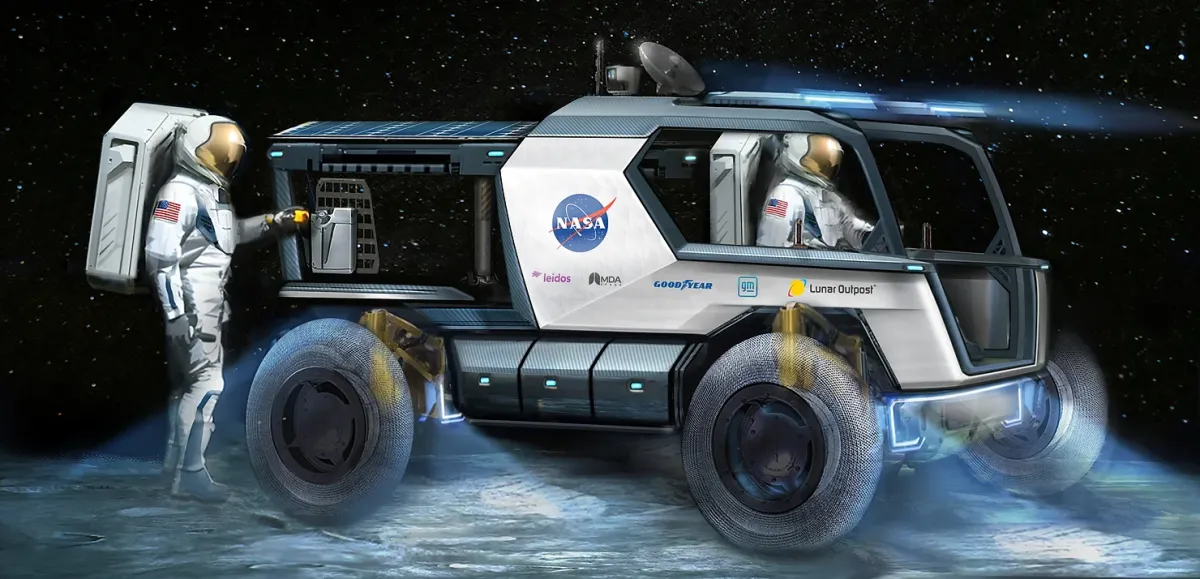
NASA selected Astrolab and Lunar Outpost to design rovers to support a planned Moon Base, to be delivered to the lunar surface by Blue Origin’s Blue Moon Mark 1 lander under the Commercial Lunar Payload Services (CLPS) program; the rovers, intended for scouting and science and operable autonomously or via teleoperation, are expected to help Artemis astronauts by 2028. The awards total roughly $219–220 million for the rover contracts, with the first Moon Base mission renamed Moon Base 1 and related missions (Astrobotic Griffin-1 and Intuitive Machines IM-3) renamed Moon Base 2 and Moon Base 3. Separately, Firefly Aerospace will deliver MoonFall drones, launched from lunar orbit by a Firefly Elytra Dark spacecraft, to scout terrain, with a planned 2028 launch. Intuitive Machines was not selected in this initial round, though NASA says it may win later task orders. The program updates reflect NASA’s shift toward a more streamlined, affordable Moon Base rollout and the use of CLPS 2.0 for cargo deliveries.

Moon’s construction crew: Lunar Outpost bets on robotic prep ahead of astronauts
business3 days ago

Moon’s construction crew: Lunar Outpost bets on robotic prep ahead of astronauts

Colorado-based Lunar Outpost raises $30 million in a Series B to shift from building individual lunar rovers to supplying a robotic workforce that can prep the Moon for longer-term human presence, including Pegasus and other mobility platforms. The company argues the real value lies in infrastructure work—landing pads, power, and maintenance—done by machines before astronauts arrive, in line with NASA’s Artemis push. Success will hinge on reliable lander delivery and a robust rover-as-a-service ecosystem rather than a single blockbuster rover, potentially making robotic prep a core part of the lunar economy.

Robots On the Moon: Lunar Outpost Nets $30M to Prebuild Moon Bases
technology4 days ago

Robots On the Moon: Lunar Outpost Nets $30M to Prebuild Moon Bases

Colorado-based Lunar Outpost has raised a $30 million Series B to accelerate its Pegasus lunar rover and develop a broader autonomous robotic workforce aimed at building the Moon’s first permanent bases—pads, power, surface prep, and habitats—before astronauts arrive. The plan centers on a Pegasus-Artemis 4 pairing and aligns with NASA’s multi-vendor lunar terrain vehicle program, which could total up to $4.6 billion through 2039. Key milestones to watch include Pegasus delivery by 2027, a successful Artemis 4 surface operation, and the ability of landers to deliver the robots intact to the lunar surface.

Private Space Startups Push NASA Toward a Faster Moon Return with Artemis IV
technology2 months ago

Private Space Startups Push NASA Toward a Faster Moon Return with Artemis IV

NASA is restructuring its Artemis program to target a 2028 Artemis IV lunar mission with a higher cadence, expanding private-partner involvement. Lunar Outpost’s Mapp rover remains central to the plan, despite earlier setbacks such as the Athena lander incident; the shift signals a broader move toward sustained public-private collaboration as the industry braces for multiple upcoming lunar missions and a long-term lunar presence.

SpaceX's Starship Secures Lunar Rover Delivery for NASA's Artemis Mission
space1 year ago

SpaceX's Starship Secures Lunar Rover Delivery for NASA's Artemis Mission

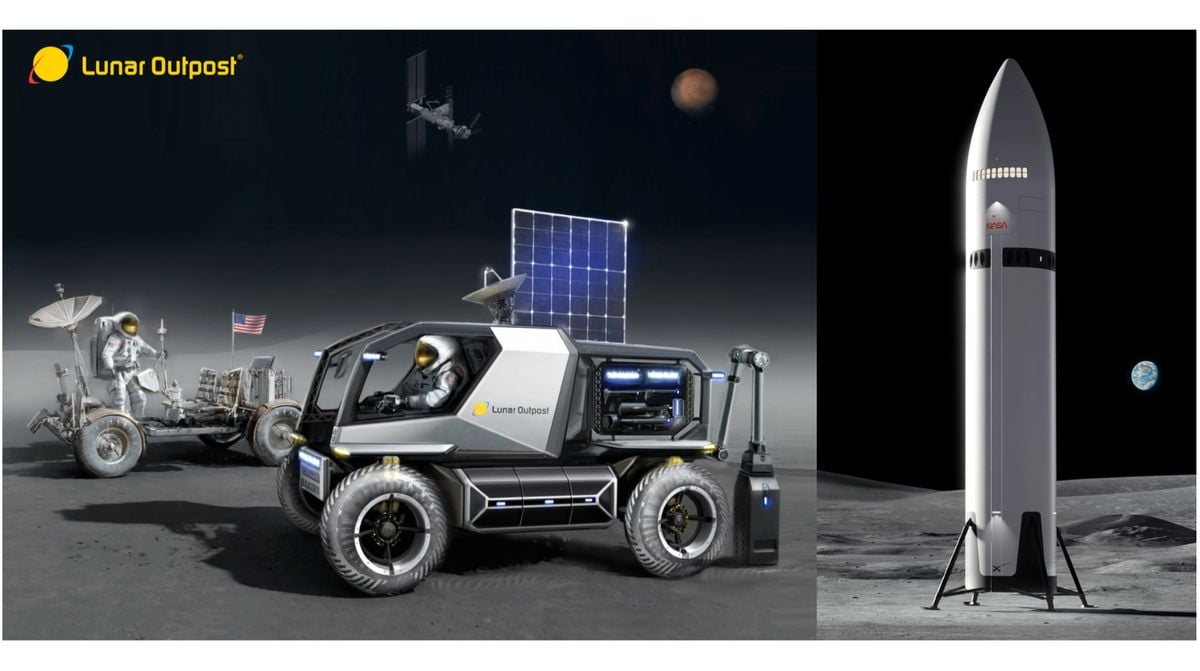
Lunar Outpost has selected SpaceX's Starship to launch and land its new moon rover, Eagle, on the lunar surface. This decision follows a successful suborbital test flight of Starship. The collaboration aims to support Lunar Outpost's mission of establishing a sustainable human presence in space. The Eagle rover is part of NASA's Lunar Terrain Vehicle (LTV) program, with three private teams, including Lunar Outpost, competing to develop a rover for NASA's Artemis missions. The winning team will conduct a test mission ahead of the Artemis 5 flight, scheduled for 2030.

SpaceX Secures Key Lunar Lander Contracts with NASA and Lunar Outpost
technology1 year ago

SpaceX Secures Key Lunar Lander Contracts with NASA and Lunar Outpost

SpaceX has signed its second commercial contract to deliver a payload to the moon using its Starship lunar lander, this time with Lunar Outpost. The deal involves transporting Lunar Outpost's rover, Eagle, to the lunar surface by 2029. This follows Lunar Outpost's selection by NASA for the lunar terrain vehicle program, which could be worth up to $4.6 billion over 13 years. Despite uncertainties about the mission specifics and NASA's final selection, Lunar Outpost plans to continue developing its rover, supported by a recent Series A funding round.

"Predicting the First Animals to Inhabit the Moon and Mars"
space-exploration2 years ago

"Predicting the First Animals to Inhabit the Moon and Mars"

NASA plans to establish a permanent lunar outpost and explore Mars, prompting consideration of which animals could help sustain ecosystems in space. Insects, fish, water bears, and crustaceans are among the candidates due to their potential for pollination, food production, and resilience to extreme conditions. However, the impact of reduced gravity on animal development remains a significant challenge, with simpler animals like insects and crustaceans likely to be more robust in space habitats. Research and engineering challenges persist, but these animals could play crucial roles in supporting future human settlements beyond Earth.

Italy's Minimalist Lunar Outpost Proposal for Artemis Mission
space2 years ago

Italy's Minimalist Lunar Outpost Proposal for Artemis Mission

The Italian Space Agency (ASI) has announced plans to develop a lunar habitation module called the Multi-Purpose Habitat (MPH) in collaboration with Thales Alenia Space for NASA's Artemis program. The MPH will provide living and working space on the lunar surface, with its own power generation, life support, and communications systems. It could also serve as a shelter for astronauts awaiting rescue. While technical details are currently unavailable, the MPH may be based on existing space-proven designs, such as the Leonardo Permanent Multipurpose Module (PMM) of the International Space Station. The development of the MPH highlights international collaboration and the growing seriousness of the Artemis program in establishing a sustainable lunar colony.

space2 years ago

"Revolutionary Moon Habitat: A Cool and Versatile Space Solution"

The Italian Space Agency (ASI) and Thales Alenia Space have partnered to develop a multi-purpose habitat, named the Multi-Purpose Habitat (MPH), which aims to be the first permanent outpost on the Moon. The cylindrical habitat, powered by solar panels and equipped with articulated legs, is designed to provide a pressurized environment, life support, and protection from radiation and micrometeorite showers. While the project has passed NASA's Element Initiation Review, it still needs to complete NASA's Mission Concept Review to become part of the Artemis program.

Artemis 4 Astronauts Prepare for Lunar Mission Aboard NASA's Gateway
space2 years ago

Artemis 4 Astronauts Prepare for Lunar Mission Aboard NASA's Gateway

NASA's Artemis 4 mission, scheduled for 2028, will be the first to utilize the moon-orbiting Gateway space station as part of the agency's Artemis moon program. The astronauts of Artemis 4 will live and work in the small lunar outpost, while the first crewed mission to the station is expected to arrive in 2025 or 2026. The Gateway will serve as a compact home for astronauts and is being designed to operate autonomously for up to three years between missions. The European Space Agency (ESA) and Japan will provide a refueling module and a second habitat module for the lunar outpost, and European astronauts will have three flight opportunities to work on the outpost and land on the moon. Gateway's unique position around the moon will enable science experiments to study radiation risks and inform future long-term missions to the moon and Mars.