
NASA’s 2028 Mars Flyby Will Test Nuclear Propulsion and Deploy Three Helicopters
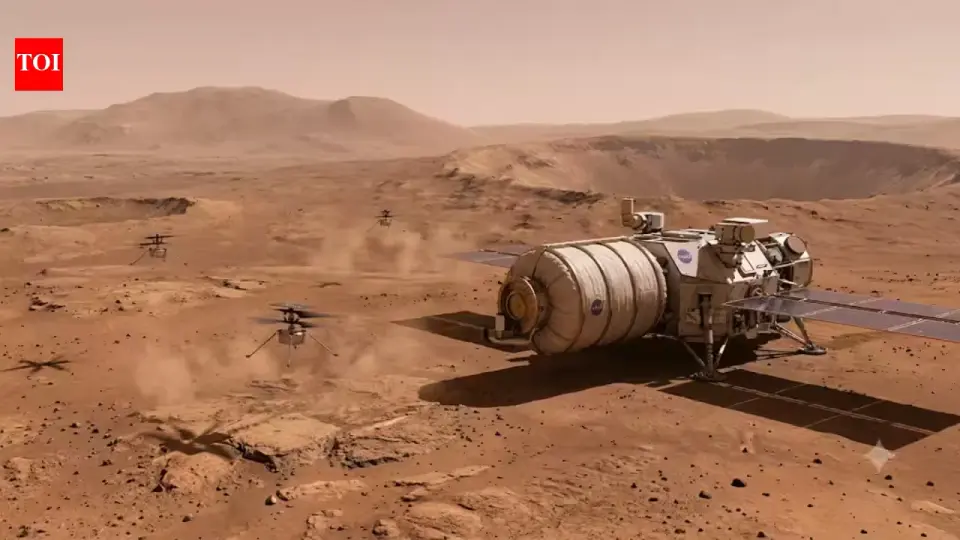
NASA plans to launch Space Reactor-1 Freedom in late 2028, a 12-tonne spacecraft featuring a 20-kilowatt nuclear reactor to test electric propulsion in deep space. The mission will fly by Mars in 2029 to deploy three Ingenuity-style helicopters for surface surveys, aiming to validate nuclear technology for future lunar and Martian bases.
Key points
- Launch targeted for late 2028, with a Mars flyby planned for 2029.
- The spacecraft will use a 20-kW fission reactor to power a 12-kW Hall-effect thruster.
- The SkyFall payload consists of three small helicopters designed to map terrain and detect subsurface ice.
- The mission reuses hardware from the Gateway lunar station to accelerate development.
- It serves as a technology demonstrator for future nuclear-powered missions to the Moon and Mars.
Background
This mission follows earlier NASA announcements regarding the Artemis program and the Psyche asteroid mission, which also utilized Mars flybys for trajectory adjustments. It builds on the agency’s long-standing interest in nuclear propulsion, previously explored in the 1960s with the SNAP-10A reactor, and aligns with recent domestic advancements in small modular reactor technology.
How outlets are covering it
While The Times of India and Space Daily emphasize the technical specifications and the historic nature of the first interplanetary nuclear reactor, SpaceNews highlights significant industry challenges. According to SpaceNews, the program faces potential bottlenecks in the supply of high-assay low-enriched uranium (HALEU) and a small workforce with dual nuclear and space expertise. Furthermore, former NASA officials warn that the program’s support is currently 'positional' rather than 'structural,' raising concerns about its continuity after the 2028 launch if political leadership changes. StartupHub.ai provides broader context on NASA’s strategic push for nuclear propulsion to reduce transit times to Mars, noting that while the current 20-kW reactor is small, it is a critical step toward larger systems needed for crewed missions.
Why it matters
Success of the SR-1 Freedom mission would validate nuclear electric propulsion for deep space, potentially reducing travel times to Mars and enabling sustained power for lunar bases during long nights. It also establishes regulatory precedents for launching nuclear materials, a critical step for future human exploration.
What to watch
NASA must finalize the design, secure launch services, and complete nuclear launch approvals before the late 2028 window. The Department of Energy is currently assessing the industry’s readiness to produce multiple reactors, which could impact the timeline for subsequent missions like Lunar Reactor-1.
- Nasa’s 2028 Mars mission will send a spacecraft with a nuclear reactor toward Mars and release three smal The Times of India
- NASA set to launch first fission-powered interplanetary spacecraft 'SR-1 Freedom' to Mars in 2028: Mission Possible WKYC
- NASA plans to send a working nuclear reactor toward Mars in late 2028. Space Reactor-1 Freedom will split uranium atoms in deep space to generate electricity for its engines — the first test of a technology NASA hopes will eventually help power human missi Space Daily
- Space nuclear programs face near- and long-term challenges SpaceNews
- NASA Administrator on Moon, Mars, and Nuclear Power StartupHub.ai
Want the full story? Read the original reporting
Read on The Times of India