
NASA’s Roman Space Telescope Launches to Map Dark Matter and Seek Exoplanets
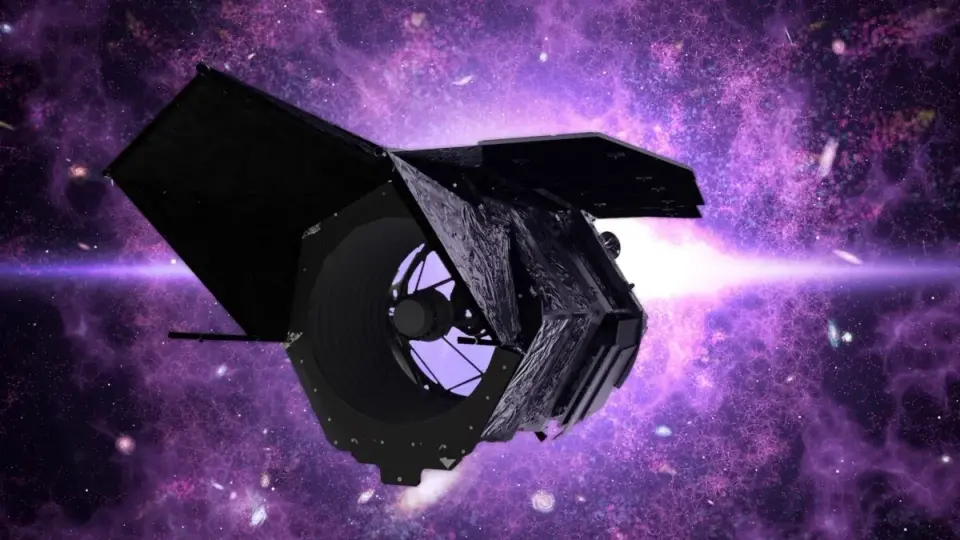
NASA is launching the $4 billion Nancy Grace Roman Space Telescope, an infrared observatory that will orbit at L2 after liftoff from Kennedy Space Center aboard a SpaceX Falcon Heavy. Equipped with a 300-megapixel Wide Field Instrument and a coronagraph, Roman will survey about 12% of the sky with images far sharper than Hubble, enabling three main goals: map dark matter via weak gravitational lensing, measure the expansion of the universe with distant supernovae, and hunt for exoplanets—using microlensing and direct imaging—to study galaxy clustering, cosmic history, and dark energy. The mission will generate a massive data set as it looks for worlds and seeks clues to fundamental questions in astrophysics.
- NASA Is Launching a $4 Billion Space Telescope on Sunday. Here’s Why You Should Care Gizmodo
- The universe, unlocked: NASA to launch a space telescope that could transform our view of the cosmos NBC News
- Roman Space Telescope Travels to SpaceX Hangar NASA (.gov)
- Inside the Nancy Grace Roman Space Telescope, NASA's next great observatory Space
- New NASA telescope to probe dark energy, dark matter and exoplanets Reuters
Want the full story? Read the original reporting
Read on Gizmodo