Tag

Space Telescopes

All articles tagged with #space telescopes

NASA’s Roman Space Telescope Launches to Map Dark Matter and Seek Exoplanets
space2 days ago

NASA’s Roman Space Telescope Launches to Map Dark Matter and Seek Exoplanets

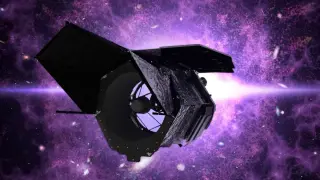
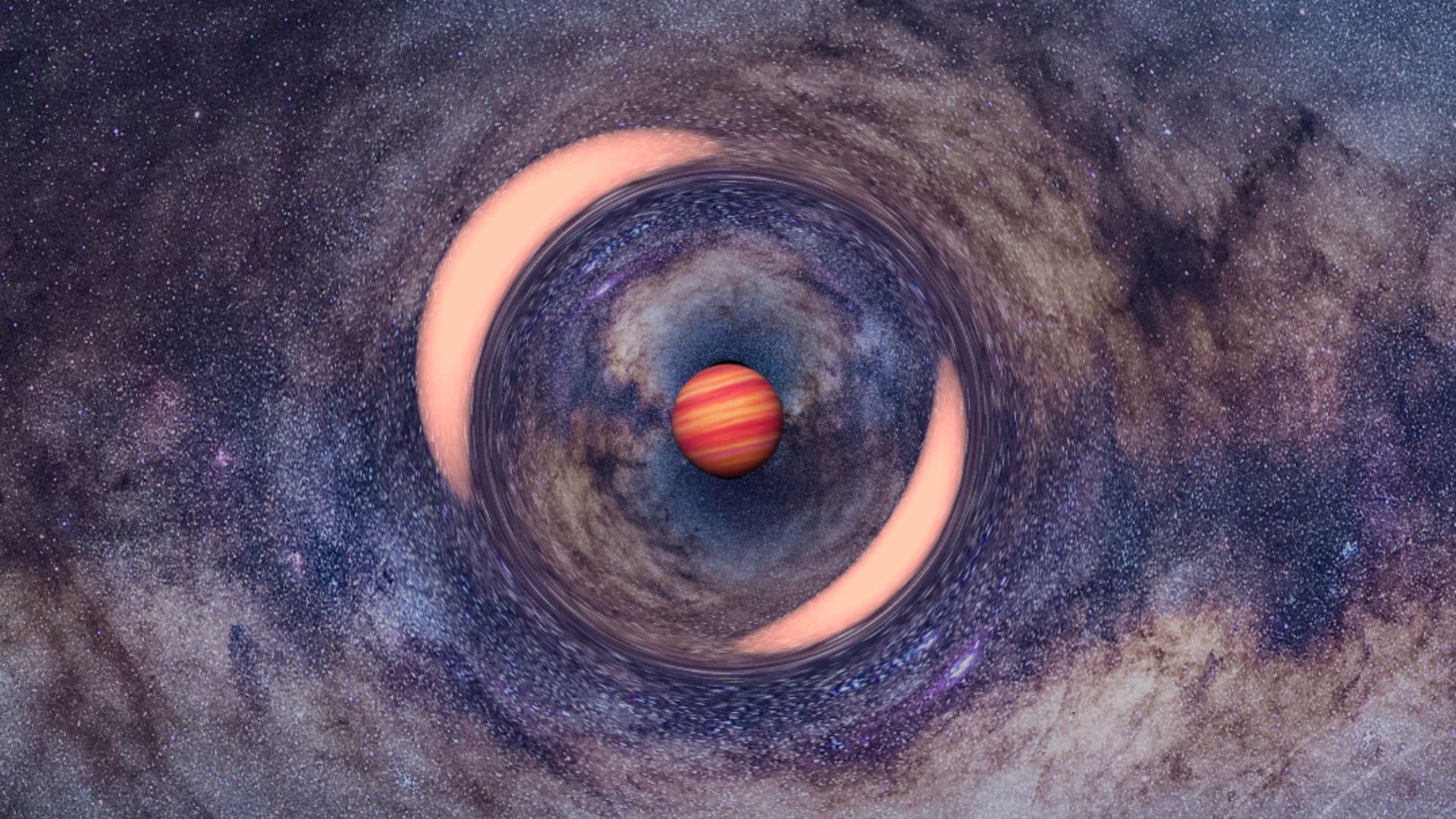
NASA is launching the $4 billion Nancy Grace Roman Space Telescope, an infrared observatory that will orbit at L2 after liftoff from Kennedy Space Center aboard a SpaceX Falcon Heavy. Equipped with a 300-megapixel Wide Field Instrument and a coronagraph, Roman will survey about 12% of the sky with images far sharper than Hubble, enabling three main goals: map dark matter via weak gravitational lensing, measure the expansion of the universe with distant supernovae, and hunt for exoplanets—using microlensing and direct imaging—to study galaxy clustering, cosmic history, and dark energy. The mission will generate a massive data set as it looks for worlds and seeks clues to fundamental questions in astrophysics.

NASA gears up for robotic servicing of its alien-hunting Habitable Worlds Observatory
space1 month ago

NASA gears up for robotic servicing of its alien-hunting Habitable Worlds Observatory

NASA’s Habitable Worlds Observatory (HWO), a future space telescope to study rocky, Earth-like planets, is being designed as serviceable in space—likely via robotics at the Sun–Earth L2 point about a million miles away—so instruments and detectors can be swapped and upgraded over time (including gamma-ray detectors). Building on Hubble’s servicing model, the plan could even involve in-space assembly if needed, with the mission still in early design stages and a launch target in the 2040s.

space2 months ago

NASA’s Roman Space Telescope lands at Cape for final launch prep

NASA’s Nancy Grace Roman Space Telescope arrived at Kennedy Space Center aboard the Pegasus barge for a ~70‑day prelaunch campaign at the Payload Hazardous Servicing Facility ahead of an Aug. 30 launch from Launch Complex 39A on a Falcon Heavy. The 43‑foot observatory, designed to operate at L2 about 1.5 million km from Earth with a 300‑megapixel Wide Field Instrument and a chronograph for exoplanets, will survey the universe far faster and wider than Hubble and is expected to last 5–10+ years with propellant after a cooling hiccup en route.

Hubble Survives on One Gyro, Extending Its Watch into the 2030s
space3 months ago

Hubble Survives on One Gyro, Extending Its Watch into the 2030s

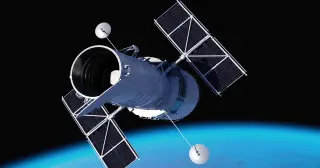
NASA has reconfigured the Hubble Space Telescope to operate on a single healthy gyroscope, preserving two spare units to extend its life into the mid‑2030s after gyro faults and a 2024 safe mode. The one‑gyro mode, developed in the 2000s, slows slews and restricts targets (notably near Mars and Earth‑bound observations), reducing scheduling efficiency by about 12% and overall scientific productivity by roughly 20–25%. The root cause is corrosion of gyro fluid; there are no funded plans to replace gyros or pursue servicing. Hubble now sits alongside JWST and the Roman Space Telescope in a complementary lineup, continuing science until it gradually winds down.

A turning point in space: 2026 blends cosmic mapping with lunar ambitions
science-tech7 months ago

A turning point in space: 2026 blends cosmic mapping with lunar ambitions

2026 is poised to reshape space exploration: NASA plans Artemis II to circle the Moon, India presses ahead with the Gaganyaan program and China expands its crewed missions, while flagship telescopes like NASA’s Roman Space Telescope, ESA’s PLATO and China’s Xuntian, plus the Vera Rubin Observatory on the ground, aim to map the cosmos and probe dark matter and dark energy. International cooperation continues even as competition heats up, with joint efforts such as SMILE illustrating a shared drive to understand the Moon’s origins, lunar water resources, and the broader evolution of the solar system.

Hubble Captures First Direct Images of Cosmic Collisions in Nearby Star System
science8 months ago

Hubble Captures First Direct Images of Cosmic Collisions in Nearby Star System

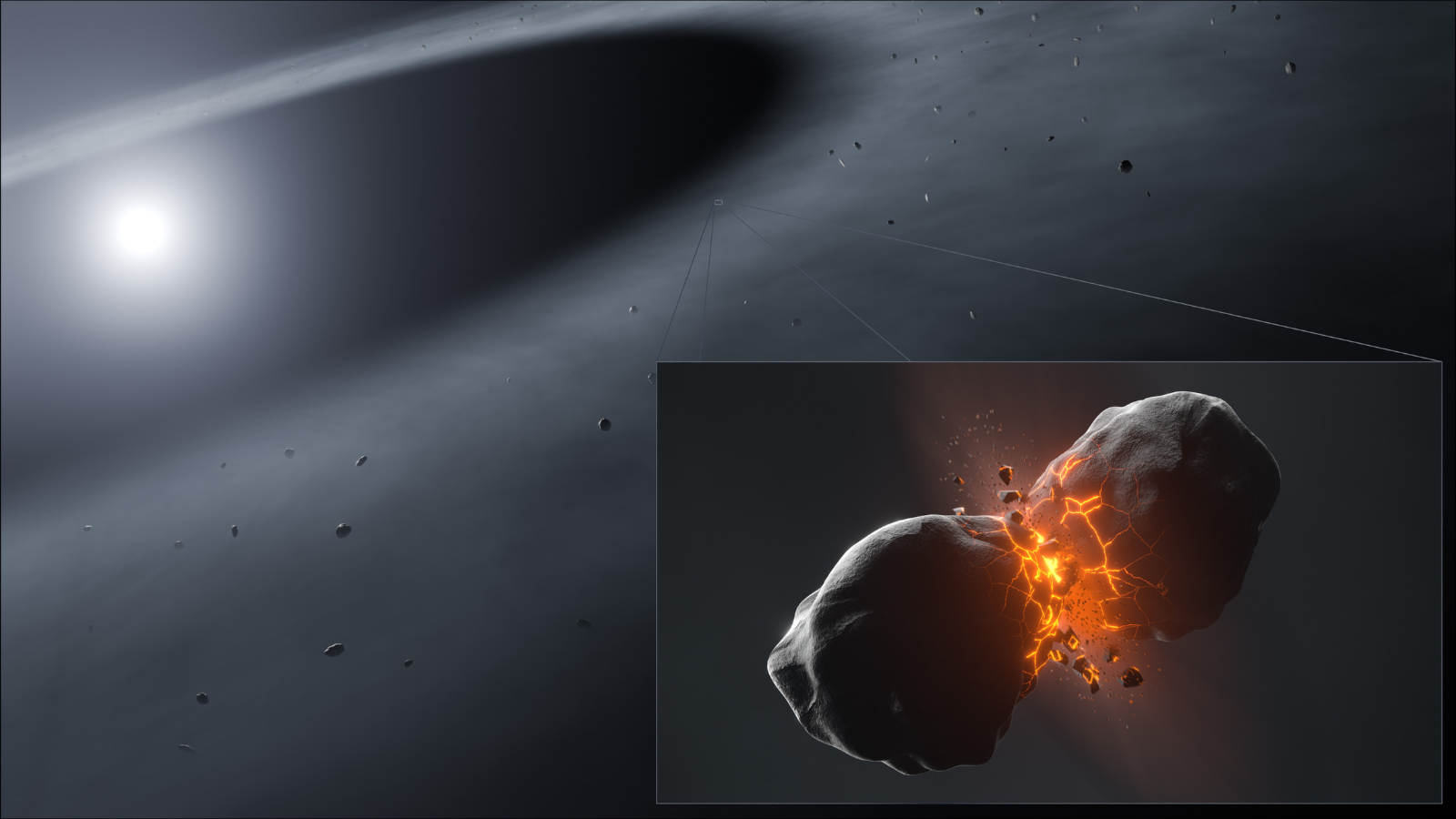
Astronomers captured the first direct images of collisions between large objects in a nearby star system, Fomalhaut, providing insights into planet formation and the behavior of planetesimals, with observations suggesting these icy bodies are similar to solar system comets. The study highlights the importance of understanding dust clouds and collisions in young planetary systems to distinguish them from planets.

NASA Staff Criticize Leadership Amid Facility Closures and Communication Breakdown
science9 months ago

NASA Staff Criticize Leadership Amid Facility Closures and Communication Breakdown

NASA's Goddard Space Flight Center faces significant concern among employees due to the sudden closure and emptying of over a dozen buildings amid a government shutdown, with fears that these actions are part of a broader effort to weaken the center's capabilities and future space missions, despite official statements citing strategic consolidation and compliance with the law.

Revealing the Hidden Companion of Betelgeuse
science10 months ago

Revealing the Hidden Companion of Betelgeuse

Astronomers from Carnegie Mellon University have confirmed that Betelgeuse has a hidden companion star, nicknamed 'Betelbuddy,' which is a young solar-sized star. This discovery, made using NASA's Chandra X-ray Observatory and the Hubble Space Telescope, helps explain Betelgeuse's six-year brightness cycle and challenges existing models of binary star formation due to the significant mass difference between the two stars.