
Mars Rover Opportunity’s 14-Year Odyssey Ends with Final Telemetry Amid Global Dust Storm
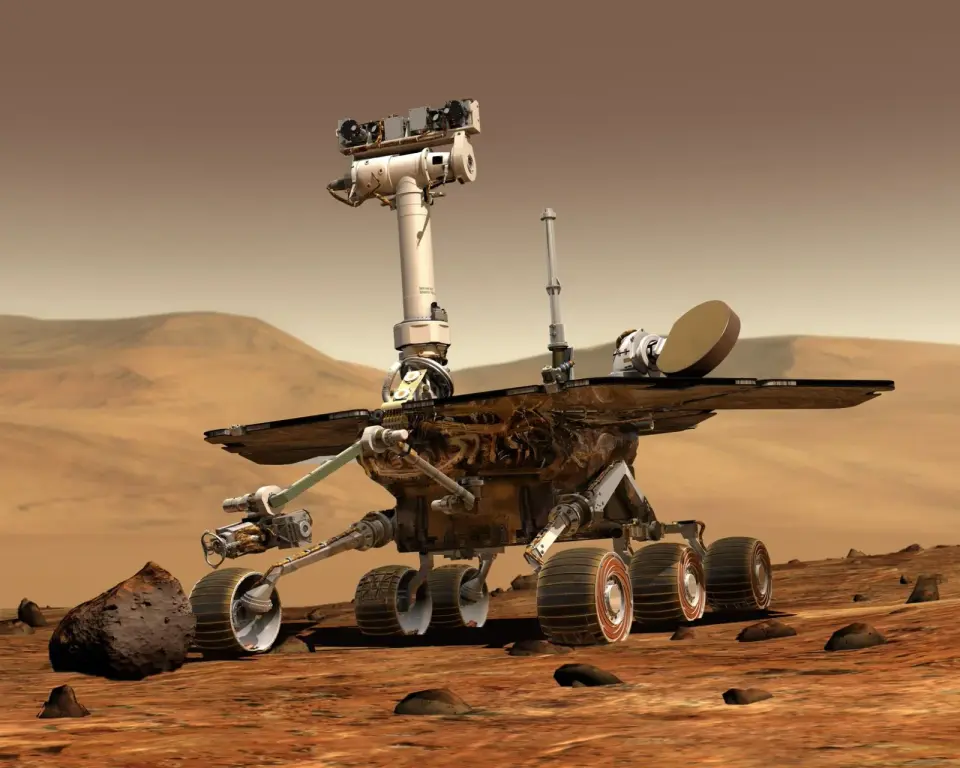
NASA’s Opportunity rover, designed for a 90-day mission, operated for 14.5 years and traveled 45.16 kilometers before a global dust storm in 2018 cut off its solar power. The rover’s final transmission on June 10, 2018, recorded critically low energy levels, leading to the mission’s official closure in February 2019.
Key points
- Opportunity landed on Mars on January 24, 2004, with a primary requirement to survive 90 sols and drive 600 meters, but it operated for 5,111 sols.
- The rover accumulated 45.16 kilometers of travel, far exceeding its initial design goals, through engineering workarounds and favorable wind conditions that cleaned its solar panels.
- A planet-wide dust storm detected in May 2018 increased atmospheric opacity to a tau value of 10.5–10.8, blocking sunlight and reducing power output to 21 watt-hours.
- The final transmission on June 10, 2018, included engineering data and a partial image, but the rover never sent the popularized phrase 'My battery is low and it’s getting dark,' which was a human interpretation of the telemetry.
- NASA declared the mission complete on February 13, 2019, after sending over 1,000 commands without a response, as the rover remained buried in dust and unable to recharge.
Background
Our earlier coverage from June 2026 noted that Opportunity’s demise highlighted the risks of solar-powered missions on Mars, contrasting with nuclear-powered rovers like Curiosity and Perseverance that survived similar conditions. The 2018 storm was part of a broader pattern of unpredictable planet-encircling dust events that remain a significant challenge for future Mars exploration.
Why it matters
Opportunity’s longevity demonstrated the potential for extended robotic exploration beyond initial design limits, providing crucial data on Mars’ water history and informing the design of subsequent missions like Curiosity and Perseverance. Its end underscored the vulnerability of solar-powered systems to atmospheric changes, influencing future mission planning and power source choices.
What to watch
NASA continues to monitor Mars’ atmospheric conditions and the performance of nuclear-powered rovers like Perseverance, which are less affected by dust storms. Future missions will likely prioritize nuclear power and enhanced autonomy to mitigate risks from unpredictable dust events and extend operational lifespans.
Want the full story? Read the original reporting
Read on Space Daily