
Psyche spacecraft validates instruments and gains speed during May 2026 Mars flyby
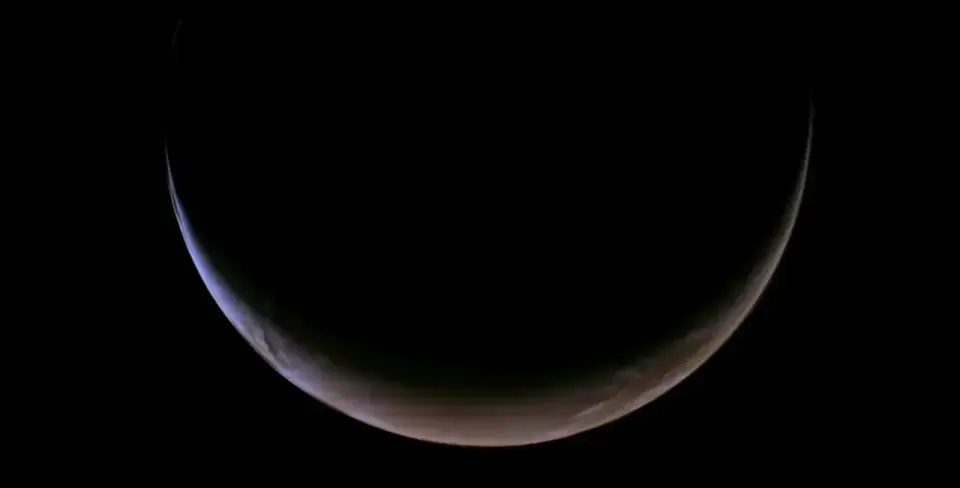
NASA’s Psyche spacecraft successfully completed a planned flyby of Mars on May 15, 2026, using the planet’s gravity to accelerate its trajectory toward the metal-rich asteroid 16 Psyche. The encounter served as a critical test for the spacecraft’s instruments, confirming their functionality ahead of the 2029 arrival at the asteroid.
Key points
- The spacecraft passed approximately 4,600 kilometers (2,800 miles) above Mars’s surface, gaining a significant speed boost through a gravity assist maneuver.
- The flyby validated three primary instruments: the multispectral imager, magnetometer, and gamma-ray and neutron spectrometer, all of which performed as expected.
- The magnetometer successfully detected a sharp increase in magnetic field strength as the spacecraft crossed Mars’s bow shock, verifying its ability to measure rapid fluctuations.
- The gamma-ray and neutron spectrometer detected escaping neutrons from Mars, confirming sensor functionality, though gamma rays were not detected due to the distance.
- The multispectral imager captured detailed images of Mars’s south polar cap and the Huygens crater, as well as the moons Phobos and Deimos, serving as a rehearsal for future asteroid observations.
Background
The Psyche mission, launched in October 2023, is on a six-year journey to study asteroid 16 Psyche, a metal-rich body hypothesized to be the exposed core of a protoplanet. Previous coverage highlighted the strategic importance of the Mars flyby in adjusting the spacecraft’s trajectory and testing its instruments before the 2029 rendezvous.
How outlets are covering it
NASA and its partners emphasized the success of the instrument tests and the gravity assist, with Lindy Elkins-Tanton noting that while no major discoveries were expected, the data provided valuable complementary insights. ScienceDaily highlighted the detailed imaging and the detection of neutrons, while NASA’s APOD focused on the efficiency of the gravity assist in reducing fuel consumption. Futura-Sciences noted the broader context of Mars’s magnetic field loss, linking the flyby to ongoing research on planetary core dynamics.
Why it matters
The successful Mars flyby confirms that Psyche’s instruments are functioning correctly, ensuring the mission is on track to study asteroid 16 Psyche in 2029. This asteroid is believed to offer insights into the formation of planetary cores, potentially advancing our understanding of early solar system processes.
What to watch
Psyche will resume sustained thrusting with its solar-electric propulsion system later in 2026, continuing its journey to asteroid 16 Psyche, with arrival scheduled for summer 2029.
- Mars like you’ve never seen it: breathtaking flyover will leave you speechless Futura, le média qui explore le monde
- APOD: 2026 July 29 - Psyche Receives Gravity Assist from Mars NASA Science (.gov)
- NASA’s Psyche spacecraft aces Mars flyby capturing stunning timelapse video ScienceDaily
- NASA’s Psyche Meets ESA’s Mars Express at Mars for a Photoshoot DIY Photography
- NASA's Psyche spacecraft just used Mars as a slingshot yahoo.com
Want the full story? Read the original reporting
Read on Futura, le média qui explore le monde