
Space Force Loses Three Launch Slots as SpaceX Declines Military Contracts
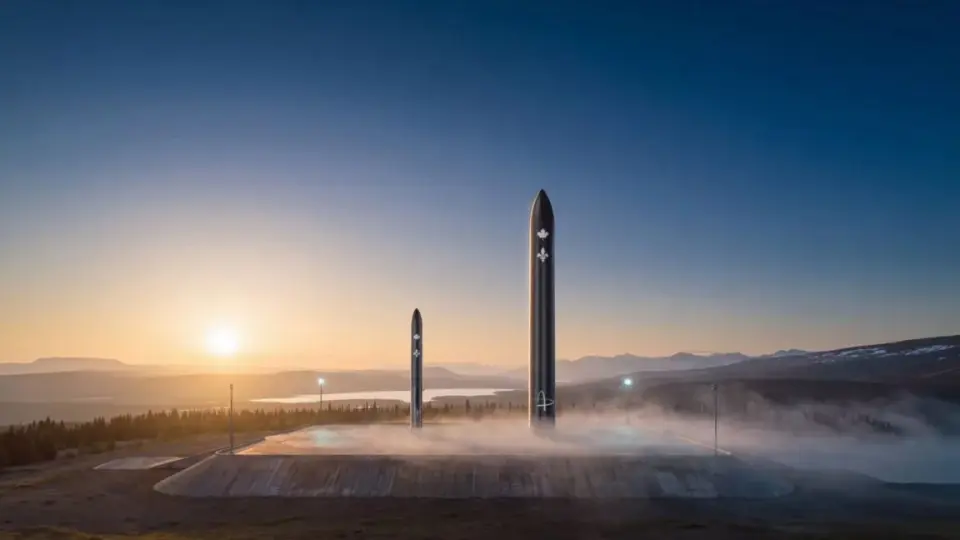
The US Space Force failed to secure launch providers for three military satellite missions after SpaceX declined the contracts, highlighting a critical gap in US launch capacity. Meanwhile, Canadian startup Reaction Dynamics seeks $350 million to build its Aurora and Borealis rockets, and SpaceX prepares to attempt catching both stages of its Starship during the next test flight.
Key points
- SpaceX declined to offer services for three future satellite missions requested by the US Space Force under the National Security Space Launch initiative, with no other US providers able to fill the gap.
- The three unfulfilled missions include two for the Space Development Agency, which is building a network of hundreds of military satellites in low-Earth orbit for data services and missile tracking.
- Canadian launch startup Reaction Dynamics is seeking to raise $350 million to expand its staff from 68 to over 350 employees, aiming to launch its small-lift Aurora rocket in 2028 and its medium-lift Borealis rocket by 2031.
- SpaceX is targeting November for its 15th Starship test flight, during which it plans to attempt catching both the Super Heavy first stage and the Starship upper stage at its South Texas launch site.
- A NASA safety panel estimated that up to 22 refuelings may be required to support a Starship lunar landing, a figure SpaceX founder Elon Musk disputed, claiming the actual number will be between 6 and 8.
Background
This launch shortage follows SpaceX's phase-out of its Falcon 9 and Falcon Heavy rockets in favor of Starship, which cannot accommodate many military satellites. As noted in recent coverage, SpaceX accounted for 85% of US launches in 2025, creating a dependency that raises national security concerns. Competing rockets like ULA's Vulcan and Blue Origin's New Glenn are currently grounded or delayed, while newer medium-lift vehicles remain years away from operational readiness. Blue Origin recently announced a major expansion of its Florida facilities to support high-cadence New Glenn launches, aiming to capitalize on this shortage.
Why it matters
The inability to secure launch providers for military missions underscores a critical vulnerability in US space capabilities, as the transition away from legacy rockets leaves a gap in launch capacity. This shortage could delay critical military satellite deployments and impact national security, while also highlighting the growing importance of new commercial launch providers and the need for diversified launch capabilities.
What to watch
The next three launches are scheduled for October 23, including Rocket Lab's Electron mission, China's Long March 6A, and Long March 4B. SpaceX is targeting November for its 15th Starship test flight, during which it will attempt to catch both stages of the rocket. Arianespace has also set a return date for its Ariane 6 rocket on November 23, following a turbopump issue that delayed its previous launch.
Want the full story? Read the original reporting
Read on Ars Technica