
Cambridge Team Unveils $10 Optical Sensor for Non-Invasive Health Monitoring
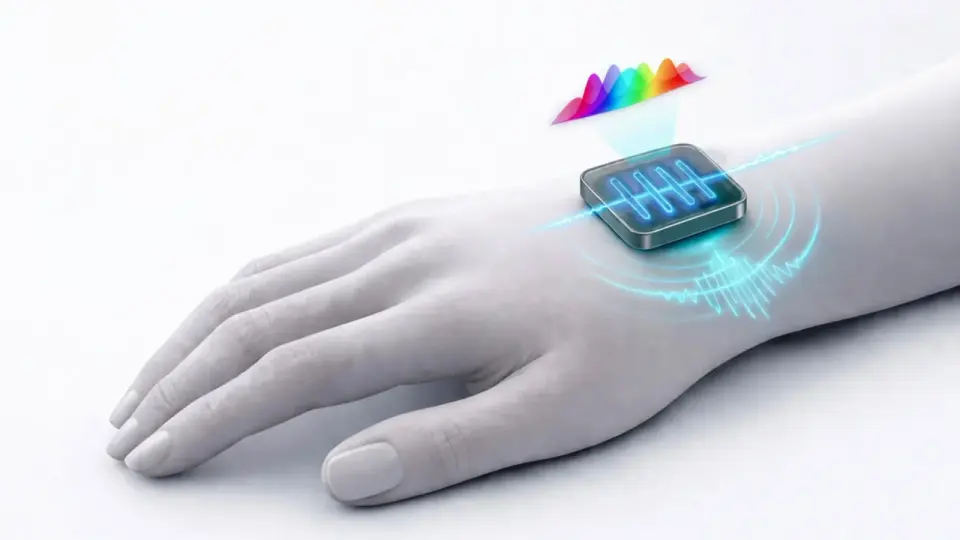
University of Cambridge researchers have developed a low-cost optical spectrometer that achieves laboratory-grade precision in a miniature form factor. The device, which costs approximately $10 to produce, utilizes a novel convolutional approach to analyze light, enabling accurate identification of materials and non-invasive monitoring of biological markers. Tests demonstrated 100% accuracy in classifying various substances and the ability to track blood glucose without needles. The technology is designed to be integrated into wearable devices, potentially revolutionizing personal health monitoring, industrial quality control, and environmental analysis by making sophisticated spectral analysis accessible and affordable.
Key points
- The new convolutional spectrometer costs around $10 and measures only centimeters across, suitable for wearable integration.
- It achieved 100% accuracy in identifying plastics, pharmaceuticals, and food items like coffee and tea in initial tests.
- The device successfully measured blood glucose, alcohol, and lactate levels non-invasively in human participants.
- It operates reliably across a wide temperature range, from -20°C to 80°C, enhancing durability for real-world use.
- The design uses the convolution theorem to reduce computational overhead, allowing for faster processing and easier scalability.
Background
This development follows a trend of miniaturizing medical diagnostics, including recent advancements in wearable sweat monitors and gold-based chemical sensors. While previous efforts often traded accuracy for size, this new approach aims to maintain high precision without significant hardware complexity. The research builds on earlier Cambridge studies regarding the impact of sweeteners on gut bacteria, highlighting the university's ongoing focus on metabolic and biochemical analysis.
Why it matters
By drastically reducing the cost and size of high-precision optical sensors, this technology could make continuous, non-invasive health monitoring a standard feature in consumer electronics. This shift could improve early detection of conditions like diabetes and enhance industrial safety by allowing real-time material analysis in manufacturing and environmental settings, moving sophisticated lab capabilities into everyday devices.
What to watch
The researchers must now conduct extensive clinical trials to validate the device's performance in diverse physiological conditions before it can be approved for medical use. Further development will focus on scaling manufacturing processes and integrating the sensor into commercial wearable platforms, with the goal of making spectral analysis as common as temperature or motion sensing in consumer electronics.
Want the full story? Read the original reporting
Read on Science Daily