
SpaceX Bandwagon-5 Launches Second Starfall Reentry Test
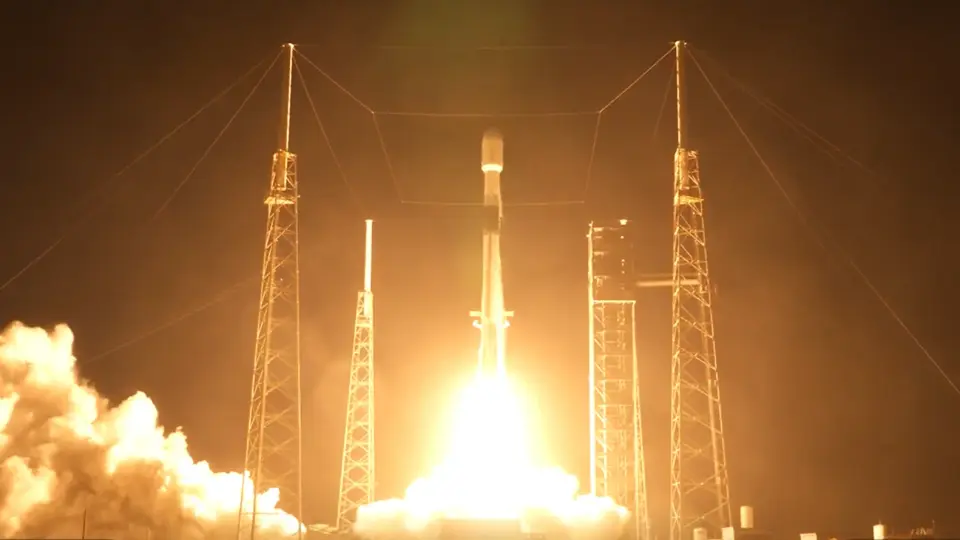
SpaceX launched its Bandwagon-5 rideshare mission on October 20, 2026, carrying 32 payloads including the second flight of its 'Starfall' reentry capsule. The mission utilized Falcon 9 booster B1085 for its 19th flight, following a weather-related scrub the previous day. Starfall, a disk-shaped vehicle designed for microgravity research and in-space manufacturing, is the second of two planned demonstration flights. The capsule, which debuted in June, aims to provide affordable access to orbital environments for scientific and commercial purposes.
Key points
- The Bandwagon-5 mission launched at 7:04 a.m. EDT from Cape Canaveral Space Force Station on October 20, 2026.
- The flight carried 32 payloads, including the Starfall reentry capsule, which is the second of two planned demonstration missions.
- Falcon 9 booster B1085 achieved its 19th flight, landing on the droneship 'A Shortfall of Gravitas' in the Atlantic Ocean.
- Starfall is a disk-shaped capsule measuring approximately 2.5 feet tall and 10.2 feet wide, with a payload capacity of 2,200 pounds.
- The mission was originally scheduled for October 19 but was scrubbed due to unfavorable weather in the booster recovery zone.
Background
SpaceX previously launched the first Starfall demonstration mission on June 23, 2026, from Cape Canaveral. That flight was a dedicated test to verify the capsule's controlled reentry and atmospheric survival capabilities. The current launch follows a one-day delay caused by weather constraints, as reported by our archive on October 19. The vehicle is designed to complement SpaceX's existing fleet by offering routine access to microgravity environments for research and manufacturing, distinct from crewed Dragon missions.
How outlets are covering it
Space.com emphasized the secrecy surrounding Starfall, noting that SpaceX has released limited public information beyond an FAA environmental assessment and a single social media post. SpaceNews focused on the broader rideshare context, listing other commercial payloads like Capella Space and Planet, while highlighting the business implications of high-cadence launches. Shattered.io concentrated on the hardware milestone, detailing how booster B1085’s 19th flight reflects the maturation of reusable rocket technology and the economic advantages of amortizing hardware costs over multiple missions. Starlust.org highlighted public interest, noting that netizens identified Starfall in pre-launch photos, and detailed the capsule’s splashdown recovery process from the previous flight.
Why it matters
The successful second flight of Starfall validates SpaceX’s strategy for creating a reusable, low-cost reentry vehicle for commercial and scientific payloads. It demonstrates the operational maturity of Falcon 9 booster reuse, with B1085 reaching 19 flights, which significantly reduces per-launch costs. This capability could accelerate the development of in-space manufacturing and microgravity research by making orbital access more routine and affordable for non-governmental entities.
What to watch
SpaceX will monitor the Starfall capsule’s reentry and splashdown, which is expected to occur in the Pacific Ocean. The company may not livestream the deployment or recovery, consistent with the classified nature of the first flight. Following this mission, SpaceX is expected to continue its high-cadence launch schedule, potentially integrating Starfall into regular rideshare missions if the demonstration proves successful. The FAA’s environmental assessment will likely guide future regulatory approvals for similar reentry vehicles.
- SpaceX launches its 'Starfall' return capsule for 2nd time ever Space
- SpaceX launches second Starfall reentry vehicle SpaceNews
- Falcon 9 Booster Hits 19th Flight for Bandwagon-5 [2026] shattered.io
- SpaceX to launch Starfall return capsule for the second time on Bandwagon-5 mission tomorrow Starlust.org
- SpaceX Starfall: Routine Microgravity Access Is Now a Service BASENOR - Tesla Accessories
Want the full story? Read the original reporting
Read on Space