
SpaceX Exits Low-Earth Orbit Crew Market, Leaving NASA Dependent on Boeing
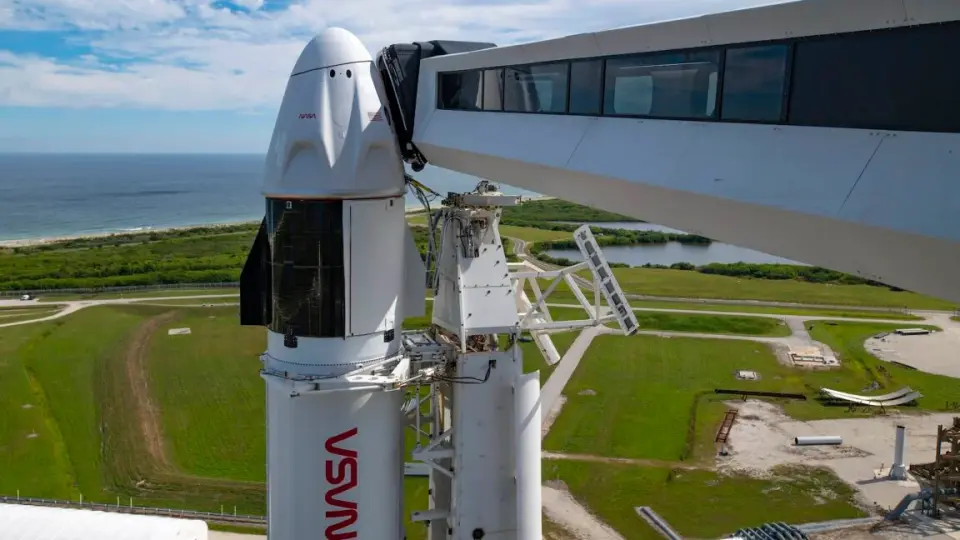
SpaceX has informed NASA it will retire the Crew Dragon spacecraft after 2030, focusing instead on Starship for its own payloads. This leaves NASA reliant on Boeing’s Starliner for human access to low-Earth orbit, raising concerns about cost and market viability. While SpaceX’s move is economically rational for the company, it threatens the broader commercial space economy NASA has spent two decades trying to build.
Key points
- SpaceX will stop flying Crew Dragon to low-Earth orbit after 2030, having fulfilled its contract obligations with 13 completed missions.
- NASA cannot compel SpaceX to continue, as the agency’s needs represent only 1% of SpaceX’s total addressable market, which is dominated by Starlink.
- NASA has committed an additional $359 million to Boeing to fix Starliner’s propulsion issues and certify the Vulcan rocket, targeting a crewed return in 2028.
- Starliner’s cost per seat is $90 million, significantly higher than Dragon’s recent $78.8 million, and prices are expected to rise further without competition.
- Critics argue this creates a de facto monopoly for Boeing, while others note NASA had few alternatives after SpaceX’s withdrawal.
Background
For two decades, NASA has pursued a strategy to foster a commercial economy in low-Earth orbit, aiming to reduce reliance on government-operated spacecraft. This included the Commercial Crew Program, which invested $3.1 billion in SpaceX and $5.1 billion in Boeing. Recent archive coverage noted NASA’s $950 million contract extension with SpaceX through 2030 and its simultaneous backing of Boeing’s Starliner as a backup. The current situation represents a shift from this dual-provider model to a single-provider dependency, as SpaceX pivots to focus on Starship for its own commercial interests rather than NASA’s needs.
Why it matters
The withdrawal of SpaceX from the low-Earth orbit crew market undermines the competitive pricing and reliability that previously supported the concept of a commercial space economy. With Boeing’s Starliner as the sole near-term option, costs for human spaceflight are likely to increase, potentially stifling private space station development and limiting access for international and private customers. This shift highlights the tension between NASA’s goal of a robust commercial ecosystem and the market realities of its primary partner, SpaceX, which prioritizes its own high-revenue ventures like Starlink over legacy crew transportation contracts.
What to watch
NASA will proceed with the $359 million investment in Boeing, aiming for an uncrewed Starliner test in late 2026 or early 2027 and a crewed mission by mid-2028. Blue Origin’s New Glenn crew vehicle is not expected to be ready until at least 2031, leaving a gap in competition. The long-term viability of a low-Earth orbit economy depends on whether Starship can eventually be adapted for human transport, though SpaceX has indicated no current plans to do so. NASA must now navigate a period of reduced competition and higher costs while attempting to maintain access to orbit for its astronauts and potential private partners.
Want the full story? Read the original reporting
Read on arstechnica.com