
SpaceX Launches Third Classified Space Force Mission in Two Weeks from Vandenberg
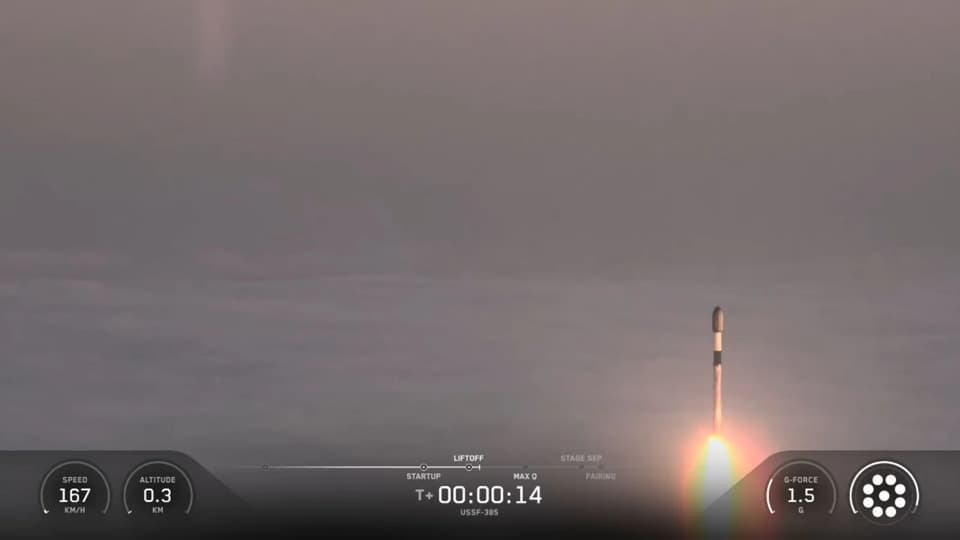
SpaceX launched the classified USSF-385 mission for the U.S. Space Force from Vandenberg Space Force Base on September 26, 2026. The Falcon 9 rocket deployed a batch of satellites, likely part of the Starshield constellation, while the first stage booster B1100 completed its tenth flight and landed on a drone ship in the Pacific Ocean.
Key points
- The USSF-385 mission launched at 7:00 a.m. PDT from Space Launch Complex 4-East in California.
- This was the third national security launch for SpaceX in 16 days, following USSF-153 and USSF-259.
- The first stage booster, designated B1100, landed on the drone ship 'Of Course I Still Love You' after 8.5 minutes.
- SpaceX cut off the live webcast shortly after booster touchdown, as is standard for classified payloads.
- The mission is believed to be part of a series deploying Starshield satellites for government use.
Background
SpaceX has increasingly shifted its national security launch operations to Vandenberg Space Force Base, making it the primary site for such missions while Cape Canaveral focuses on Starship operations. Recent developments include a deal granting SpaceX exclusive access to classified space tracking data and the establishment of a new Space Academy for officer training.
How outlets are covering it
Space.com and Spaceflight Now emphasize the classified nature of the mission and the likely deployment of Starshield satellites, noting that 23 satellites were cataloged in orbit after the launch. KOMO News highlights the booster landing at sea and the frequency of these launches, while KSBY News focuses on the local launch window and the booster's previous use on Starlink missions. All sources agree on the launch time and location but differ in their emphasis on the satellite constellation versus the logistical details of the booster recovery.
Why it matters
The rapid succession of classified launches underscores the U.S. Space Force's accelerating reliance on commercial providers for national security satellite deployments. The use of Starshield technology suggests a growing integration of commercial satellite infrastructure into military operations, raising questions about the future of government space capabilities and the competitive landscape in the space industry.
What to watch
Analysts expect further classified launches from Vandenberg as SpaceX continues to deploy satellites for the U.S. Space Force. The next launch window for a similar mission could open within the coming weeks, depending on the operational needs of the Space Force and the availability of Falcon 9 boosters.
- SpaceX launches classified mystery mission for US Space Force from California (video, photos) Space
- SpaceX launches classified US Space Force mission from California, lands booster at sea KOMO
- SpaceX Falcon 9 launches classified mission for U.S. Space Force from West Coast Spaceflight Now
- SpaceX launches Falcon 9 from Vandenberg SFB Saturday KSBY News
- SpaceX launches mysterious U.S. Space Force mission from California KTLA
Want the full story? Read the original reporting
Read on Space