
SpaceX Adds 27 Satellites to Starlink Network in 81st Launch of 2026
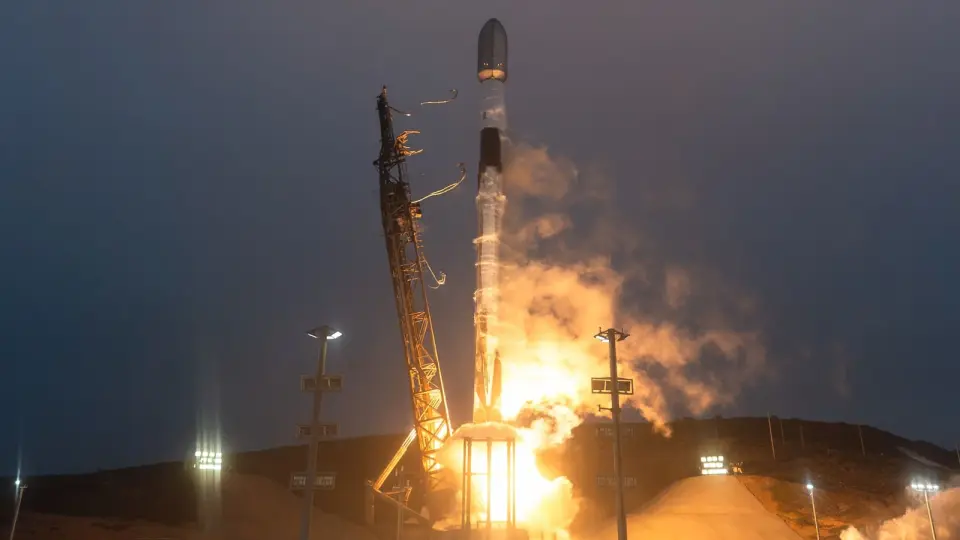
SpaceX launched 27 Starlink satellites from California on September 19, 2026, marking the 81st Starlink mission of the year. The Falcon 9 rocket deployed the satellites into low Earth orbit, while the first stage booster successfully landed on a drone ship in the Pacific Ocean.
Key points
- Liftoff occurred at 9:47 p.m. EDT from Vandenberg Space Force Base in California.
- The mission deployed 27 Starlink V2 Mini satellites into low Earth orbit approximately 62 minutes after launch.
- The first stage booster, designated B1093, landed on the drone ship 'Of Course I Still Love You' about 8.5 minutes after liftoff.
- This was the 17th flight for booster B1093 and the 107th Falcon 9 mission of 2026.
- The Starlink constellation now consists of more than 11,100 active spacecraft.
Background
This launch continues the rapid expansion of SpaceX's Starlink network, which surpassed 11,000 active satellites in August 2026, accounting for roughly two-thirds of all active spacecraft in low Earth orbit. Recent launches in September 2026 have consistently added 27 satellites per mission, reflecting an industrial-scale approach to satellite deployment and orbital infrastructure.
How outlets are covering it
Space.com and Spaceflight Now both confirm the launch details, including the 27 satellites and the booster's 17th flight. Spaceflight Now specifies the satellites as 'V2 Mini Optimized' and notes the mission designation as Starlink 15-27. KSBY News provides a brief confirmation of the launch and booster landing but lacks specific technical details. All sources agree on the launch time, location, and the successful deployment and landing.
Why it matters
The launch underscores SpaceX's dominance in low Earth orbit and its ability to maintain a high launch cadence, which is critical for expanding and maintaining the Starlink network. The successful reuse of booster B1093 highlights the company's progress in reducing launch costs and increasing operational efficiency, which has implications for the broader commercial space industry and satellite communication services.
What to watch
SpaceX is expected to continue its high-frequency launch schedule, with additional Starlink missions planned to further expand the constellation. The company is also preparing for the debut of its Starship rocket on the East Coast, which could mark a significant shift in launch capabilities and satellite deployment strategies.
- SpaceX launches 27 Starlink satellites to orbit from California (video, photos) Space
- USSF-385 Mission SpaceX
- SpaceX launches 27 Starlink V2 Mini satellites on Falcon 9 rocket from Vandenberg Spaceflight Now
- SpaceX launches Falcon 9 rocket from Vandenberg Space Force Base Saturday KSBY News
- Weekend rocket launch on tap at Vandenberg. How you can watch livestream The Desert Sun
Want the full story? Read the original reporting
Read on Space