
SpaceX Starlink Fleet Surpasses 11,000 Satellites, Controlling Two-Thirds of Active Orbits
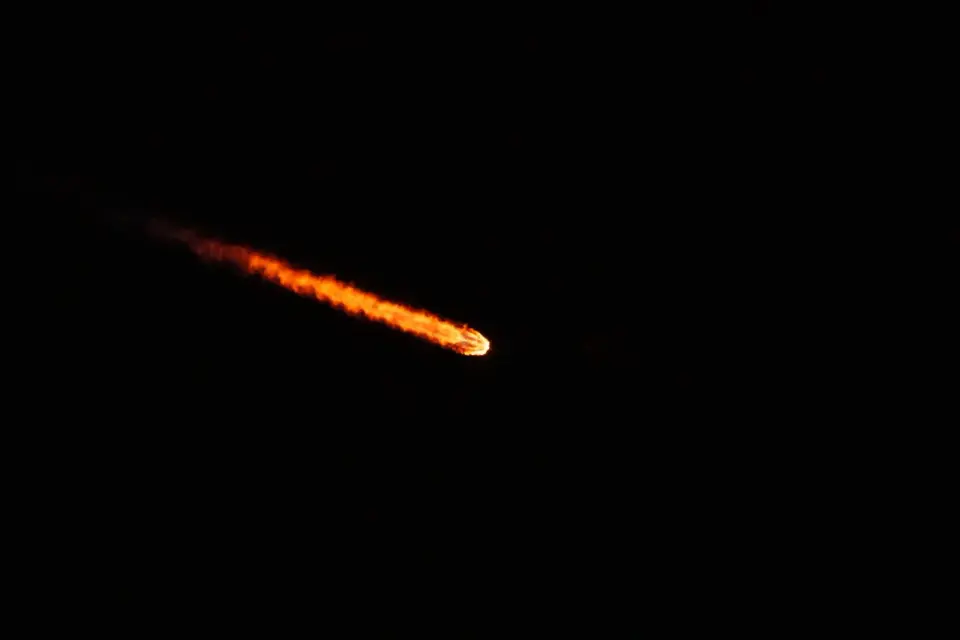
SpaceX’s Starlink constellation exceeded 11,000 satellites in orbit on August 19, 2026, representing roughly two-thirds of all active satellites globally. This milestone, achieved via the Starlink Group 17-50 launch, highlights the rapid concentration of low Earth orbit dominated by a single commercial network. While the exact count fluctuates due to reentries and new deployments, the structural dominance of Starlink is now undeniable, raising significant concerns for orbital traffic management and astronomical observations.
Key points
- A Falcon 9 launch on August 19, 2026, deployed 24 satellites, pushing the Starlink fleet past 11,000 in orbit.
- Starlink now accounts for approximately 66% of all active satellites, based on Look Up’s June 2026 index of 15,711 total active satellites.
- The distinction between 'in orbit' and 'operational' satellites is critical, as newly launched units require time to reach working orbits.
- SpaceX’s launch cadence is enabled by Falcon 9 booster reuse, with 74 of its first 100 missions in 2026 dedicated to Starlink.
- The concentration of satellites in low Earth orbit increases the workload for collision avoidance and astronomical observation.
Background
Since the first full Starlink batch launched in May 2019, the global active satellite population has grown from fewer than 2,000 to over 15,000. Our previous coverage in August 2026 noted that Starlink already controlled about two-thirds of active orbits, a trend that has accelerated. The current milestone reflects an eightfold increase in the global active satellite population since 2019, driven by industrial-scale manufacturing and reusable rocket technology.
How outlets are covering it
Space Daily emphasizes the structural dominance of Starlink, noting that one network now accounts for two-thirds of active satellites, which fundamentally changes orbital traffic management. Spaceflight Now focuses on the operational details of the launch cadence, highlighting the 75th Starlink mission of 2026 and the reuse of booster B1078 for its 30th flight. Florida Today provides live coverage of the launch mechanics, confirming the successful deployment and booster landing. Yahoo’s source is a technical error page and provides no substantive news content, so it is excluded from the synthesis. The outlets agree on the scale of the constellation but differ in emphasis: Space Daily focuses on the long-term implications of orbital concentration, while Spaceflight Now and Florida Today focus on the immediate operational success of the launch.
Why it matters
The dominance of Starlink in low Earth orbit has significant implications for space traffic management, astronomical observations, and the future of satellite communications. The concentration of satellites in a single network increases the risk of collisions and requires more sophisticated collision avoidance systems. Additionally, the bright trails and radio transmissions of Starlink satellites interfere with astronomical observations, raising concerns among the scientific community. The milestone also highlights the shift to industrial-scale, concentrated low Earth orbit usage, which may influence future regulatory frameworks and orbital resource allocation.
What to watch
SpaceX is expected to continue its high launch cadence, with another Starlink mission targeted for August 25, 2026. The exact number of satellites in orbit will fluctuate due to reentries and new deployments, but the structural dominance of Starlink is likely to persist. Regulatory bodies and astronomical organizations may need to develop new frameworks to manage the increasing density of satellites in low Earth orbit and mitigate their impact on scientific observations.
- On 19 August 2026, SpaceX pushed its Starlink constellation past 11,000 satellites in orbit — meaning a single network now accounts for roughly two-thirds of all active satellites circling Earth. Space Daily
- SpaceX launches 29 Starlink satellites from Cape Canaveral following last-minute scrub Spaceflight Now
- Live updates from SpaceX Starlink mission from Cape Canaveral, Florida Florida Today
- Here's how to watch as SpaceX eyes overnight California rocket launch Yahoo
- SpaceX launches its 100th mission of the year, sends Starlink satellites to orbit (video) Space
Want the full story? Read the original reporting
Read on Space Daily