
The Giant-Impact Hypothesis: How a Mars-Sized Collision Shaped the Moon
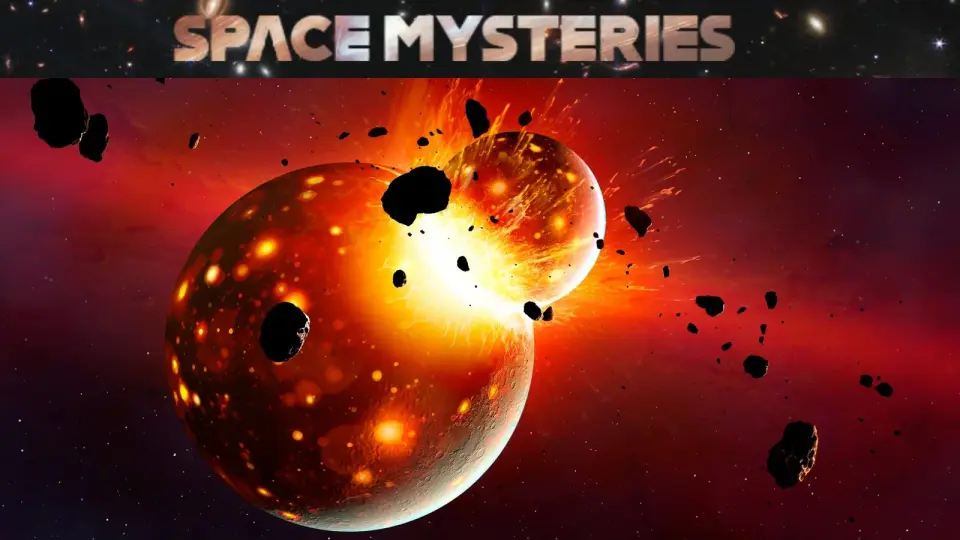
Astronomers widely accept the giant-impact hypothesis, which posits that a Mars-sized protoplanet named Theia collided with Earth within the first 100 million years of the solar system's existence. This catastrophic event, potentially lasting only a few hours, ejected material into orbit that eventually coalesced to form the Moon. While this theory explains the Moon's current state, significant questions remain regarding the exact timing and composition of the impact.
Key points
- The leading theory for the Moon's origin is the giant-impact hypothesis, suggesting a collision between Earth and a protoplanet called Theia.
- The impact is believed to have occurred within the first 100 million years of the solar system's history, possibly within a few hours.
- Material ejected from the collision accumulated in orbit to form the Moon, a concept first proposed by geologist Reginald Aldworth Daly in 1946.
- Earlier theories suggested the Moon formed from Earth's rapid spin, but collision models by William Hartmann and Donald Davis in the 1970s gained more traction.
- Despite its popularity, the hypothesis faces unresolved questions regarding the precise details of the event and the Moon's exact age.
Background
Recent scientific discussions have focused on the Moon's influence on Earth, including a 2026 study in JGR Solid Earth linking gravitational tides from the Sun and Moon to slow earthquakes through resonance mechanisms. Additionally, the Moon's role in stabilizing Earth's climate and tides has long been a subject of inquiry, as noted in earlier coverage of lunar impacts and tidal forces.
Why it matters
Understanding the Moon's origin is crucial for explaining Earth's current stability, including its axial tilt, which influences climate and seasons. The giant-impact hypothesis provides a framework for understanding planetary formation processes in the early solar system, helping scientists model how other planetary systems may have developed. Resolving the remaining uncertainties about this event could refine our knowledge of the solar system's timeline and the conditions that allowed life to emerge on Earth.
What to watch
Researchers continue to analyze lunar samples and isotopic data to refine the timing and composition of the giant-impact event. Future missions and studies may provide more precise dates for the Moon's formation and clarify the nature of Theia, potentially resolving the remaining gaps in the current hypothesis.
Want the full story? Read the original reporting
Read on Space