
Tiny NASA CubeSat Delivers First Ultraviolet Images for Exoplanet Habitability
TL;DR
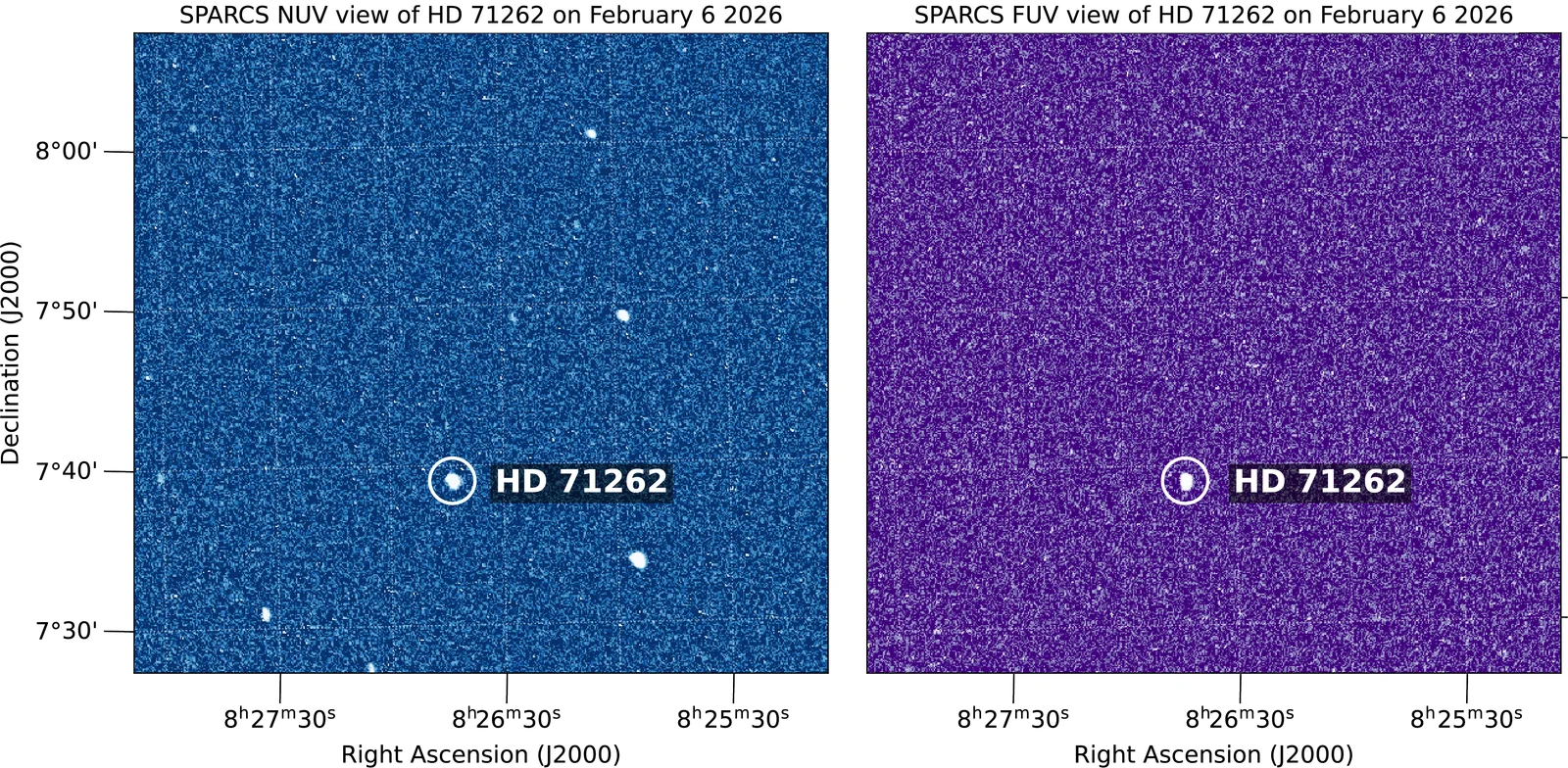
NASA's SPARCS CubeSat released its first ultraviolet images, validating its detectors and filters and kicking off a year-long program to monitor flares from low-mass stars in order to assess how stellar activity could affect the habitability of their orbiting planets and inform future UV missions.
- Tiny NASA Spacecraft Delivers Exoplanet Mission’s First Images NASA Jet Propulsion Laboratory (JPL) (.gov)
- JPL Camera Technology Aboard Tiny NASA Spacecraft Returns First Images From Orbit Pasadena Now
- ASU-led SPARCS mission achieves 'first light,' marking the start of its science operations in orbit ASU News
- Cereal Box-Sized Satellite Shares First Images of Stars While Searching for Life on Exoplanets Discover Magazine
- Cereal-box-sized NASA spacecraft sends first UV images of planet-host stars Interesting Engineering
Want the full story? Read the original reporting
Read on NASA Jet Propulsion Laboratory (JPL) (.gov)