Tag

Cubesat

All articles tagged with #cubesat

CubeSat neutrino detector aims to illuminate solar core from orbit
space13 days ago

CubeSat neutrino detector aims to illuminate solar core from orbit

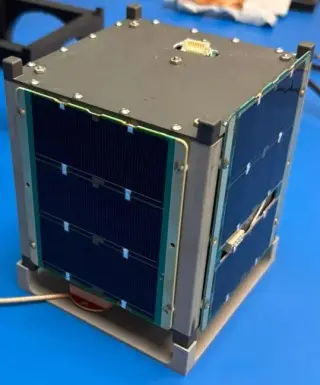
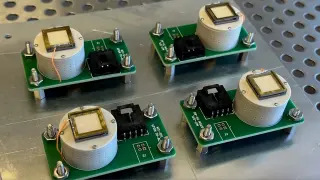
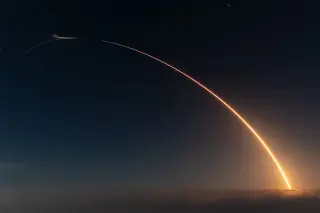
Space.com reports the world’s first space-based neutrino detector, SNAPPY, has launched to a ~310‑mile Earth orbit aboard SpaceX CAS500‑2 for about two years. The 3U CubeSat carries gallium‑tungsten detector crystals to catch solar neutrinos closer to the Sun, testing space-based detection technology and potentially enabling future solar-neutrino missions and imaging of solar fusion shells.

Tiny CubeSat Probes Solar Neutrinos from Low-Earth Orbit
space18 days ago

Tiny CubeSat Probes Solar Neutrinos from Low-Earth Orbit

NASA-supported SNAPPY, a half-pound CubeSat, launched from Vandenberg AFB to test a solar neutrino detector in a low-Earth polar orbit, featuring four crystal detectors shielded with tungsten-dust epoxy and an electronics stack on a Kongsberg NanoAvionics platform; the mission, funded by NASA's NIAC program, aims to validate detector performance in space and inform future near-Sun detectors, with contributions from NASA centers, Wichita State University, and other partners.

NASA allocates science payload on Mars MTN relay mission
civil1 month ago

NASA allocates science payload on Mars MTN relay mission

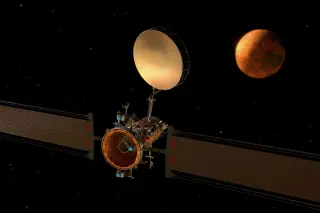
NASA is reserving space for a small science payload on the Mars Telecommunications Network (MTN) relay spacecraft—up to 20 kilograms in a 55 by 55 by 45 cm volume, up to 60 watts, and capable of 200–1,000 megabits of data per day. The payload will be provided by NASA and could be cubesats. This follows NASA's plan to include science on MTN; a draft RFP was released April 2 with an updated industry-day briefing noting the payload requirement. The final RFP is due May 1, with proposals about a month later. MTN aims for a late-2028 launch and full Mars operation by 2030, funded by a $700 million bill; several companies, including Blue Origin and Rocket Lab, are pursuing the contract, though instruments and selection details remain undecided.

Small NASA CubeSat Delivers First Ultraviolet Views of Exoplanet-Hosting Stars
space2 months ago

Small NASA CubeSat Delivers First Ultraviolet Views of Exoplanet-Hosting Stars

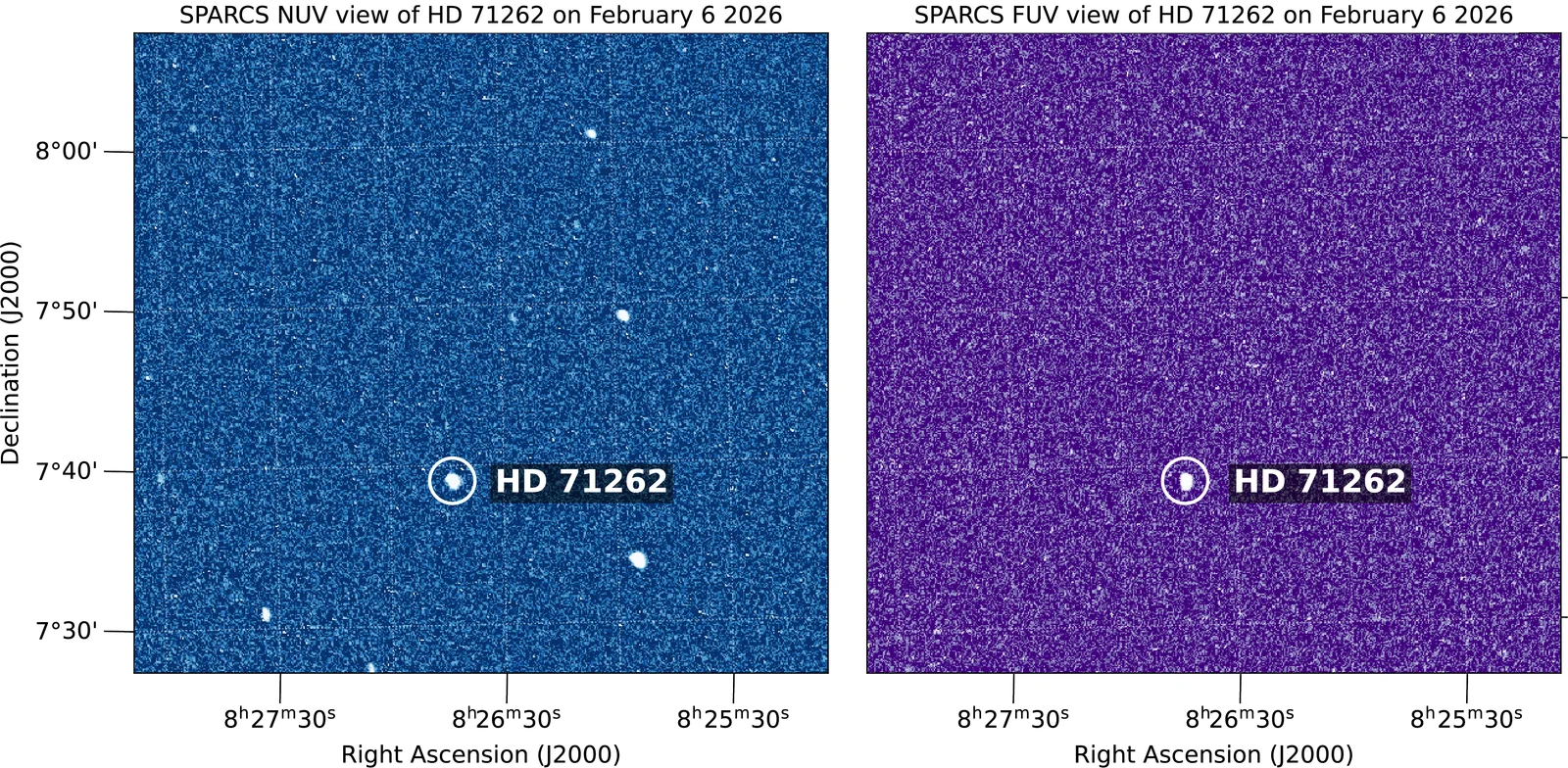
NASA’s SPARCS CubeSat has released its first ultraviolet images, confirming instrument performance and launching a year-long study of low-mass stars to understand how their flares may affect the habitability of surrounding exoplanets. The mission will monitor about 20 stars for five to 45 days using detector-integrated UV filters and onboard processing to sample stellar activity and guide future UV missions.

Tianzhou 7 Completes Mission with Atmospheric Reentry
space1 year ago

Tianzhou 7 Completes Mission with Atmospheric Reentry

China's Tianzhou 7 cargo spacecraft, which delivered supplies to the Tiangong space station earlier this year, has been deorbited and burned up in Earth's atmosphere. After undocking from the station on November 10, it reentered the atmosphere on November 17, likely over the South Pacific Ocean. Before reentry, Tianzhou 7 released a 6U cubesat named Bayi-08 for Earth observation and communication purposes. Meanwhile, China has launched the Tianzhou 8 mission to continue resupplying the Tiangong station.

NASA Launches Climate Satellite to Study Earth's Poles
science-and-technology2 years ago

NASA Launches Climate Satellite to Study Earth's Poles

Nasa has launched a CubeSat mission called PREFIRE to study the heat escaping from Earth, focusing on the Arctic and Antarctica. The mission aims to improve climate models and predictions related to sea levels, weather, and ice cover. The satellites, launched from New Zealand, will gather data on how heat is radiated into space and how cloud cover affects Earth's temperature.

NASA and Rocket Lab Launch PREFIRE Mission to Study Earth's Polar Heat Loss
science-and-technology2 years ago

NASA and Rocket Lab Launch PREFIRE Mission to Study Earth's Polar Heat Loss

NASA has launched the first of two CubeSats as part of the PREFIRE mission to measure heat loss from the Arctic and Antarctica. The data collected will enhance climate models and improve predictions related to sea levels, weather, and ice cover. The second satellite's launch date will be announced soon, and both will operate in near-polar orbits to gather frequent measurements of atmospheric phenomena.

"First Electric Thruster Successfully Tested by Benchmark Space Systems"
space-technology2 years ago

"First Electric Thruster Successfully Tested by Benchmark Space Systems"

Benchmark Space Systems has successfully flown its first electric thruster, the Xantus, on the Electro-Optical/Infrared (EO/IR) Weather Systems (EWS) demonstration cubesat. The thruster, acquired through the company's acquisition of Alameda Applied Science Corporation, uses molybdenum as propellant and is expected to be used for end-to-end spacecraft operations, including deorbiting. Benchmark plans to produce more than 50 units this year, with a focus on serving the microsat and ESPA-class spacecraft market.

"NASA's Latest Selection: New CubeSat Candidates for Space Station Missions"
space2 years ago

"NASA's Latest Selection: New CubeSat Candidates for Space Station Missions"

NASA has selected 10 small research satellites, known as CubeSats, from across eight states to fly to the International Space Station as part of its efforts to expand education and science opportunities, support technology advancement, and provide for workforce development. The selected CubeSats include projects from minority serving institutions and a K-12 school, and they aim to conduct various scientific investigations and technology demonstrations in space. These missions are planned to launch between 2025 and 2028, and they will contribute to the agency's ongoing efforts to encourage collaboration and innovation in space exploration.

"Cubesat Revolutionizes Astronomy with New Insights on 'Hot Jupiters'"
space-science2 years ago

"Cubesat Revolutionizes Astronomy with New Insights on 'Hot Jupiters'"

The Colorado Ultraviolet Transit Experiment (CUTE), a NASA-funded small satellite equipped with a telescope and spectrograph, has exceeded its expected lifetime and continues to gather data on the atmospheric loss of "hot jupiters." Its success has led to the development of two additional NASA-funded missions, Sprite and Mantis, which will study various aspects of galaxies and the habitability of planets. Lessons learned from CUTE are helping researchers understand how to build small spacecraft and instruments. The extended lifespan of CUTE has been attributed to ingenuity and luck, and its success has demonstrated the potential for small satellites to play a significant role in observing distant galaxies and other astronomical phenomena.