
Voyager 1 Endures on 22 Watts as NASA Plans a New 'Big Bang' Power Strategy
TL;DR
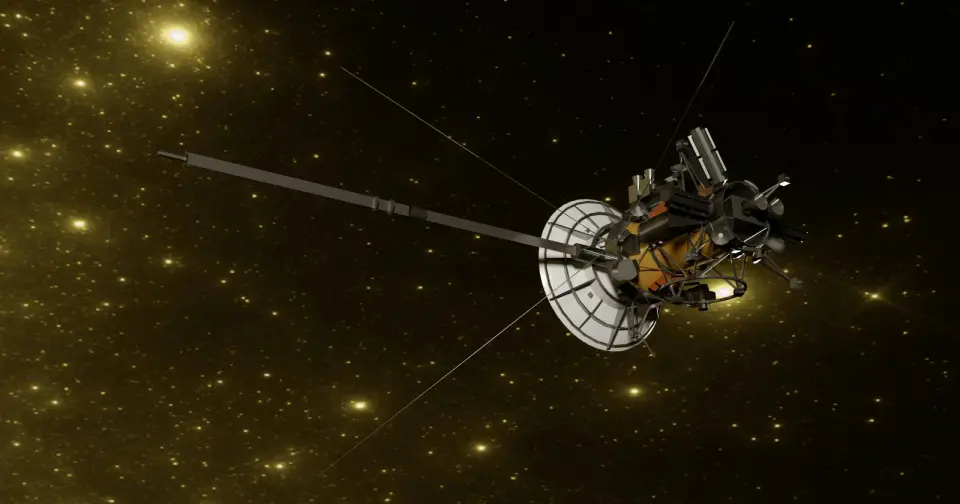
Voyager 1, about 172.6 AU from Earth, continues to transmit from beyond the heliosphere on roughly 22 watts; seven of its ten original instruments are shut down to conserve power, with only the Plasma Wave Subsystem and magnetometer remaining and a small 0.5-watt motor kept spinning to preserve revival chances. The RTGs now deliver around 220 watts total, and NASA plans a long-term 'Big Bang' power-swap strategy—starting with Voyager 2 in mid-2026—to extend telemetry into the 2030s, though one-way signals already take about 23 hours to reach Earth.
Topics:sciencespace#heliosphere#jpl#nasa#note-five-tags-only-extra-tag-kept-for-clarity-would-be-ignored#power-management#space#voyager-1
- Voyager 1 is still transmitting from beyond the heliosphere on 22 watts — less power than the bulb in your hallway — and the engineers who built it in the 1970s never expected we'd still be listening half a century later. Space Daily
- Sunset on the Voyagers wng.org
- NASA's twin Voyager spacecraft are very low on power after nearly 50 years. How long can they keep going? Space
- Countdown: NASA’s race to keep the Voyager Probes “alive” for another year CPG Click Petróleo e Gás
- NASA tweaks Voyager 2's power settings The Register
Want the full story? Read the original reporting
Read on Space Daily