Tag

Power Management

All articles tagged with #power management

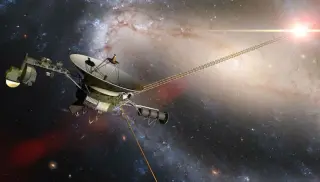
Voyager 1 Survives on a Thread: NASA balances power to keep its signal alive
science1 day ago

Voyager 1 Survives on a Thread: NASA balances power to keep its signal alive

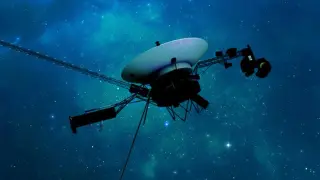
NASA is keeping Voyager 1 alive by cautiously turning off nonessential instruments and heaters to conserve the aging RTG’s power, while keeping it warm enough to prevent fuel lines from freezing and to maintain precise antenna pointing. The 25-billion-kilometre distance makes any misfire fatal, and a 2025 fuel-line clog nearly cut off thruster control—forcing a successful test of the long-dormant primary roll thrusters to extend the mission into the 2030s as communications depend on a 23-hour round trip.

Intel Arc G3: A purpose-built handheld GPU engineered for uncompromised portable gaming
technology1 month ago

Intel Arc G3: A purpose-built handheld GPU engineered for uncompromised portable gaming

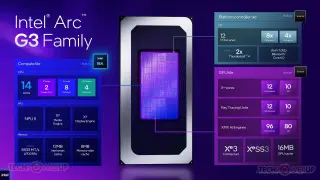
Intel revealed the Arc G3 as a handheld-focused GPU-with-integrated-CPU, built from fallout Panther Lake dies and stripped of IP blocks to fit a tight 12–13 W SoC power envelope; core count drops from 4 to 2, display engines from 3 to 2, and Thunderbolt from 4 to 2 to hit thermal targets. Power Management v3.5 parks P-cores under low power so the E-cores handle the workload for steadier frame delivery; XeSS Frame Gen imposes a rasterization tax, and Endurance Gaming mode currently doesn’t support Frame Gen. A cloud-based shader pre-compilation pipeline further reduces load times, as Intel positions Arc G3 as a dedicated handheld challenger to Ryzen Z-series.

technology1 month ago

Microsoft overhauls third-party drivers after years of Windows 11 battery drain

Microsoft acknowledges that faulty third-party drivers have silently drained Windows 11 batteries and degraded performance for years. It will overhaul driver evaluation to assess power usage, heat generation, and performance, introduce automatic rollbacks to block problematic drivers, and shift away from crash-only criteria by incorporating telemetry to detect everyday usability issues.

Voyager 1 Endures on 22 Watts as NASA Plans a New 'Big Bang' Power Strategy
space1 month ago

Voyager 1 Endures on 22 Watts as NASA Plans a New 'Big Bang' Power Strategy

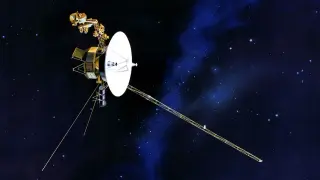
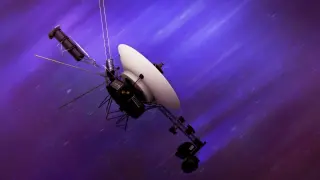
Voyager 1, about 172.6 AU from Earth, continues to transmit from beyond the heliosphere on roughly 22 watts; seven of its ten original instruments are shut down to conserve power, with only the Plasma Wave Subsystem and magnetometer remaining and a small 0.5-watt motor kept spinning to preserve revival chances. The RTGs now deliver around 220 watts total, and NASA plans a long-term 'Big Bang' power-swap strategy—starting with Voyager 2 in mid-2026—to extend telemetry into the 2030s, though one-way signals already take about 23 hours to reach Earth.

Voyager's 'Big Bang' Power Fix Could Extend Deep-Space Mission into the 2030s
space2 months ago

Voyager's 'Big Bang' Power Fix Could Extend Deep-Space Mission into the 2030s

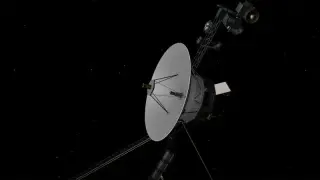
NASA's Voyager 1 and 2 may keep transmitting deep-space data into the 2030s thanks to a high-risk power-management maneuver nicknamed the 'Big Bang' that will disable three instruments to prevent fuel-line freezing and replace them with new devices to save about 10 watts. Testing on Voyager 2 in May and June 2026, followed by Voyager 1, aims to extend instrument life by roughly a year as power from aging RTGs dwindles; the goal remains to reach about 200 astronomical units by around 2035, though the probes will continue to lose capability as power declines and the transmitter consumes most of the remaining power.

Voyager 1 pauses a science instrument to extend its interstellar mission
space2 months ago

Voyager 1 pauses a science instrument to extend its interstellar mission

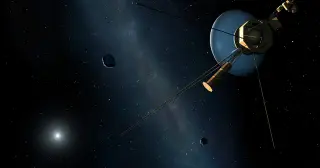
NASA commanded April 17 to shut down Voyager 1’s Low-energy Charged Particles instrument to conserve power as it drifts deeper into interstellar space, mirroring a similar move on Voyager 2 last year. Engineers hope a bold “Big Bang” power-swap upgrade—first tested on Voyager 2 this spring and then on Voyager 1 in July—will keep the venerable probes producing data for about another year, helping mark Voyager 1’s 50th anniversary while two other instruments remain active.

Voyager 1 Shuts Down a Sensor to Stretch Its Interstellar Mission
space2 months ago

Voyager 1 Shuts Down a Sensor to Stretch Its Interstellar Mission

NASA’s Voyager 1 cut power to the Low-energy Charged Particles instrument to conserve energy after a power drop, leaving two instruments still operating as the aging probe drifts through interstellar space. The shutdown buys about a year while engineers pursue a long-term, lower-power “Big Bang” fix to swap in efficient hardware and extend the mission's life.

NASA Sacrifices Voyager 1 Instrument to Keep Interstellar Mission Alive
science2 months ago

NASA Sacrifices Voyager 1 Instrument to Keep Interstellar Mission Alive

Facing a dwindling nuclear power source, NASA shut down Voyager 1’s Low-energy Charged Particles (LECP) instrument to conserve energy and prevent an automatic shutdown, as its power declines by about four watts per year. Only two instruments remain online—plasma waves and magnetic fields—with a bold plan dubbed the Big Bang to swap in lower‑power components on Voyager 2 first, then Voyager 1, in hopes of keeping the mission alive for at least another year while continuing exploration of interstellar space.

Voyager 1 Trims Its Payload to Push Deeper into Interstellar Space
science2 months ago

Voyager 1 Trims Its Payload to Push Deeper into Interstellar Space

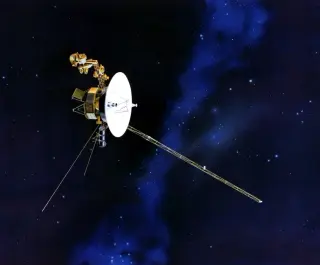
NASA has shut down Voyager 1’s Low-energy Charged Particles instrument to conserve dwindling power as the probe—about 15 billion miles from Earth—continues its interstellar voyage; seven of its ten instrument sets have been turned off so far, with Voyager 2’s LECP already disabled, and the team plans further shutdowns along with a 'Big Bang' power swap to keep data flowing from beyond the heliosphere.

technology2 months ago

Linux AMDGPU Adds Power Module to Align Display Power with Windows

The AMDGPU kernel driver’s DC patches introduce a new Linux "power module" to manage display power features such as backlight and panel self-refresh (PSR), aiming to better match Windows behavior. The Display Manager will be refactored to use the power module for replay/PSR/backlight control and improved VRR handling, unifying power-saving behavior across Linux and Windows—benefiting laptops and mobile devices. The patches also enable driver power gating, but they’re not in Linux 7.1 and are expected to land in 7.2 later this year.

M5 Max Too Powerful for 14-Inch MBP: Throttling Undermines its 14" chassis
technology4 months ago

M5 Max Too Powerful for 14-Inch MBP: Throttling Undermines its 14" chassis

Notebookcheck tests the 14-inch MacBook Pro with the top-end M5 Max (40-core GPU, 128 GB RAM, 8 TB SSD) and finds phenomenal raw performance on paper but serious cooling limits in a compact chassis: significant thermal throttling and inconsistent CPU behavior in High Power mode, driven by true limits on power input (~97 W) and a 96 W PSU. The result is faster short-burst gains but unstable sustained performance, plus battery drain under load. Despite the downsides, the 14" MBP still offers an excellent display, speakers and impressive battery life in light use; for sustained workloads the 16-inch MBP or the M5 Pro in 14" form may be a better fit, with 8 TB/128 GB RAM as the top-end option.

technology9 months ago

Apple Silicon Enthusiast Appreciates Framework's Charm

The article discusses the challenges and frustrations with modern standby and suspend/hibernate support on Linux laptops, contrasting it with Apple's Silicon efficiency and macOS, and highlights the technical complexities involved in achieving low power consumption and reliable sleep modes on different hardware platforms. It emphasizes the need for better hardware-software integration and the potential of custom solutions like UKI for Linux hibernation, while also expressing optimism for future improvements in battery life and suspend support across various systems.