
Voyager 1 Keeps Coasting Toward a Light-Day Milestone
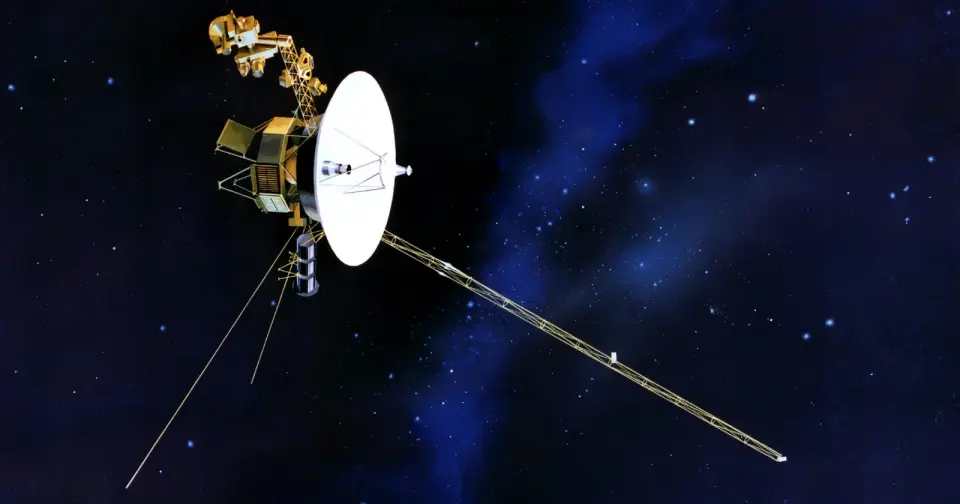
Voyager 1, launched in 1977, remains the fastest and most distant human-made object, cruising at about 17 km/s with no engine. It has crossed the heliopause into interstellar space and sits roughly 25 billion kilometers from the Sun (about 170 AU). NASA expects it to reach about one light-day from Earth by November 2026, a distance at which light takes a day to reach Voyager and come back. Power is fading—from an initial ~470 watts to well under half—so engineers are shutting instruments offline; only two remain as the team plans further power-saving steps. When power runs out, Voyager 1 will go quiet but continue coasting for thousands of years, not aimed at any particular star (in ~40,000 years it will pass about 1.6 light-years from Gliese 445).
- Voyager 1 has been travelling non-stop since 1977, faster than a speeding bullet every second of every day, and it has not yet reached the distance of a single light-year from Earth Space Daily
- It's Official: Voyager 1 Will Break A Cosmic Record, Reaching 1 Light-Day From Earth On November 18, 2026 IFLScience
- The 49-Year-Old Spacecraft Still Talking From Deep Space HackerNoon
- Voyager 1 launched in 1977 on a four-year mission and is still flying 49 years later, now so far away that in November 2026 a radio signal will take a full 24 hours to reach it — so when engineers say "good morning" on a Monday, the answer won't arrive until 19FortyFive
- A probe is about to enter a realm humanity has only imagined until now Futura, le média qui explore le monde
Want the full story? Read the original reporting
Read on Space Daily