
Voyager 1 Loses Science Data Amid One Light-Day Milestone
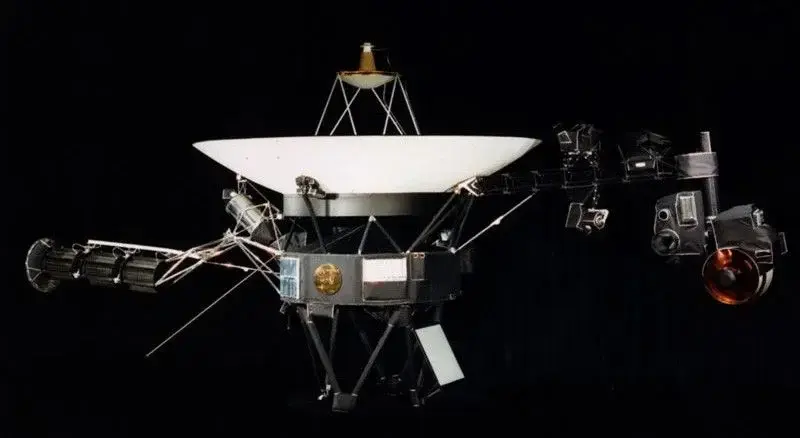
NASA confirmed that Voyager 1 has reached a distance of one light-day from Earth, a milestone achieved nearly 49 years after its 1977 launch. However, the spacecraft has ceased transmitting science and engineering data since November 14, 2026, sending only an empty carrier signal. Engineers are investigating the cause, which may be linked to a previous flight data system failure or a recent two-day communication blackout. The probe’s extreme distance creates a 48-hour communication loop, complicating repairs as its power sources slowly deplete.
Key points
- Voyager 1 reached one light-day from Earth (approximately 16 billion miles) on November 18, 2026, making it the first human-made object to cross this threshold.
- The spacecraft stopped sending science and engineering data on November 14, 2026, but continues to transmit a carrier signal, indicating its navigation computer and antenna are functional.
- NASA detected the data loss on November 14, five days before the light-day milestone, and is currently investigating the cause.
- The issue resembles a 2023 failure involving a defective flight data system chip, which was resolved by bypassing the faulty component.
- Voyager 1 experienced a complete loss of communication for two days in late October 2026, which NASA is investigating as a potential link to the current data outage.
- Communication with the probe is severely delayed, with commands taking 24 hours to reach the spacecraft and responses taking another 24 hours to return.
Background
Voyager 1, launched in September 1977, was originally designed for a five-year mission to explore Jupiter and Saturn. It crossed into interstellar space in 2012, becoming the first human-made object to do so. The spacecraft has been extended multiple times beyond its expected lifespan, with recent power-saving measures including the shutdown of the Low-energy Charged Particles instrument in April 2026 and a 'Big Bang' operation in September 2026 that turned off three devices. The probe carries a Golden Record, a gold-plated copper phonograph containing images and sounds from Earth, intended as a message for any advanced civilization that might find it.
How outlets are covering it
CNN emphasizes the historical significance of the one light-day milestone and the concern over the spacecraft’s status, noting that the data loss echoes a 2023 incident. Hackaday highlights the technical challenges, including failing RAM chips and clogged fuel lines, and questions how much longer the probe can operate. Big Think focuses on the Golden Record’s pulsar map, arguing that it is now scientifically inaccurate and would be useless to any alien civilization that might find it. KATV, through an interview with Dr. Constance Meadors, discusses the cultural significance of the Golden Record and STEM opportunities for students, but does not address the current data transmission issue.
Why it matters
The data transmission failure of Voyager 1 underscores the fragility of deep-space exploration and the challenges of maintaining communication with spacecraft at extreme distances. The probe’s aging systems and dwindling power sources raise questions about the future of long-duration space missions. Additionally, the incident highlights the importance of robust engineering and redundancy in spacecraft design, as well as the need for innovative solutions to extend the lifespan of such missions.
What to watch
NASA engineers are actively troubleshooting the data transmission issue, but the 48-hour communication loop means that any fixes will take weeks to implement. The probe’s radioisotope thermoelectric generators are slowly losing power, with estimates suggesting that engineering data may continue until 2036. If the issue cannot be resolved, Voyager 1 may eventually cease all communication, marking the end of its mission. The spacecraft’s Golden Record, while scientifically outdated, remains a cultural artifact intended for any advanced civilization that might encounter it in the future.
- Voyager 1 Stops Sending Data, Reaches One Light-Day From Earth Hackaday
- Voyager 1 hits new data glitch while making history CNN
- What Voyager’s Golden Record says about us—and where Arkansas students can go next KATV
- Voyager’s cosmic map of Earth’s location: Cute, but wrong Big Think
- Voyager 1 Spacecraft is One “Light Day” From Earth NewsForKids.net
Want the full story? Read the original reporting
Read on Hackaday