
2026 Leonid Meteor Shower Peaks With Modest Rates and Dark Skies
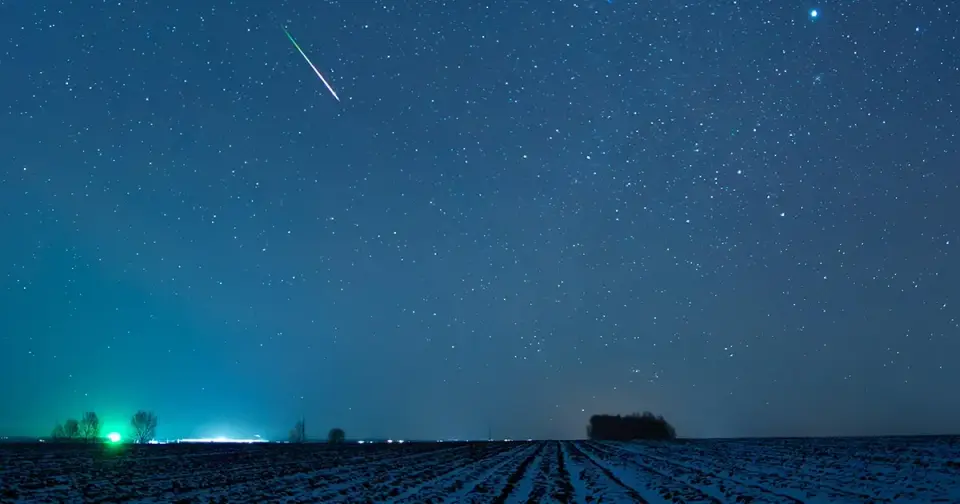
The 2026 Leonid meteor shower peaks between November 16 and 17, offering a modest display of up to 15 meteors per hour under ideal conditions. Unlike historical storms, this year’s activity is low due to the parent comet’s distance from the sun. Observers are advised to seek dark locations away from light pollution, as the waxing crescent moon will set early, improving visibility in the pre-dawn hours.
Key points
- Peak activity occurs overnight from Monday to Tuesday, with the best viewing window between 2:00 and 3:00 a.m. local time when the constellation Leo is high in the sky.
- Expected meteor rates are low, ranging from fewer than three to approximately 15 per hour, depending on the source and viewing conditions.
- The waxing crescent moon, 39-41% illuminated, sets before 11:00 p.m. local time, leaving the rest of the night dark for optimal observation.
- No major meteor storm is expected this year; the next significant outburst is forecast for 2033 or 2034, with rates potentially reaching 2,000 per hour.
- Viewing requires no special equipment; observers should lie flat, face east, and allow eyes to adapt to darkness for at least 30 minutes.
Background
The Leonid meteor shower occurs annually when Earth passes through debris left by Comet 55P/Tempel-Tuttle, which orbits the sun every 33 years. Historical storms, such as those in 1833 and 1966, produced thousands of meteors per hour, but recent activity has been modest. The 2026 shower is part of a series of annual displays, including the Geminids in December and Ursids in late December. Previous coverage noted that the 2026 peak was expected to offer modest rates due to the comet’s current distance from the sun.
How outlets are covering it
NASA and the American Meteor Society emphasize the low expected rates, with NASA’s Bill Cooke noting that Leonids are faint and require dark skies. The New York Times highlights the low observation rate, predicting fewer than three meteors per hour, while CNN reports up to 15 per hour under ideal conditions. Space magazine provides historical context, noting that 1966 saw 144,000 meteors per hour, but forecasts a lean 2026 due to the comet’s distance. All sources agree that the moon’s early setting improves visibility, but differ on the exact peak time and expected rates.
Why it matters
The 2026 Leonid meteor shower offers a rare opportunity to observe cosmic debris from a comet that originated in the outer solar system. While this year’s display is modest, it serves as a reminder of the periodic nature of meteor showers and the long-term cycles of cometary orbits. Understanding these events helps scientists predict future storms and appreciate the dynamic nature of our solar system.
What to watch
The Leonid meteor shower will continue through November 30, with weaker encounters predicted between November 17 and 19. The next major Leonid storm is expected in 2033 or 2034, with rates potentially reaching 2,000 per hour. Observers can also look forward to the Geminids in December 13-14 and Ursids in December 21-22, as well as two supermoons in November and December 2026.
- Leonids meteor shower peaks on both Tuesday and Wednesday night - How to best view the celestial show LiveNOW from FOX
- See the Leonid meteors this week — ‘the shower that started it all’ CNN
- How to Watch the 2026 Leonids Meteor Shower The New York Times
- This Week's Sky at a Glance, November 13 – 22 Sky & Telescope
- 60 years ago the Leonid meteor shower produced 144,000 meteors per hour. Could it happen again? Space
Want the full story? Read the original reporting
Read on LiveNOW from FOX