
2026 Total Solar Eclipse Delivers Rare Darkness to Europe and Greenland
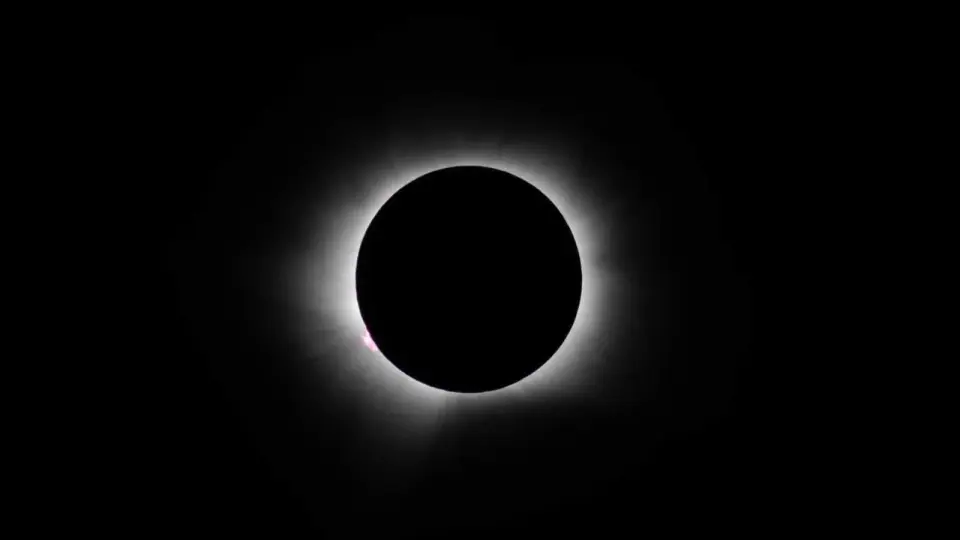
The August 12, 2026 total solar eclipse swept across Greenland, Iceland, and Spain, offering rare totality to millions. While Europe saw up to 92% coverage, Spain experienced its first total eclipse since 1905. Scientists captured solar corona data from aerial missions, and the UK saw its most significant partial eclipse since 1999.
Key points
- Totality began in Scoresby Sund, Greenland, and moved across Iceland and northern Spain.
- Spain experienced its first total solar eclipse since 1905, with crowds gathering in locations like A Coruña.
- The UK and much of Europe saw a partial eclipse, with coverage reaching 90-92% in some areas.
- Irish and international scientists flew to Iceland to capture images of the sun's corona.
- The next total solar eclipse visible in the UK will not occur until 2090.
Background
Prior to August 12, 2026, media outlets highlighted the upcoming total solar eclipse as a rare event for Europe, with the path of totality crossing Greenland, Iceland, and Spain. Experts noted that while total eclipses occur every 18 months somewhere on Earth, they are rare for specific locations, happening roughly once every 400 years. The 2026 event was part of a 'golden age' of total solar eclipses expected between 2026 and 2028, though none are visible in the UK.
How outlets are covering it
Space.com emphasized the visual spectacle, highlighting first photos of totality from the MS Spitsbergen in Greenland and the sun's corona. CNN focused on the broad impact, noting that while Spain and Iceland saw totality, millions in Europe and the US saw a partial eclipse, with Berlin seeing 85% coverage and Paris 92%. RTÉ.ie highlighted the scientific aspect, detailing an Irish-led aerial mission to capture solar data, with scientists describing the experience as 'extremely eerie.' BBC focused on the public reaction, noting the UK's most dramatic eclipse since 1999 and the rarity of the event for European locations.
Why it matters
The 2026 total solar eclipse provided a rare opportunity for scientists to study the sun's corona and for millions of people to witness a once-in-a-generation astronomical event. It also highlighted the importance of eye safety, with optometrists warning of potential damage from improper viewing. The event underscored the rarity of total solar eclipses for specific locations, with the UK not seeing another until 2090.
What to watch
The Perseid meteor shower is expected to peak on August 13, 2026, offering another astronomical event for skywatchers. The next total solar eclipse visible in the UK will not occur until 2090, while the next total solar eclipse in the US will be in 2027, which is expected to be the longest in the remainder of our lifetimes.
- Total solar eclipse 2026 has begun. Here are the first views of totality Space
- Live updates: Total solar eclipse sweeps across Europe CNN
- Thousands turn out across Ireland for solar eclipse RTE.ie
- Millions in UK and Europe left wowed by once-in-a-generation solar eclipse BBC
- Solar eclipse 2026 across Europe: in pictures The Guardian
Want the full story? Read the original reporting
Read on Space