
James Webb Spots a New Cosmic Class: a Black Hole Star Wrapped in Gas
TL;DR
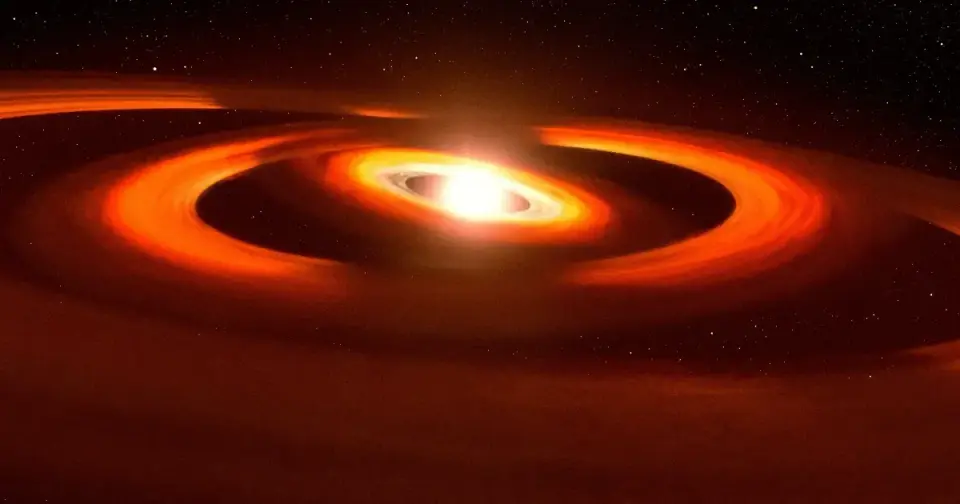
Using the James Webb Space Telescope, researchers identified MoM-BH*-1—a black hole at its core surrounded by a dense gas shell that makes it look star-like, with about 100,000 solar masses and emitting energy about 100 billion times that of a typical star; it formed within 700 million years after the Big Bang. This discovery suggests many of the faint red dots seen in the early universe could be black hole stars embedded in young galaxies, potentially reshaping ideas about early black holes and galaxy growth.
Topics:top-newsscience#black-hole-star#early-universe#james-webb-space-telescope#little-red-dots#quasi-star#science
- Astronomers Discover an Entirely New Type of Object: a "Black Hole Star" Futurism
- A gas-enshrouded and gas-reddened black hole at cosmic dawn Nature
- Astronomers Peered at the Early Universe and May Have Discovered a New Kind of Celestial Object: Black Hole Stars Smithsonian Magazine
- Astronomers discover a brand-new type of astrophysical object: A black hole star MIT News
- Astronomers discover a new kind of cosmic object – a black hole ‘star’ The Guardian
Want the full story? Read the original reporting
Read on Futurism