
New Radio Signal Links White Dwarf to Sun-Like Star in Mystery Binary
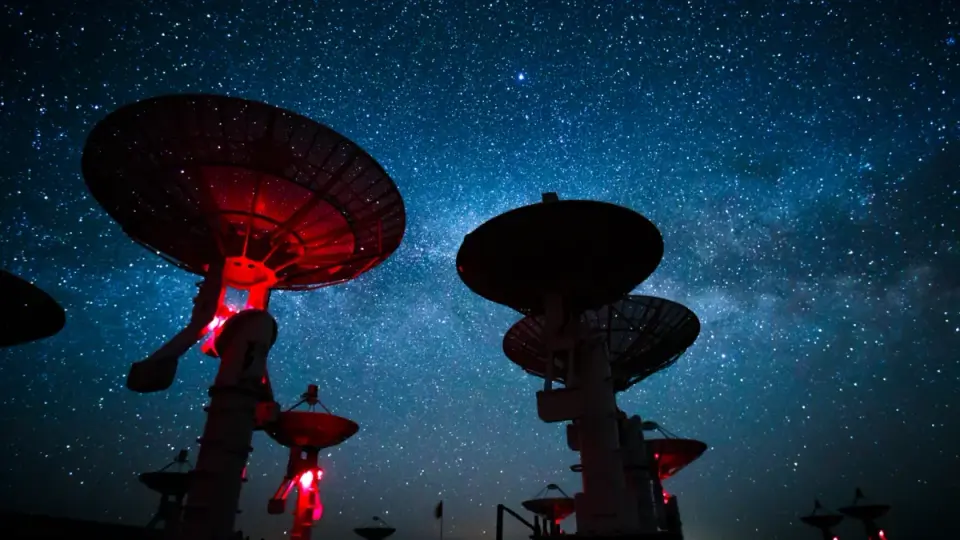
Astronomers identified a new long-period transient, GPM J071507-114153, consisting of a white dwarf orbiting a Sun-like star. The system emits radio pulses every 7.9 minutes, a behavior previously linked only to white dwarfs paired with cooler red dwarfs. This discovery helps clarify that the radio signals originate from the white dwarf itself, not its companion, resolving a key debate in the field.
Key points
- The object GPM J071507-114153 is a binary system located approximately 5,000 light-years away, comprising a low-mass white dwarf and a G-type star similar to the Sun.
- The white dwarf emits radio pulses every 7.9 minutes, while the pair orbits each other with a period of about 1.3 days.
- This is the first confirmed case of a long-period transient (LPT) involving a Sun-like companion; previous LPTs with white dwarfs were mostly paired with M-dwarf red dwarfs.
- Radio data from the Murchison Widefield Array and MeerKAT telescope allowed researchers to track the white dwarf's motion, confirming the pulses originate from the white dwarf or its immediate vicinity.
- The study also detected stellar flares and a stellar prominence on the Sun-like companion, demonstrating that radio waves can reveal atmospheric activity on distant stars.
Background
Long-period transients (LPTs) are a recently recognized class of radio sources that emit bright pulses with regular intervals of minutes to hours. The first LPT was identified in 2018 and reported in 2022, with about a dozen now known. While some LPTs have been linked to white dwarf binaries, it was previously unclear which star in the pair generated the radio emission. This new discovery provides the first clear evidence that the white dwarf is the source.
How outlets are covering it
ScienceAlert highlights a separate LPT, J1555-5631, which pulses every 62.2 minutes and shows complex magnetic field structures, suggesting not all LPTs are the same type of object. In contrast, Nature and Space focus on GPM J071507-114153, emphasizing the confirmation that the white dwarf is the radio source. Sci.News notes that this is the first time such a signal has been traced to a white dwarf with a Sun-like partner, resolving previous ambiguity about which star in binary LPTs produces the pulses. All sources agree that the Square Kilometre Array (SKA) will significantly improve future LPT detection.
Why it matters
This discovery clarifies the physical mechanism behind long-period transients, confirming that white dwarfs in binary systems can produce radio pulses even when paired with Sun-like stars. It also demonstrates that radio astronomy can detect stellar storms on distant stars, opening new avenues for studying stellar activity and magnetic interactions in binary systems.
What to watch
Researchers expect the Square Kilometre Array (SKA) to detect many more LPTs and provide detailed views of their signals. A larger catalog of LPTs may reveal patterns in their activity, helping astronomers understand why these objects erupt with clockwork regularity and then fall silent. Further studies may also explore the role of magnetic fields and companion star interactions in generating radio emission.
- A Mysterious Object in Space Pulsed Every 62 Minutes. Then It Vanished. ScienceAlert
- A dead star is flashing radio waves every 8 minutes, and its partner looks a lot like the sun Phys.org
- A long-period transient with a Sun-like companion Nature
- Astronomers trace mystery radio signals back to cosmic odd couple of white dwarf and sun-like star Space
- White Dwarf’s Radio Pulses Reveal Storms on Its Sun-Like Companion Sci.News
Want the full story? Read the original reporting
Read on ScienceAlert