Tag

White Dwarfs

All articles tagged with #white dwarfs

Warwick Astronomers Confirm First Green Star, Powered by Devoured Planets
science3 hours ago

Warwick Astronomers Confirm First Green Star, Powered by Devoured Planets

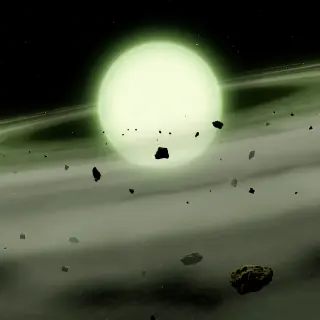
A University of Warwick study identifies WD J1330+6435 as the first star to appear green to the human eye. The white dwarf’s color results from a dense atmosphere rich in sodium, calcium, and lithium, which absorbs orange and violet light. This material originates from rocky debris of destroyed planets. The research, published in RAS Techniques and Instruments, also identifies the reddest known star and suggests that roughly one in thirty nearby white dwarfs exhibits unusual colors, challenging the traditional view that stellar hue is determined solely by temperature.
White Dwarfs Break the Color Rule: First Green Star Identified
science20 hours ago

White Dwarfs Break the Color Rule: First Green Star Identified

A University of Warwick study reveals that white dwarf stars can appear in colors beyond the traditional orange, white, and blue, including a newly identified green star. By analyzing spectral data from 151 nearby white dwarfs, researchers found that dense atmospheres and accreted planetary debris alter light absorption, creating hues like green, pink, and yellow. While most white dwarfs remain white, this discovery challenges the assumption that stellar color is determined solely by temperature.
Warwick astronomers identify first green star and reddest white dwarf via spectral analysis
science2 days ago

Warwick astronomers identify first green star and reddest white dwarf via spectral analysis

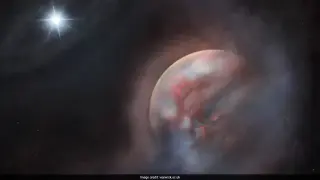
Astronomers at the University of Warwick have identified the first star to appear green to the human eye, a white dwarf named WD J1330+6435. Located 280 light-years away in the constellation Draco, this 'zombie' star glows green because sodium in its atmosphere absorbs orange light. The study also identified WD J1011+2845 as potentially the reddest star ever recorded, glowing salmon-pink due to carbon molecules. These findings challenge the traditional view that stellar color is determined solely by temperature, demonstrating that atmospheric density and accreted planetary debris can create unexpected hues.

Study Reveals White Dwarfs Can Appear Green, Pink, and Purple Due to Dense Atmospheres
science4 days ago

Study Reveals White Dwarfs Can Appear Green, Pink, and Purple Due to Dense Atmospheres

A new study published in RAS Techniques and Instruments reveals that white dwarf stars, the dense remnants of dying stars, can appear in colors beyond the traditional white or blue. Researchers found that atmospheric density and chemical composition, rather than just temperature, dictate these hues. The study identifies the first known green star and the reddest recorded star, challenging previous assumptions about stellar color.

White Dwarf WD J1330+6435 Reveals First-Ever Green Star
science4 days ago

White Dwarf WD J1330+6435 Reveals First-Ever Green Star

Astronomers have identified the first star to appear green to the human eye, a white dwarf named WD J1330+6435. This discovery, along with the reddest star ever recorded, challenges the traditional view that stellar color is determined solely by temperature. The findings suggest that dense atmospheres and accreted planetary debris can create unexpected hues like green, pink, and purple.
Warwick Study Identifies First Green Star and Reddest White Dwarf
science4 days ago

Warwick Study Identifies First Green Star and Reddest White Dwarf

Astronomers at the University of Warwick have identified the first known green star and the reddest recorded star, both of which are white dwarfs. By analyzing spectral data from 151 nearby white dwarfs, researchers determined that atmospheric density and chemical composition, rather than just temperature, dictate stellar color. The green star, WD J1330+6435, appears green due to sodium absorption, while the reddest star, WD J1011+2845, glows deep salmon-pink due to carbon molecules. This study challenges the traditional view that stellar color is solely temperature-dependent and offers new insights into planetary debris accretion.

Warwick Astronomers Identify First Green Star and Reddest White Dwarf in Universe
science5 days ago

Warwick Astronomers Identify First Green Star and Reddest White Dwarf in Universe

A study by University of Warwick researchers reveals that white dwarfs can appear green, pink, or yellow due to dense atmospheres altering light absorption. The team identified WD J1330+6435 as the first known green star and WD J1011+2845 as the reddest recorded, challenging the assumption that stellar color is determined solely by temperature.
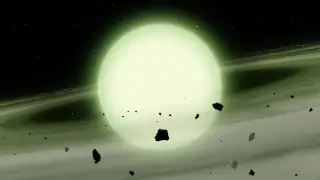
Hubble Data Reveals First 'Second-Generation' Planet Orbiting a White Dwarf
science7 days ago

Hubble Data Reveals First 'Second-Generation' Planet Orbiting a White Dwarf

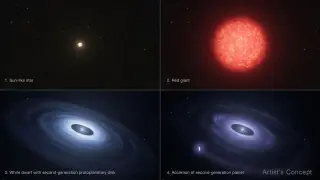
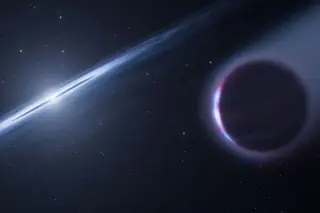
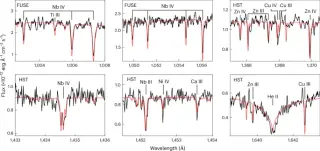
Astronomers have identified the first known 'second-generation' planet orbiting the white dwarf HS 0209+0832. This gas giant, likely Jupiter-sized, formed from material ejected by a dying star rather than the original protoplanetary disk. Evidence comes from re-analyzing 1999 Hubble data, which showed unusually high levels of niobium, an element synthesized only in dying stars. The planet is currently losing its atmosphere to intense radiation, which rains back onto the white dwarf.

White Dwarf Feeds on Planet Born from Stellar Ashes
science8 days ago

White Dwarf Feeds on Planet Born from Stellar Ashes

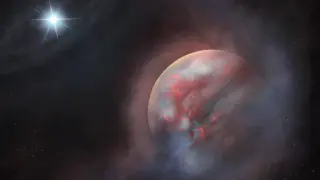
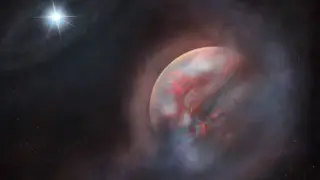
Astronomers have identified the first potential 'second-generation' planet orbiting the white dwarf HS 0209+0832, located 270 light-years away in the constellation Cetus. Unlike typical planets formed from a star's birth, this candidate likely formed from material ejected when the star died. Analysis of 1999 Hubble data reveals the white dwarf is accreting heavy elements like niobium, suggesting it is consuming the atmosphere of a nearby gas giant. This discovery implies that planets can form after a star's main sequence phase, potentially offering long-term habitability as white dwarfs cool slowly.

Astronomers Identify First 'Phoenix Planet' Formed From Dead Star's Ashes
science13 days ago

Astronomers Identify First 'Phoenix Planet' Formed From Dead Star's Ashes

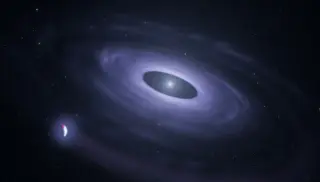
A team led by the University of Warwick has identified a likely second-generation planet orbiting the white dwarf HS 0209+0832. Published in Nature Astronomy, the study suggests this world formed from debris ejected by the star during its dying phase, rather than from the original protoplanetary disk. The discovery, confirmed by Hubble and TESS data, marks the first time such a planet has been found around a white dwarf, challenging the assumption that planetary formation is a one-time event tied to a star's youth.

White Dwarf HS 0209+0832 Accretes 'Second-Generation' Planet Formed from Stellar Ashes
science14 days ago

White Dwarf HS 0209+0832 Accretes 'Second-Generation' Planet Formed from Stellar Ashes

Astronomers have identified a white dwarf, HS 0209+0832, that is accreting material from a 'second-generation' planet. This planet formed not from the original protoplanetary disk, but from the ejected envelope of the star's red giant phase. The composition of the accreted material, rich in s-process elements like niobium and depleted in rock-forming elements, confirms this unique origin.

First 'Second-Generation' Planet Found Orbiting a White Dwarf
science15 days ago

First 'Second-Generation' Planet Found Orbiting a White Dwarf

Astronomers have identified the first known 'second-generation' planet orbiting a white dwarf, a world formed from the ejected material of a dying star rather than the original protoplanetary disk. The discovery, centered on the white dwarf HS 0209+0832, reveals a gas giant whose atmosphere is being stripped by intense radiation, feeding heavy elements back into the star. This finding challenges previous assumptions about planetary formation around stellar remnants and offers a new method to detect similar systems.

White Dwarf HS 0209+0832 Feeds on Planet Formed from Stellar Ashes
astronomy15 days ago

White Dwarf HS 0209+0832 Feeds on Planet Formed from Stellar Ashes

Astronomers have identified a white dwarf, HS 0209+0832, that is accreting material from a 'second-generation' planet. This planet likely formed from the ejected envelope of the star's progenitor after it died, rather than from the original protoplanetary disk. The discovery, published in Nature, marks the first evidence of such post-stellar planetary formation around a white dwarf.

White Dwarf Feeds on Planet Born from Stellar Ashes
science15 days ago

White Dwarf Feeds on Planet Born from Stellar Ashes

Astronomers have identified a white dwarf star, HS 0209+0832, that is accreting material from a 'second-generation' planet. This planet likely formed from the ejected envelope of the star’s progenitor after it died, rather than from the original protoplanetary disk. The discovery, published in Nature, marks the first evidence of such post-stellar planetary formation around a white dwarf.