
Engineered Yeast Converts Plastic Waste Into Edible 'Microbites' for Space and Disaster Zones
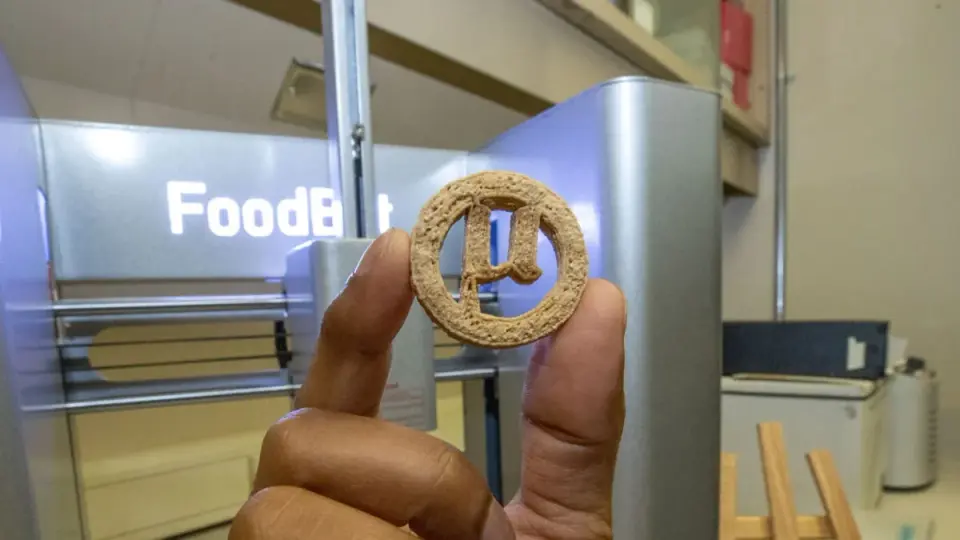
Researchers at Southern Illinois University Carbondale have developed a method to convert polyethylene terephthalate (PET) plastic and agricultural waste into edible cookies called 'µBites.' The process uses oxidative hydrothermal dissolution to break down materials, followed by genetically engineered yeast to synthesize proteins, vitamins, and flavors like vanilla. While the cookies are safe and aromatic, human taste tests are pending regulatory approval. The technology aims to address food scarcity in extreme environments, such as deep-space missions or disaster zones, though current production costs remain high at $60 per kilogram.
Key points
- The 'µBites' project, led by Lahiru Jayakody and Sandhya Jayasekara at SIU Carbondale, transforms PET plastic and corn stalks into edible food using engineered yeast.
- The process involves breaking down plastic with heat and pressure, then using CRISPR-edited yeast to convert carbon into proteins, fats, and flavorings like vanillin and beta-carotene.
- The resulting dough is 3D-printed into cookie shapes and microwaved; while safety tests are complete, human consumption trials await institutional approval.
- The technology was developed under NASA's Deep Space Food Challenge to provide sustainable nutrition for astronauts and disaster relief, though it did not win the competition.
- Current production costs are approximately $60 per kilogram, with the team aiming to reduce this through improved efficiency and scale.
Background
This development follows earlier coverage of similar initiatives, including a July 2026 study on using bottle reflectors to protect dolphins, which highlights broader efforts to repurpose plastic waste. The µBites project builds on previous demonstrations of converting plastic into other materials, such as medicines or super-materials, but focuses specifically on food production for extreme environments where traditional supply chains are absent.
How outlets are covering it
Gizmodo and The Guardian emphasize the potential of µBites to address global food insecurity and plastic waste, citing Jayakody's vision for a 'social shift' in waste management. ScienceAlert highlights the technical feasibility, noting that the system could be deployed in submarines or disaster relief vehicles. However, New Scientist presents a critical perspective, quoting Jason Hallett of Imperial College London, who argues that the approach is a 'practical dead end' given the 400 million tons of annual plastic waste, suggesting that recycling remains the more viable solution. While the research team views the project as a proof of concept for upcycling, skeptics question its commercial viability and public acceptance.
Why it matters
The µBites project represents a significant step in bioengineering, demonstrating that plastic waste can be repurposed into nutritious food. This could mitigate food scarcity in isolated regions and reduce environmental plastic pollution. However, the high cost and public skepticism regarding eating plastic-derived products pose significant hurdles to widespread adoption. The technology also raises questions about the future of food production in space and extreme environments, where traditional agriculture is impossible.
What to watch
The team is awaiting institutional approval to conduct human taste tests. They plan to improve yeast efficiency to increase carbon conversion rates from the current 50% to nearly 100%. Additionally, they are exploring the use of µBites ingredients in other food products, such as milk and meat alternatives, and in animal feed. Long-term, the goal is to reduce production costs and address the challenges of operating the system in microgravity for space missions.
- Scientists Develop Microbes That Make Vanilla Cookies Out of Plastic Bottles Gizmodo
- Here’s How Scientists Turned Plastic Bottles Into Nutritious Cookies Forbes
- Scientists Just Made A Cookie Out of Recycled Plastic 'Slurry'. Welcome to 2026 ScienceAlert
- Hard to swallow? The future of snacking may be 3D-printed cookies made from upcycled plastic The Guardian
- Plastic bottles can be turned into edible, vanilla-flavour cookies New Scientist
Want the full story? Read the original reporting
Read on Gizmodo