
Study Reveals White Dwarfs Can Appear Green, Pink, and Purple Due to Dense Atmospheres
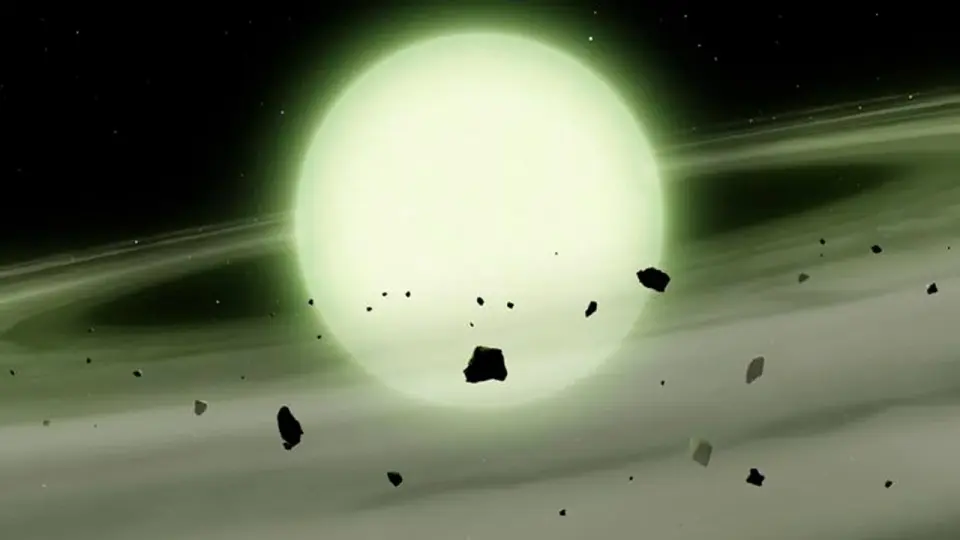
A new study published in RAS Techniques and Instruments reveals that white dwarf stars, the dense remnants of dying stars, can appear in colors beyond the traditional white or blue. Researchers found that atmospheric density and chemical composition, rather than just temperature, dictate these hues. The study identifies the first known green star and the reddest recorded star, challenging previous assumptions about stellar color.
Key points
- White dwarfs can appear green, pink, cyan, purple, and yellow due to dense atmospheres interacting with trace elements like carbon, calcium, and sodium.
- The study analyzed spectra from 151 white dwarfs within 65 light-years of Earth, finding that only about 1 in 30 exhibit unusual colors.
- WD J1330+6435 is identified as the first known green star, caused by sodium absorption, while WD J1011+2845 is the reddest recorded star, glowing deep salmon-pink due to carbon molecules.
- The findings suggest that white dwarfs can act as diagnostic tools for the chemistry of planetary debris accreted from nearby systems.
- The median color temperature of the sample was approximately 6,800K, perceived as white, correcting the misconception that white dwarfs are typically blue.
Background
This discovery builds on earlier reports from our archive, which highlighted the same study's findings regarding the first green star and the reddest white dwarf. Previous coverage emphasized how these findings challenge the traditional view that stellar color is solely temperature-dependent. Additionally, recent studies have suggested that the solar system may collapse within one billion years after the Sun becomes a white dwarf, highlighting the dynamic nature of stellar remnants.
How outlets are covering it
Live Science and Popular Science emphasize the surprising variety of colors, including the first green star and the reddest recorded star, attributing these hues to dense atmospheres and chemical interactions. CNN focuses on the green star discovery, noting that white dwarfs can serve as diagnostic tools for planetary material. Space.com highlights the green star as a 'cosmic zombie' just in time for Halloween, while also noting the broader implications for understanding stellar remnants. All sources agree that the study challenges the traditional view that stellar color is determined solely by temperature, but they differ in their emphasis on the specific colors and the implications for planetary debris accretion.
Why it matters
This study provides new insights into the physics of white dwarfs and the chemistry of planetary debris, offering a new way to understand the formation and evolution of planetary systems. The findings also correct misconceptions about the color of white dwarfs and highlight the importance of atmospheric density in determining stellar appearance.
What to watch
Researchers plan to analyze more white dwarf spectra as new spectroscopic surveys deliver data, potentially increasing the number of known white dwarfs with unusual colors. This could lead to a better understanding of the distribution of colors among white dwarfs and the implications for planetary debris accretion.
- 'White' dwarf stars can be purple, pink and even green, surprising new study finds Live Science
- Astronomers say they’ve discovered the first green star CNN
- Astronomers discover first green star and the reddest star ever recorded Popular Science
- Astronomers discover the 1st ever green star, a cosmic zombie just in time for Halloween Space
- Green, pink and purple: astronomers reveal the surprising true colours of white dwarf stars University of Warwick
Want the full story? Read the original reporting
Read on Live Science