Tag

University Of Warwick

All articles tagged with #university of warwick

Warwick Astronomers Confirm First Green Star, Powered by Devoured Planets
science35 minutes ago

Warwick Astronomers Confirm First Green Star, Powered by Devoured Planets

A University of Warwick study identifies WD J1330+6435 as the first star to appear green to the human eye. The white dwarf’s color results from a dense atmosphere rich in sodium, calcium, and lithium, which absorbs orange and violet light. This material originates from rocky debris of destroyed planets. The research, published in RAS Techniques and Instruments, also identifies the reddest known star and suggests that roughly one in thirty nearby white dwarfs exhibits unusual colors, challenging the traditional view that stellar hue is determined solely by temperature.


White Dwarfs Break the Color Rule: First Green Star Identified
science17 hours ago

White Dwarfs Break the Color Rule: First Green Star Identified

A University of Warwick study reveals that white dwarf stars can appear in colors beyond the traditional orange, white, and blue, including a newly identified green star. By analyzing spectral data from 151 nearby white dwarfs, researchers found that dense atmospheres and accreted planetary debris alter light absorption, creating hues like green, pink, and yellow. While most white dwarfs remain white, this discovery challenges the assumption that stellar color is determined solely by temperature.

Warwick astronomers identify first green star and reddest white dwarf via spectral analysis
science2 days ago

Warwick astronomers identify first green star and reddest white dwarf via spectral analysis

Astronomers at the University of Warwick have identified the first star to appear green to the human eye, a white dwarf named WD J1330+6435. Located 280 light-years away in the constellation Draco, this 'zombie' star glows green because sodium in its atmosphere absorbs orange light. The study also identified WD J1011+2845 as potentially the reddest star ever recorded, glowing salmon-pink due to carbon molecules. These findings challenge the traditional view that stellar color is determined solely by temperature, demonstrating that atmospheric density and accreted planetary debris can create unexpected hues.

Study Reveals White Dwarfs Can Appear Green, Pink, and Purple Due to Dense Atmospheres
science4 days ago

Study Reveals White Dwarfs Can Appear Green, Pink, and Purple Due to Dense Atmospheres

A new study published in RAS Techniques and Instruments reveals that white dwarf stars, the dense remnants of dying stars, can appear in colors beyond the traditional white or blue. Researchers found that atmospheric density and chemical composition, rather than just temperature, dictate these hues. The study identifies the first known green star and the reddest recorded star, challenging previous assumptions about stellar color.

White Dwarf WD J1330+6435 Reveals First-Ever Green Star
science4 days ago

White Dwarf WD J1330+6435 Reveals First-Ever Green Star

Astronomers have identified the first star to appear green to the human eye, a white dwarf named WD J1330+6435. This discovery, along with the reddest star ever recorded, challenges the traditional view that stellar color is determined solely by temperature. The findings suggest that dense atmospheres and accreted planetary debris can create unexpected hues like green, pink, and purple.

Warwick Study Identifies First Green Star and Reddest White Dwarf
science4 days ago

Warwick Study Identifies First Green Star and Reddest White Dwarf

Astronomers at the University of Warwick have identified the first known green star and the reddest recorded star, both of which are white dwarfs. By analyzing spectral data from 151 nearby white dwarfs, researchers determined that atmospheric density and chemical composition, rather than just temperature, dictate stellar color. The green star, WD J1330+6435, appears green due to sodium absorption, while the reddest star, WD J1011+2845, glows deep salmon-pink due to carbon molecules. This study challenges the traditional view that stellar color is solely temperature-dependent and offers new insights into planetary debris accretion.

"AI Unveils Mysteries of Cosmic Explosions"
science-and-technology2 years ago

"AI Unveils Mysteries of Cosmic Explosions"

Scientists at the University of Warwick are using machine learning to analyze supernovae, significantly speeding up the process of generating models to understand these cosmic explosions. This AI approach allows for the creation of thousands of models in seconds, enhancing the accuracy and depth of supernova research by comparing explosion models to real-life observations.

"New Earth-Sized Planet Gliese 12 b Discovered, Potential for Life"
science-and-technology2 years ago

"New Earth-Sized Planet Gliese 12 b Discovered, Potential for Life"

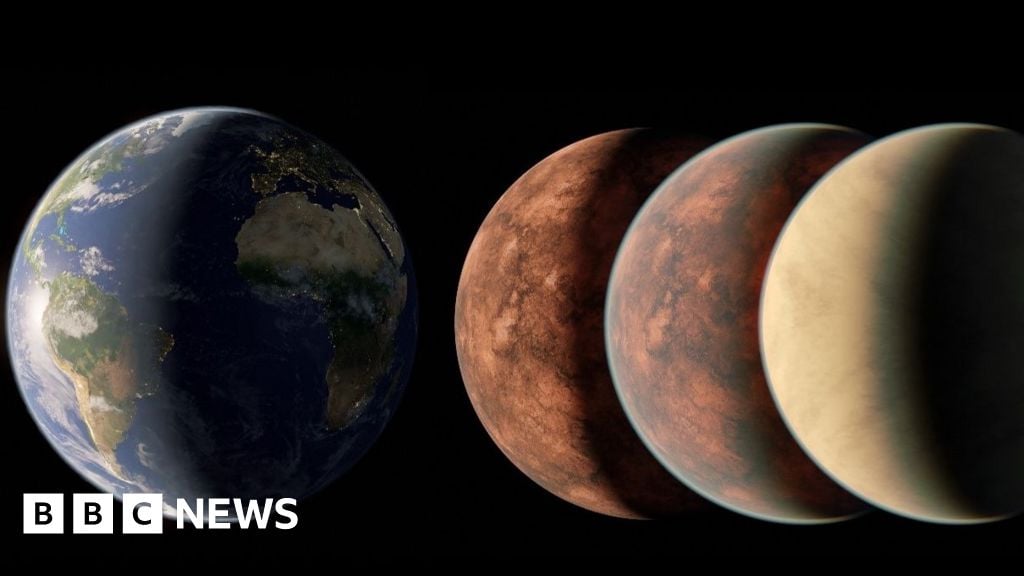
Researchers at the University of Warwick, in collaboration with NASA and ESA, have discovered an Earth-sized planet named Gliese 12 b, located 40 light years away. The planet has a surface temperature of about 42°C and orbits a red dwarf star in the constellation Pisces. While its distance makes close examination challenging, the discovery is significant for studying planetary habitability and atmospheric conditions.

"White Dwarf Star: The Grim Fate of Our Solar System"
astronomy2 years ago

"White Dwarf Star: The Grim Fate of Our Solar System"

A study by scientists from the University of Warwick and other universities sheds light on the impact of white dwarf stars on planetary systems like our solar system. When asteroids, moons, and planets get close to a white dwarf, its gravity rips them into smaller pieces, eventually grinding them into dust. The study observed changes in brightness of three different white dwarfs over 17 years, revealing chaotic variability and catastrophic events. While Earth will likely be swallowed by the expanding sun before it becomes a white dwarf, other parts of our solar system, including asteroids and moons, may undergo the shredding process near a white dwarf.