
SpaceX Dragon Returns to Earth with Cancer Research and Sonic Boom
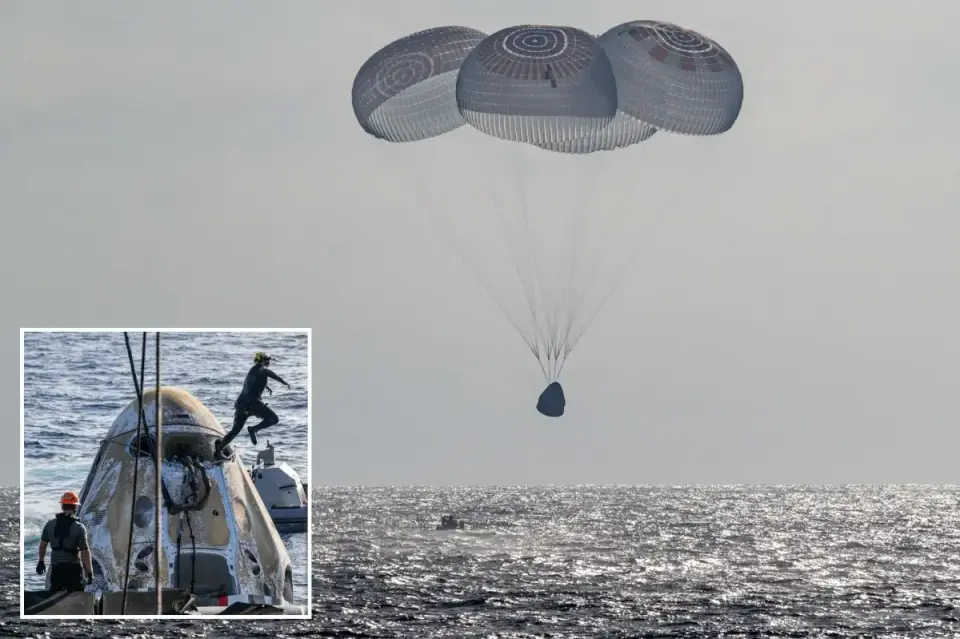
The SpaceX Dragon cargo capsule splashed down in the Pacific Ocean near Los Angeles on Nov. 21, 2026, concluding its 35th commercial resupply mission to the International Space Station. The capsule returned thousands of pounds of cargo, including 3D-bioprinted blood vessels, frozen tumor organoids, and a lighting system tested for astronaut well-being. A sonic boom was heard prior to splashdown, and no live video stream was broadcast.
Key points
- The Dragon capsule undocked from the ISS on Nov. 20 at 11:05 a.m. CST and splashed down in the Pacific near Los Angeles at 2:03 p.m. PST on Nov. 21.
- The mission, designated CRS-35, launched on Oct. 13 from Cape Canaveral and delivered over 6,300 pounds of supplies to the station.
- Returning cargo includes frozen tumor organoids treated in space, a 3D-bioprinted blood vessel model for studying cardiovascular disease, and microbial samples to analyze antibiotic resistance.
- A lighting system that spent over three years aboard the ISS was also returned to evaluate its impact on astronaut sleep and well-being.
- SpaceX announced that a sonic boom would precede the splashdown, and NASA confirmed no live video stream would be available for the event.
Background
This return follows the recent Starship Flight 15 test on Nov. 13, which focused on full rocket recovery. The Dragon mission is part of NASA’s Commercial Resupply Services program, which relies on SpaceX for cargo delivery to the ISS. Previous missions have established the Dragon as the only reusable cargo craft capable of returning samples to Earth, unlike expendable competitors such as Cygnus and Progress.
How outlets are covering it
California Post and MyNewsLA emphasized the sonic boom and the local splashdown location near Los Angeles. NASA and Space.com focused on the scientific value of the returned cargo, particularly the cancer and cardiovascular research. All sources agreed on the splashdown time and location, though Space.com noted a discrepancy in the undocking time, citing 12:05 p.m. EST, while NASA listed 11:05 a.m. CST. No outlets reported on the microbial samples' specific findings, only their return for analysis.
Why it matters
The successful return of the Dragon capsule demonstrates the viability of reusable cargo spacecraft for long-duration space missions. The returned samples, particularly the tumor organoids and bioprinted vessels, could lead to advancements in personalized medicine and cardiovascular research by understanding how these biological structures behave in microgravity. The mission also highlights the ongoing collaboration between NASA and SpaceX in maintaining the ISS.
What to watch
Researchers will analyze the returned tumor organoids and blood vessel models to identify potential improvements in cancer treatments and cardiovascular disease management. NASA will post updates on its space station blog regarding the recovery of the capsule and the analysis of the cargo. The lighting system data will be reviewed to determine its effectiveness for future long-duration missions.
- SpaceX shuttle to splash down off California coast — here’s how you’ll know it’s coming New York Post
- Dragon Returns to Earth Packed With Science and Cargo NASA (.gov)
- SpaceX Dragon cargo capsule returns to Earth from the ISS Space
- SpaceX Dragon Returns With Experiments Studying Cancer, Aging and Superbugs Newsweek
- SpaceX Dragon to Splash Down of LA Coast Saturday MyNewsLA.com
Want the full story? Read the original reporting
Read on New York Post